

The Nigerian Communications Commission (NCC) has raised the alarm over the damage to more than 5,000 fibre-optic links by road construction, excavation and other civil works across the country in the first six months of 2026, warning that the incidents threaten digital connectivity and impose wider costs on Nigerians and the economy.
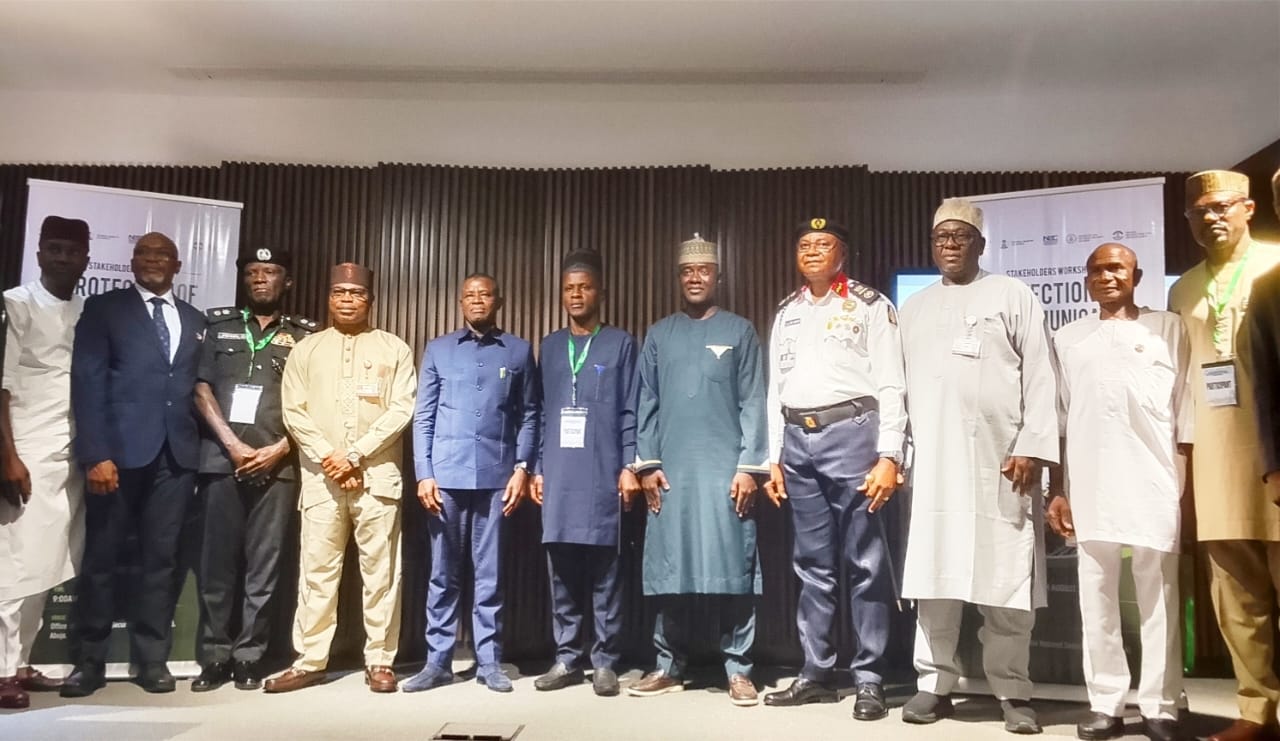
The Executive Vice Chairman of the NCC, Dr Aminu Maida, disclosed this on Tuesday in Abuja at a Stakeholder Workshop on the Protection of Fibre Optic Cables during road construction, rehabilitation and other civil works.
Maida said the frequency of fibre cuts underscored the need for stronger coordination among telecommunications operators, construction companies, government agencies and other stakeholders before work begins.
He said many of the incidents occurred because contractors commenced excavation with little or no information about the location of underground telecommunications infrastructure.
According to him, the challenge was not about assigning blame, as neither road contractors nor telecommunications operators wanted their activities to disrupt essential services.
Rather, he said, the problem was the absence of a dependable system for early coordination between stakeholders whose infrastructure often occupied the same physical space.
Maida described fibre infrastructure as a national lifeline supporting banking, government services, education, healthcare, commerce, security and emergency communications.
He said the consequences of a fibre cut could extend from failed calls and stalled payments to disrupted public services and lost business opportunities.
“A damaged fibre cable is therefore not simply a cost to an operator; it is a cost to Nigerians and to the wider economy,” Maida said.
The NCC chief recalled the telecommunications disruption of February 2024, when fibre cuts caused an almost network-wide outage for one operator, leaving millions unable to make calls, send messages or access the internet for several hours.
He said the incident also placed pressure on other networks as subscribers migrated to them, showing how damage to one telecommunications network could quickly develop into a wider national disruption.
To address the recurring problem, Maida said the Permanent Secretaries of the Federal Ministry of Works and the Federal Ministry of Communications, Innovation and Digital Economy had inaugurated a Standing Committee on the Protection of Fibre Optic Cables.
The committee, he said, was mandated to develop practical coordination mechanisms before, during and after road construction and related civil works.
He added that the Office of the National Security Adviser had recently been included in the committee to strengthen strategic oversight of the protection of telecommunications infrastructure.
Maida said the workshop was a direct product of the committee’s work and was designed to ensure that construction companies, engineers, contractors and site supervisors understood the risks and responsibilities associated with working around fibre infrastructure.
He stressed that telecommunications infrastructure had been designated as Critical National Information Infrastructure, making its protection a matter of national importance.
The designation, Maida explained, was not intended to criminalise legitimate construction activities but to ensure proper planning, due care and accountability.
He urged telecommunications operators to provide accurate information on the location of their fibre routes, while contractors must verify underground infrastructure before excavation.
Government agencies, he added, must facilitate timely information exchange and ensure that coordination became part of the design and execution of relevant projects.
The Permanent Secretary, Federal Ministry of Communications, Innovation and Digital Economy, Engr. Nadungu Gagare, represented by the Director of Telecoms and Postal Services, Stanley Musa, also described the protection of fibre infrastructure as a shared national responsibility.
Gagare said continued fibre cuts were undermining investments in broadband infrastructure by disrupting essential services, increasing operational costs and affecting millions of citizens and businesses dependent on reliable connectivity.
He said the ministry was strengthening collaboration among relevant institutions to improve compliance with right-of-way regulations, enhance information sharing and promote coordinated infrastructure development.
Gagare disclosed that the ministry had presented a memorandum to the National Economic Council on the harmonisation of right-of-way charges and implementation strategies.
According to him, the council approved the memorandum and directed the ministry to develop the standards and guidelines required for implementing the harmonised right-of-way strategy, including the “dig once” initiative.
He added that a multi-stakeholder committee had been established to develop national standards, define routes and propose a management structure for shared infrastructure.
In his remarks, the Permanent Secretary, Federal Ministry of Works, Rafiu Olarinre Adeladan, said road construction and telecommunications infrastructure increasingly operated within the same physical space, making early coordination essential.
He said excavation, drainage works, reconstruction, utility relocation and other road activities could inadvertently expose or damage buried fibre cables when proper precautions were not taken.
Adeladan called for improved mapping and marking of fibre routes, as well as early communication among contractors, consultants, government agencies and telecommunications operators before excavation.
He said the Ministry of Works remained committed to working with the NCC, Office of the National Security Adviser, telecommunications operators and other stakeholders to ensure that road development did not inadvertently undermine the digital infrastructure supporting the country.
“Our objective should be clear: to build roads without breaking our connectivity,” he said.
The Director, Critical National Assets and Infrastructure Protection at the Office of the National Security Adviser, Air Vice Marshal Effiom Enebong Ewa, said damage to fibre infrastructure had consequences far beyond telecommunications.
Ewa said every damaged fibre cable could disrupt governance, economic productivity, public services and the daily activities of millions of Nigerians.
He stressed that protecting the infrastructure was a shared responsibility involving government institutions, private organisations, contractors, telecommunications operators and other stakeholders.
Ewa noted that fibre-optic infrastructure had been designated as Critical National Information Infrastructure, warning that negligence or interference that resulted in damage could constitute an offence under Nigerian law.
He therefore urged stakeholders to comply strictly with established protocols, guidelines and procedures during construction, maintenance and other activities around telecommunications infrastructure.
The workshop brought together government ministries and agencies, telecommunications operators, construction companies, contractors, security agencies and other stakeholders to examine the causes of fibre cuts and develop practical measures for preventing further damage.
Maida said the objective was to make coordination between road construction and telecommunications infrastructure protection standard practice rather than an exception.
He said preventing a fibre cut could keep a business transaction alive, ensure continued access to public services, enable communication between families and support security and emergency responses.
“Every fibre cut we prevent is more than an engineering success,” Maida said. “It is a call that connects, a payment that goes through, a lesson that continues, a public service that remains available.”
📢 Follow National Periscope on WhatsApp
Get breaking news and updates directly on WhatsApp.
Join WhatsApp ChannelPost Disclaimer
All rights reserved. This material and other digital content on this website are not and do not represent the stance of National Periscope but the statements of newsmakers mentioned therein.
For your detailed news reportage... contact the Editor at Joel2oladele@gmail.com







NITDA moves to drive digital revolution with $37,000 cash prizes Read more
Nigeria has begun a major rethink of its telecommunications Read more
We are set to drive Nigeria into global tech talent Read more
The Nigerian Communications Commission (NCC) has called on telecom operators, Read more