

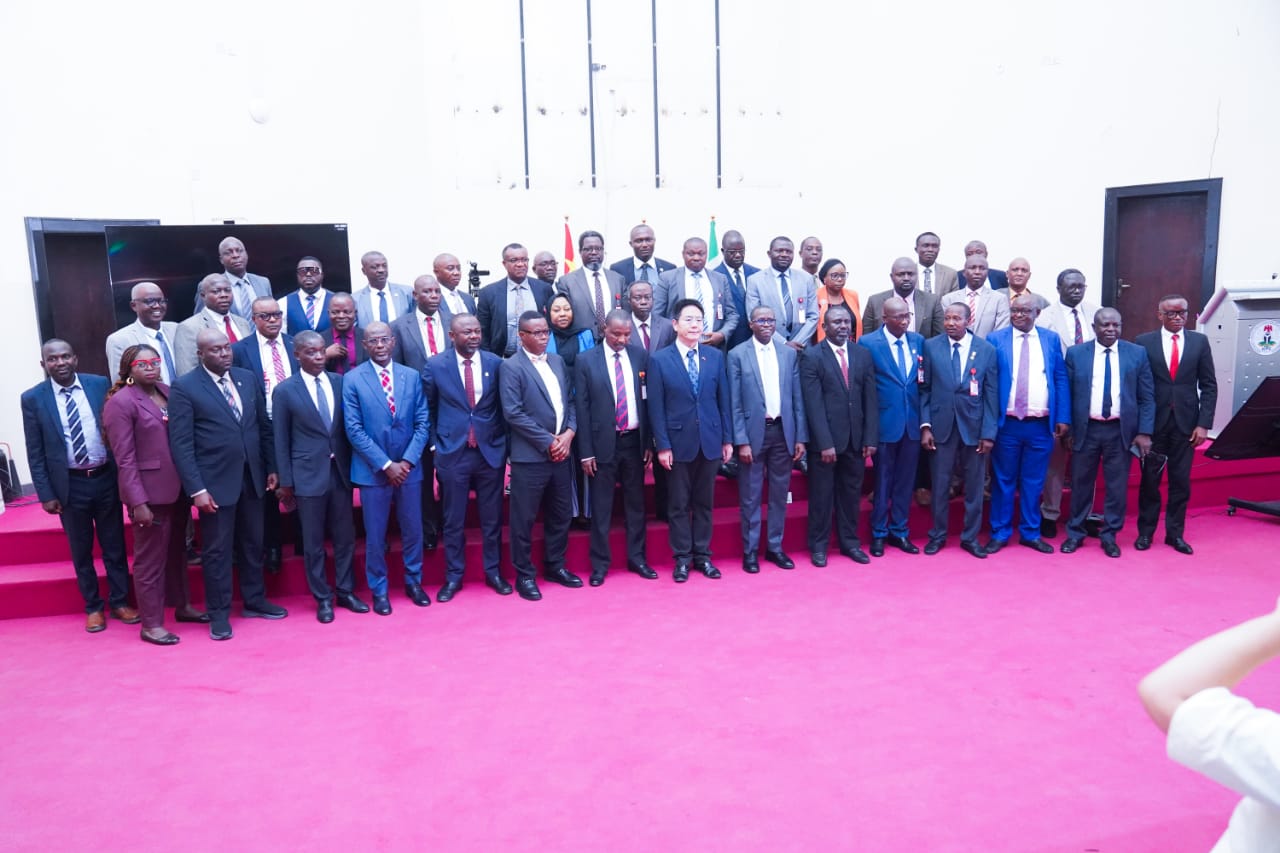
The Independent Corrupt Practices and Other Related Offences Commission (ICPC) has expressed its readiness to draw from international experiences as it strengthens Nigeria’s policies and strategies for combating corruption.
ICPC Chairman, Dr Musa Adamu Aliyu, SAN, made the position known at the third edition of the International Diplomatic Dialogue held at the commission’s headquarters in Abuja.
The dialogue, organised by the Anti-Corruption Academy of Nigeria (ACAN), the research and training arm of the commission, focused on “Experience Sharing in Anti-Corruption Policies and Strategies: The Chinese Perspective.”
Aliyu said comparative learning was important to the country’s anti-corruption efforts, particularly in identifying practices that could be adapted to Nigeria’s circumstances.
“As Nigeria continues to deepen its anti-corruption efforts, there is much value in learning from comparative experiences, understanding best practices, and identifying innovative approaches that can be adapted to our local realities,” he said.
The ICPC chairman noted that corruption remained a major obstacle to political, socio-economic and developmental progress, particularly in societies where it was allowed to persist without effective checks.
He said China’s experience was particularly relevant, pointing to the country’s anti-corruption institutions, including the National Supervisory Commission (NSC) and the Central Commission for Discipline Inspection (CCDI).
Aliyu said the commission was interested in understanding China’s institutional and legal reforms, enforcement mechanisms and broader policies deployed in tackling corruption.
He recalled that the commission had previously hosted the Kenyan High Commissioner to Nigeria and the Indonesian Ambassador to Nigeria during the first and second editions of the diplomatic dialogue.
According to him, the engagements had provided opportunities to examine how different countries approached corruption and identify lessons applicable to Nigeria.
The Provost of ACAN, Prof Sheriff Ghali Ibrahim, said China’s emergence as a major economic and technological power from a relatively poor nation was partly linked to sustained efforts to curb corruption and strengthen governance.
Ibrahim said China had developed its anti-corruption system around strong political commitment, unified investigations and a zero-tolerance approach to corruption.
He also highlighted the use of technology to promote transparency and detect corrupt practices, while drawing attention to the role of values associated with Confucian philosophy, including righteousness, propriety, wisdom, sincerity and integrity.
The ACAN provost called for deeper comparative studies between Nigeria and China, saying lessons from both systems could contribute to stronger accountability and sustainable development.
In his keynote address, Cultural Counsellor of the Chinese Embassy in Nigeria and Director of the China Cultural Centre in Nigeria, Counsellor Yang Juanxing, explained that China’s anti-corruption strategy went beyond investigating and punishing offenders.
He said the approach combined enforcement with prevention, institutional reforms, oversight and public education to create a comprehensive system for tackling corruption.
According to Yang, the objective was to establish conditions in which people were unwilling, unable and afraid to engage in corrupt practices.
He stressed that accountability must apply to everyone, regardless of position, influence or personal connections, arguing that no individual should consider himself above the law.
Yang further identified values, strong institutions and the rule of law as critical foundations for a sustainable anti-corruption framework.
He said promoting integrity, establishing transparent procedures, strengthening oversight mechanisms and ensuring appropriate sanctions for violations were necessary to make anti-corruption efforts effective.
The International Diplomatic Dialogue forms part of ACAN’s efforts to facilitate the exchange of knowledge and experiences on anti-corruption policies and practices among countries.
The commission said continued engagement with international partners would help broaden Nigeria’s understanding of effective anti-corruption mechanisms while supporting the development of strategies suited to the country’s institutional and socio-economic realities.
📢 Follow National Periscope on WhatsApp
Get breaking news and updates directly on WhatsApp.
Join WhatsApp ChannelPost Disclaimer
All rights reserved. This material and other digital content on this website are not and do not represent the stance of National Periscope but the statements of newsmakers mentioned therein.
For your detailed news reportage... contact the Editor at Joel2oladele@gmail.com






The Edo State Government has raised the alarm over the Read more
FG Reaffirms Drive for Unity, Inclusion Through Sports Partnerships JOEL Read more
Keke operator dies fighting over ₦400 levy A tussle between Read more
At last, Edo assembly impeaches deputy gov, Shaibu The Edo Read more