

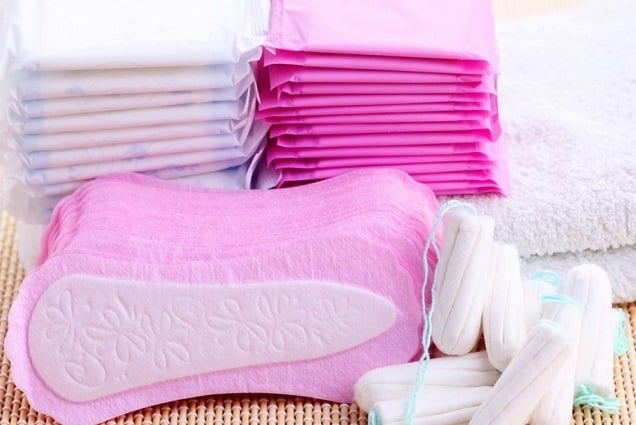
Stakeholders across the health, manufacturing, regulatory and development sectors have called for policy and regulatory reforms to reduce the cost of menstrual products and tackle period poverty among Nigerian women and girls.
They made the call at the Nigeria Menstrual Health Forum, themed “Driving Standards and Policy Reform for Affordable Menstrual Products,” organised in Lagos by the United Nations Population Fund (UNFPA), in partnership with the Standards Organisation of Nigeria (SON) and the Federal Ministry of Women Affairs and Social Development.
The two-day forum, funded by the Sanitation and Hygiene Fund (SHF), brought together government agencies, manufacturers, private sector operators, civil society groups and development partners.
Participants examined ways to improve affordability, quality standards, local production and market access for menstrual products.
An estimated 37 million women and girls in Nigeria face period poverty. Also, about 24 per cent of schoolgirls regularly miss classes because they lack adequate menstrual materials and proper water, sanitation and hygiene facilities.
Rising inflation has further deepened the challenge. The price of sanitary pads has climbed from about N200-N400 three years ago to between N500 and N750 or more.
The rising cost has forced some women and girls to use unsafe alternatives, including old pieces of cloth, mattress foam and reused sanitary pads.
Speaking at the forum, UNFPA Gender and Adolescent Unit representative, Dr Zubaida Abubakar, said the challenge went beyond access to menstrual products.
She said stakeholders must ensure that products available to consumers remained affordable, safe and met required quality standards.
“This forum marks a turning point in Nigeria’s menstrual health landscape. By driving standards and policy reform, we aim to dismantle barriers to access, ensure dignity for women and girls, and unlock opportunities for education, health, and empowerment,” Abubakar said.
She said the government could not continue to shoulder the burden of subsidising menstrual commodities, stressing the need to create conditions that would enable local manufacturers to lower production costs.
“We cannot expect the government alone to be responsible for subsidising menstrual commodities. What we want to do is make sure that the manufacturers are enabled to be able to produce them at a lower cost,” she said.
According to Abubakar, stakeholders want to “flood the market with affordable, quality-standard” menstrual products that can reach women and girls across the country.
The forum also examined the role of standards and certification in protecting consumers and keeping substandard menstrual products out of the Nigerian market.
Head of SON’s National Product Certification Department, Mrs Phebean Arumemi, said proper standards could also help manufacturers cut costs by reducing waste and improving production efficiency.
“One of the key benefits from standards is cost management,” Arumemi said.
She added that SON was working with manufacturers, particularly micro, small and medium enterprises (MSMEs), to strengthen their ability to meet quality requirements.
Arumemi said the agency’s approach focused on supporting manufacturers rather than shutting down factories that struggle with compliance.
“Our first priority is not to close down factories. It is mentorship support to help them escalate from where they are now,” she said.
Also, Elisha Sule of SHF called for stronger coordination among regulators, manufacturers and financial institutions to build a sustainable menstrual health market.
“The businesses are there, the regulators are there, NAFDAC is there, SON is there. We need someone to bring us all together to keep talking. And so, without that coordination, we’re not going to be able to move forward,” Sule said.
He said many women-led businesses in the menstrual health sector needed better technical support and access to finance to expand production.
Sule also urged greater collaboration with financial institutions, including the Development Bank of Nigeria (DBN), to help businesses scale.
Investment adviser at ONYX Investment Advisory Limited, Kunle Awolowo, advocated greater investment in local production through import substitution.
Awolowo said some local manufacturers currently import as much as 90 per cent of their production inputs, a situation that adds significantly to the cost of menstrual products.
He also proposed smaller product packages to make sanitary products more accessible to consumers with limited incomes.
The forum forms part of the SHF-funded Menstrual Health & Hygiene: Unlocking Women’s Power initiative, which operates across six African countries.
Nigeria has adopted the Africa Regional Standard for menstrual products and is pursuing ISO certification. The country has also developed the National Policy on Menstrual Health and Hygiene Management, 2025-2030.
The stakeholders said tackling period poverty would go beyond restoring dignity to women and girls.
They said affordable and quality menstrual products could improve health outcomes, boost school attendance, advance gender equality and strengthen women’s participation in the economy.
📢 Follow National Periscope on WhatsApp
Get breaking news and updates directly on WhatsApp.
Join WhatsApp ChannelPost Disclaimer
All rights reserved. This material and other digital content on this website are not and do not represent the stance of National Periscope but the statements of newsmakers mentioned therein.
For your detailed news reportage... contact the Editor at Joel2oladele@gmail.com





The National Agency for Food and Drug Administration and Control Read more
Health: Nigerian manufacturers capable, ready to produce vaccines – Tinubu Read more
Medical leave: Akeredolu bows to pressure, transfers power to deputy Read more
Lassa Fever: 109 cases, 20 deaths recorded In 1 week Read more