

•18m Adolescent Girls Get HPV Vaccine as FG Intensifies Prevention Efforts
•NPHCDA Seeks More Screening Centres to Improve Early Diagnosis
•Financial Constraints Threaten Wider Access to Subsidised Treatment Nationwide
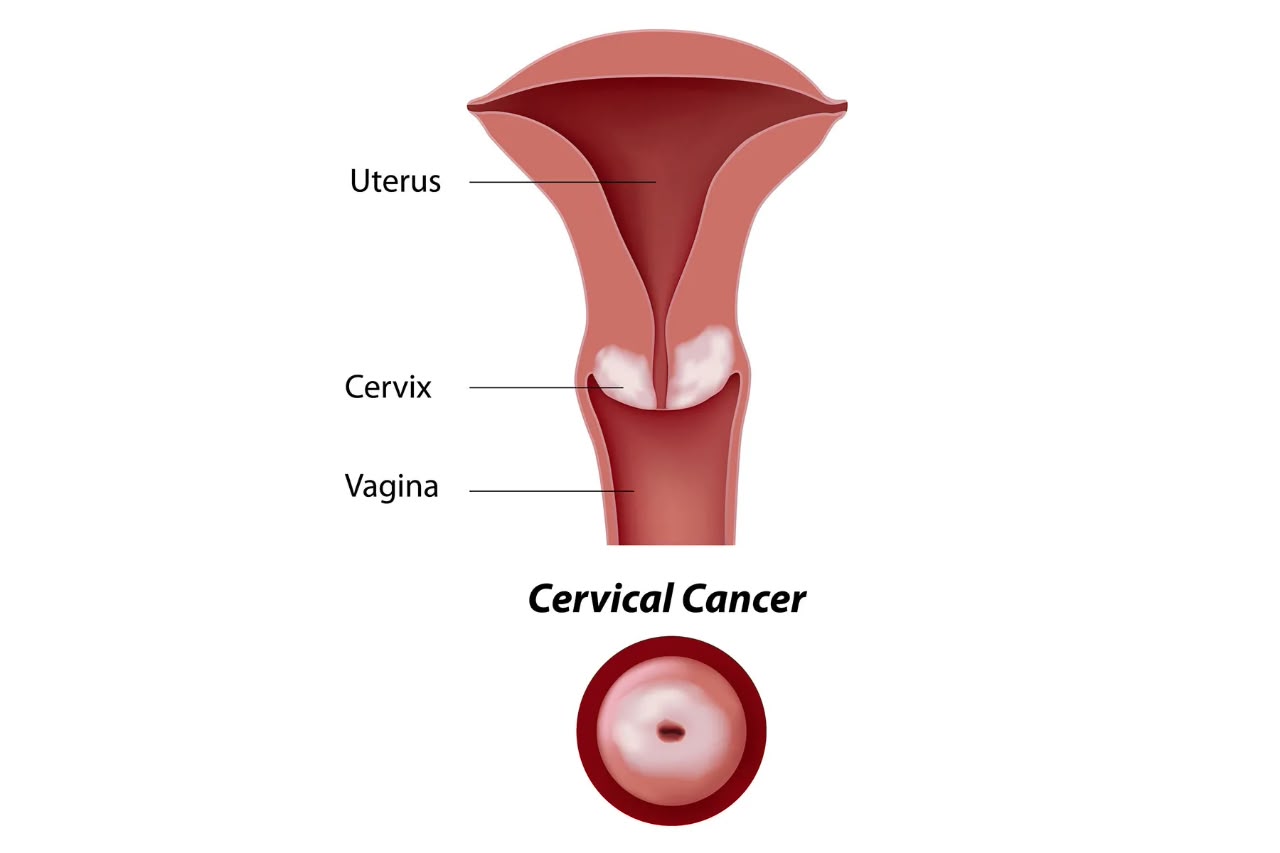
The Federal Government has raised concern over Nigeria’s cervical cancer burden, with about 12,000 new cases and nearly 8,000 deaths recorded among women every year.
The National Primary Health Care Development Agency (NPHCDA) said the figures showed the need to strengthen prevention, screening, early diagnosis and treatment alongside the country’s expanding vaccination programme.
The Director of Disease Control and Immunisation at NPHCDA, Dr Rufai Garba, disclosed this on Tuesday at a strategic policy roundtable organised by MSD in partnership with Africa Health Business in Abuja.
The meeting, themed “Accelerating Cervical Cancer Elimination in Nigeria: Uniting Public and Private Sectors for Equitable Access,” brought together stakeholders to examine gaps in HPV vaccination, screening, treatment and cancer care.
Garba said Nigeria had made significant progress since introducing Human Papillomavirus (HPV) vaccination into its national immunisation programme in October 2023. However, he stressed that vaccination alone would not eliminate cervical cancer.
“We see around 12,000 new cases every year in Nigeria, and we lose close to 8,000 women on a yearly basis. So, that’s how serious it is,” he said.
The burden is consistent with international estimates. Data from the International Agency for Research on Cancer put Nigeria’s annual cervical cancer incidence at 12,075 cases and deaths at 7,968 in its 2023 estimates. ([HPV Centre][1])
18m adolescent girls get HPV vaccine
Against the high disease burden, Garba disclosed that Nigeria had vaccinated more than 18 million adolescent girls against HPV, representing about 76 per cent of its target population.
“Today, we are around 76 per cent coverage of our target, but in terms of numbers, we have crossed 18 million adolescent girls, which is equivalent to three countries in Africa,” he said.
Nigeria initially targeted 7.7 million girls aged nine to 14 when it introduced the HPV vaccine into routine immunisation in October 2023. The rollout received support from Gavi, UNICEF, the World Health Organisation (WHO) and other partners before expanding nationwide.
The vaccine targets HPV, the primary cause of cervical cancer. However, the WHO elimination strategy also requires countries to screen women and ensure timely treatment for those diagnosed with pre-cancer or invasive cancer. ([WHO | Regional Office for Africa][2])
Garba said the government had made vaccination available free to eligible nine-year-old girls at public health facilities, while private facilities could vaccinate people outside the routine target age.
He identified the difficulty of getting healthy nine-year-old girls into health facilities for preventive vaccination as one of the challenges facing the programme.
To address the gap, NPHCDA has adopted school-based vaccination, outreach campaigns and other public health initiatives to improve access and coverage.
Garba also called for stronger adolescent-friendly health services, including safe spaces where young people can access preventive healthcare without fear of judgment.
NPHCDA demands more screening centres as diagnosis remains major challenge
Garba stressed that the country must now give greater attention to screening, early diagnosis, treatment and follow-up.
“It is not just the vaccination, which NPHCDA does, but also how we are able to get women to screen them, to catch them early, treat them and follow them up till they actually get better,” he said.
The Federal Government has also identified screening and treatment as the weaker links in Nigeria’s cervical cancer response and has been expanding HPV-based screening and referral services. ([Federal Ministry of Information][3])
Garba said stronger adolescent and community health services would help connect prevention programmes with women who require further care.
On concerns about vaccine shortages in some states, he explained that NPHCDA monitored stock levels and consumption through a logistics dashboard. The system allows vaccines to be redistributed to states with higher demand.
He described the country’s cold-chain system as strong, noting that solar-powered equipment had been deployed to some primary healthcare centres. Efforts, he added, were continuing to extend the facilities to more locations.
Garba also urged journalists to investigate reports of private health facilities charging patients for HPV vaccines supplied free by the government.
“All of the health facilities that conduct routine immunisation have HPV vaccines. We give them,” he said.
Although NPHCDA lacks enforcement powers, he said the agency could withdraw supplies from facilities found selling government-provided vaccines.
“We will need you guys to bust that story. Unfortunately, NPHCDA does not have enforcement powers, but what we can do is we can stop giving them vaccines when we find out that they’re selling vaccines that are supposed to be free,” he added.
Meanwhile, the Director of External Affairs for Sub-Saharan Africa at MSD, Vuyo Mjekula, called for stronger private-sector participation in the fight against cervical cancer.
She said Nigeria needed an integrated approach that would sustain vaccination gains while expanding screening and treatment.
Mjekula said the roundtable was designed to identify opportunities for investment, partnerships and coordinated action among government agencies, healthcare providers, civil society organisations and private companies.
“The main thing was, how do we build upon that foundation and even the work of these various task groups? And one of the areas which we believe was a gap or is a gap is we see that there’s a great opportunity for the increased involvement of the private sector,” she said.
She advocated integrating preventive healthcare into routine maternal and reproductive health services so women could access screening and other interventions during regular healthcare visits.
“We don’t look at women in a siloed way,” she said.
Mjekula also called for private-sector representatives to join national cervical cancer task forces, partnerships and technical working groups.
She disclosed that MSD had supported catch-up HPV vaccination for girls up to age 20 who were not covered when Nigeria introduced its national programme.
The company, she added, was working with Gavi and UNICEF to promote access to higher-valency HPV vaccines in Africa.
According to Mjekula, MSD had invested more than $44 million in Nigeria over the past decade through its MSD for Mothers initiative, supporting civil society organisations working in maternal healthcare.
The company is also collaborating with City Cancer Challenge in Abuja to identify gaps and develop solutions to improve oncology services.
Cancer fund faces inadequate funding
Also speaking, the Director of Cancer Prevention and Control at the National Institute for Cancer Research and Treatment (NICRAT), Dr Usman Muhammad Waziri, said inadequate awareness, affordability and access to quality healthcare continued to affect cancer prevention and treatment.
Waziri, who represented the institute’s Director-General, Professor Usman Malami Aliyu, said NICRAT was working with government agencies, international partners and other stakeholders to strengthen cancer prevention, research, screening, treatment and palliative care.
He identified financial constraints as a major reason some patients delay seeking medical attention, increasing the likelihood of advanced-stage diagnosis.
“Affordability, because when people decide late, even if they go to the best of facilities, the disease will be late-stage,” he said.
Waziri disclosed that NICRAT was collaborating with the American Association for Cancer Research and other organisations to develop a community cancer communication strategy.
The initiative aims to improve public understanding of cancer and address misconceptions that discourage people from seeking appropriate medical care.
“We need to come together, streamline our efforts and standardise the information that goes out. Because most often, it’s not just the information that goes out, but appropriate information that is population- or community-centred,” he said.
To improve early diagnosis, Waziri disclosed that NICRAT had introduced the National Initiative for Cancer Early Detection, Screening and Coordinated Access to Network of Care (NISCAN).
He said the programme would make cancer screening more routine for people at risk through standardised national guidelines and a coordinated referral system.
NISCAN is being piloted in the Federal Capital Territory, with suspected cervical cancer cases referred to the Federal Medical Centre, Jabi, for further evaluation and diagnosis.
“Every woman with a suspected cervical lesion will get there and get evaluated to the point of histological diagnosis under one roof. If it is cancerous, she gets connected to treatment. If it is not cancerous, she gets counselled and continued on follow-up based on national guidelines,” Waziri said.
He said Nigeria was working towards the WHO’s 90-70-90 targets for eliminating cervical cancer as a public health problem by 2030.
Government-led cervical cancer screening has commenced in Imo State, with Niger State next in line for expansion.
“We want to have this cervical cancer rollout reach all the nooks and crannies of the country,” Waziri added.
He further disclosed that the Cancer Health Fund, which supports indigent Nigerians seeking cancer treatment, was being implemented in six facilities.
The fund covers breast, cervical and prostate cancers. However, Waziri identified inadequate funding as a major constraint to expanding the programme and reaching more vulnerable patients.
“The funding allocated to the programme is not yet optimal enough to go round and assist the bulk of the populace that is affected, especially the indigent,” he said.
📢 Follow National Periscope on WhatsApp
Get breaking news and updates directly on WhatsApp.
Join WhatsApp ChannelPost Disclaimer
All rights reserved. This material and other digital content on this website are not and do not represent the stance of National Periscope but the statements of newsmakers mentioned therein.
For your detailed news reportage... contact the Editor at Joel2oladele@gmail.com






Tinubu Cuts GenCos’ N6tn Claim to N2.8tn After Forensic Audit Read more
NLC suspends day – two nationwide protest The Nigeria Labour Read more
Okuama killings: Tinubu honours slain soldiers with national awards, offers Read more
National dialogue: IGP, CSOs kick against state police, as Tinubu, Read more