

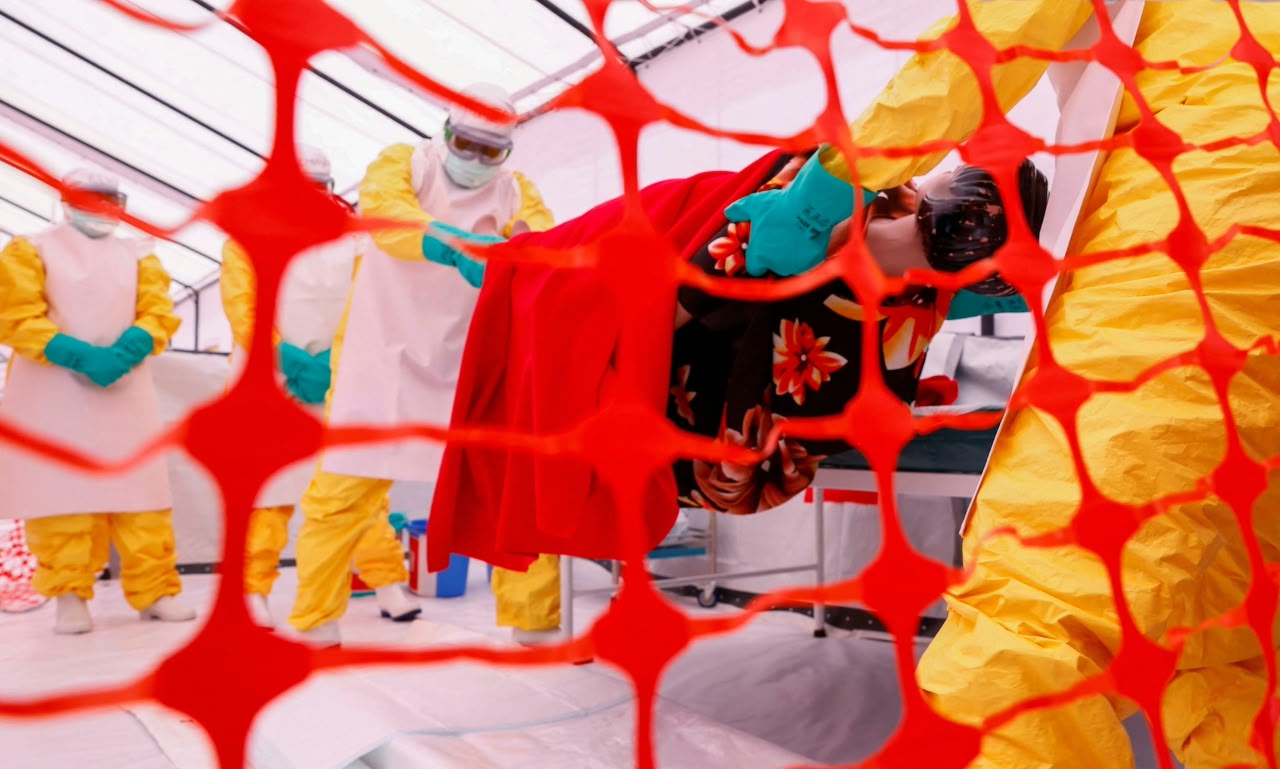
Kenya has recorded its first Ebola fatality after a man who had been living in the Democratic Republic of Congo (DRC) died in Nairobi, days after returning to the country.
Health Cabinet Secretary Aden Duale announced the death on Tuesday, saying the man had travelled from the DRC through Uganda before arriving in Nairobi on October 3.
Duale said the deceased fell ill about a month ago and received treatment in the DRC before making the journey by road to Kampala, the Ugandan capital.
He later boarded a flight to Nairobi, where health officials screened him and confirmed that he had contracted Ebola.
The minister said the man died at about 11:30 p.m. on Monday.
Following the death, Kenyan health authorities identified 28 people who had contact with the deceased. The contacts include members of his family and healthcare workers who attended to him.
Duale disclosed that authorities had tested the identified contacts and detected one positive case so far.
The government has stepped up surveillance and contact tracing as health officials work to determine whether the virus has spread beyond the known contacts.
Duale, however, urged Kenyans to remain calm, saying authorities had activated measures to contain the disease.
“I wish to assure the public not to panic, as all systems are in place to mitigate the spread of the disease,” he said.
The fatality marks the first time Kenya has recorded an Ebola death. The development has renewed concerns over the country’s preparedness to contain the virus after cross-border movement from the DRC.
Kenya had earlier faced public opposition to plans to establish an Ebola facility at Laikipia Air Base, about 200 kilometres from Nairobi.
The proposed facility triggered strong reactions from residents earlier this year, amid concerns about the risks associated with hosting an Ebola treatment centre in the area.
The DRC declared its 17th Ebola outbreak in mid-May, placing neighbouring countries on heightened alert because of the potential for cross-border transmission.
Ebola has killed more than 15,000 people across Africa over the past five decades. The disease spreads through direct contact with the blood or bodily fluids of infected people.
According to figures from the World Health Organisation (WHO) as of October 2, the Bundibugyo strain had recorded 8,463 cases and 4,082 deaths.
The strain remains a particular concern because no vaccine or specific treatment currently exists for it.
Kenyan authorities are expected to continue monitoring the 28 identified contacts while testing and surveillance efforts seek to establish the extent of the outbreak.
📢 Follow National Periscope on WhatsApp
Get breaking news and updates directly on WhatsApp.
Join WhatsApp ChannelPost Disclaimer
All rights reserved. This material and other digital content on this website are not and do not represent the stance of National Periscope but the statements of newsmakers mentioned therein.
For your detailed news reportage... contact the Editor at Joel2oladele@gmail.com






 died in Nairobi.)
Iran’s Supreme Leader Khamenei Killed in US-Israel Strikes Iran’s Supreme Read more
US Commandos Rescue Downed Airman in High-Risk Iran Mission [caption Read more
Israel says it will open border crossing in northern Gaza Read more
DRC extends voting after chaotic presidential, legislative elections Lengthy delays Read more