

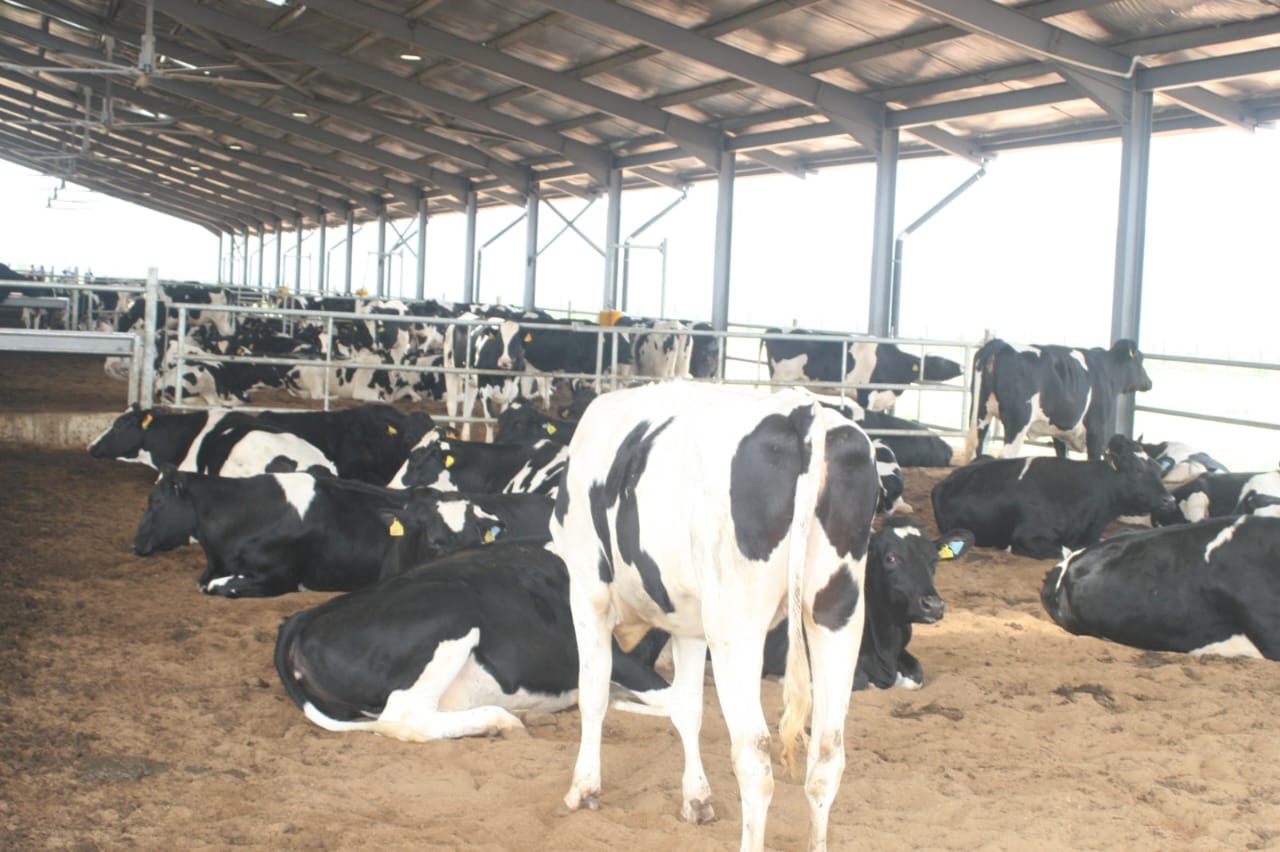
The Advancing Local Dairy Development in Nigeria (ALDDN) programme has integrated more than 63,000 smallholder farmers into formal dairy supply chains as part of efforts to increase local milk production and reduce Nigeria’s dependence on imports.
The six-year intervention also generated about N6.5 billion in milk transactions and facilitated the supply of more than 16 million litres of fresh milk to processing companies.
The achievements were disclosed at the programme’s national close-out event in Abuja on Thursday, where stakeholders called for an expansion of the initiative to strengthen Nigeria’s dairy industry.
Funded by the Gates Foundation and implemented by Sahel Consulting Agriculture and Nutrition Limited, ALDDN operated from 2020 to 2026 across Adamawa, Bauchi, Jigawa, Kaduna, Kano, Plateau and Taraba states.
The programme focused on improving smallholder farmers’ productivity, linking them to commercial markets, empowering women and creating favourable conditions for domestic dairy production.
Nigeria has an estimated 20.9 million cattle, including about 2.2 million dairy cows. Despite this potential, the country imports more than 60 per cent of its dairy requirements annually.
The imports cost an estimated $1.6 billion, while local milk productivity remains far below the global average.
Managing Partner of Sahel Consulting, Temitope Adegoroye, said the intervention addressed the disconnect between local dairy farmers and processing companies.
He explained that several processors had invested heavily in production facilities but relied largely on imported milk powder because local farmers could not meet their supply requirements.
According to him, ALDDN deliberately connected smallholder farmers with processors to guarantee markets for their produce and improve household earnings.
He said farmers previously struggled with limited access to veterinary services, improved breeding, quality feed, finance and technical support.
These challenges contributed to low milk yields, poor handling practices and quality concerns that restricted the use of locally produced milk in industrial processing.
Adegoroye said a Nigerian dairy cow produces an average of one to 1.5 litres of milk daily, compared with 35 to 40 litres in countries such as New Zealand and Australia.
He put India’s average at 15 to 20 litres and Kenya’s at 10 to 15 litres daily.
He said the productivity gap showed the need to invest more in local production instead of relying heavily on imported milk powder.
The Sahel Consulting managing partner disclosed that ALDDN facilitated about N6.5 billion in transactions between farmers and processors, with participating companies receiving more than 16 million litres of fresh milk.
He said expanding the programme’s model would require more processors to commit to local sourcing and additional farmers to join formal supply chains.
“What we need to do is to scale. We have integrated 63,000 farmers and worked with five or six processors across seven states,” he said.
Adegoroye said the next phase should increase the number of participating processors and extend the programme to more small-scale producers.
“We need to increase the number of processors to 10, 15 or 20, while expanding the number of small-scale dairy producers to 100,000, 200,000 or even 500,000,” he added.
On sustainability, Adegoroye said the programme had positioned participating farmers within processors’ supply chains rather than leaving them dependent on Sahel Consulting and other implementing partners.
He noted that some processing companies had established structures to sustain farmer engagement, milk collection and supply arrangements after the intervention.
He also identified the strengthening of the Commercial Dairy and Livestock Association of Nigeria (CODA) as another measure to preserve the programme’s gains.
According to him, the association had received support to sustain policy engagement and represent the interests of players across the dairy industry.
Earlier, ALDDN Programme Lead, Fisayomi Kayode, said the intervention integrated 63,261 farmers into formal dairy supply chains, with women accounting for about 45 per cent of beneficiaries.
She added that the programme established or strengthened 2,663 farmer groups and supported the formation of about 234 dairy cooperatives.
More than 32,000 households across the seven states also benefited from the intervention.
Kayode said ALDDN adopted an integrated approach covering farmer organisation, financial inclusion, animal health, feed production, improved breeding, nutrition and access to formal markets.
She disclosed that more than 83,000 cows received animal health interventions, while farmers cultivated over 4,700 hectares of pasture and hay.
The initiative also supported the production of nearly 11,000 tonnes of animal feed.
In addition, more than 60,000 farmers received financial literacy training, while the programme engaged about 10 financial institutions to improve access to financial services.
Digital payment systems facilitated more than 3,000 transactions weekly, providing farmers with better financial records and improving their prospects of accessing credit.
Kayode said the programme also addressed household welfare through nutrition, water, sanitation and hygiene education.
“More than 800,000 beneficiaries received nutrition, water, sanitation and hygiene education,” she said.
The programme also supported the establishment of over 1,600 household vegetable gardens, with women cultivating more than 80 per cent of them.
Kayode further highlighted the initiative’s contribution to improving relations between pastoralist and farming communities through commercial fodder production.
She explained that the arrangement provided crop farmers with an additional source of income while giving livestock producers access to essential animal feed.
“This created economic opportunities for both groups and encouraged cooperation between farming and pastoralist communities,” she said.
Kayode said the programme’s impact extended beyond milk production to improved household livelihoods, business operations and community relations.
In his goodwill message, Managing Director of Sebore International Farms, Aminu Murtala Nyako, commended Sahel Consulting and its partners for their contributions to strengthening the dairy value chain.
He said the integration of more than 63,000 farmers, supply of over 15 million litres of fresh milk to processors and establishment or strengthening of 234 dairy cooperatives represented significant progress.
Nyako said Sebore Farms was proud to have participated in the programme, particularly in strengthening market linkages and improving productivity.
“We are proud to have been part of this programme, particularly in strengthening market linkages and improving productivity,” he said.
He urged stakeholders to sustain and expand the achievements, assuring that the company remained committed to working with farmers, cooperatives, processors and development partners.
“We remain committed to working with farmers, cooperatives, processors and development partners to build a stronger and more competitive dairy industry,” he added.
For one of the beneficiaries, Bello Adamu of Haske Dairy Cooperative, the intervention brought a significant improvement to his livelihood.
Adamu, who spoke through an interpreter, said training in animal husbandry, milk hygiene, fodder production and milk aggregation had strengthened his dairy business.
He disclosed that he now aggregates between 200 and 300 litres of raw milk daily and supplies it to a collection centre established by L&Z Integrated Farms in Gira Limited.
He said improved skills and access to a reliable market had increased his daily earnings and strengthened his ability to provide for his family.
“The training we received in animal husbandry, milk hygiene and fodder production has helped us improve our operations and increase our earnings,” he said.
Adamu also praised the programme’s animal health interventions, particularly the deployment of veterinary technicians who provided treatment and vaccination services.
He said members of his cooperative were applying the knowledge they acquired and remained committed to sustaining the gains in their communities.
“The veterinary technicians also helped us with treatment and vaccination of our animals. We are now applying what we learnt and are determined to sustain the progress,” he added.
ALDDN, formally launched on January 23, 2020, built on lessons from the Nigerian Dairy Development Programme.
It adopted a processor-led model to connect smallholder farmers with commercial dairy companies and improve the supply of locally produced milk.
Although the intervention has ended, stakeholders said expanding its model to more states and attracting additional processors and farmers would be critical to increasing domestic production.
They maintained that stronger local supply chains would help Nigeria reduce its dependence on imported dairy products and make better use of its large cattle population.
📢 Follow National Periscope on WhatsApp
Get breaking news and updates directly on WhatsApp.
Join WhatsApp ChannelPost Disclaimer
All rights reserved. This material and other digital content on this website are not and do not represent the stance of National Periscope but the statements of newsmakers mentioned therein.
For your detailed news reportage... contact the Editor at Joel2oladele@gmail.com






Over 33 million Nigerians may face food crisis In 2025 Read more
CEFSAR Commends NAFDAC on N800m Toxic Agro-Chemicals Ban Enforcement The Read more
FG unveils comprehensive mechanisation plan to boost agricultural productivity The Read more
FG, NDLEA Move to Replace Cannabis Farms with Food, Pharma Read more