

JOEL OLADELE, Abuja
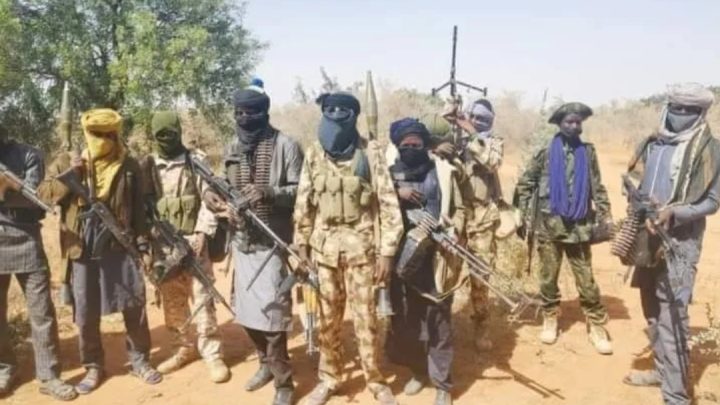
A new report by the United States Commission on International Religious Freedom has painted a grim picture of Nigeria’s worsening insecurity, revealing that an estimated 30,000 Fulani militants are operating across the country and are responsible for some of the deadliest attacks on religious communities in recent years.
The report, which examined nonstate violators of religious freedom in Nigeria, said the armed groups have increasingly targeted Christian communities in the Middle Belt and parts of southern Nigeria, while also attacking Muslim communities, kidnapping worshippers and rustling cattle.
According to the commission, the militants operate in loosely connected cells ranging from 10 to 1,000 fighters, often coordinating attacks with criminal gangs and extremist groups.
It noted that the violence has escalated from the North-West through the Middle Belt into southern states, leaving a trail of deaths, displacement and destruction.
“Violence by Fulani militants caused the highest number of deaths among all religious communities in Nigeria over the last year as compared to attacks by organized insurgent groups and criminal gangs,” the report stated.
The commission said militants frequently attack isolated rural communities at night using motorcycles, automatic weapons and machetes, burning churches and homes while abducting, raping and killing residents.
The report added that attackers often strike during major Christian celebrations such as Christmas and Easter “to maximize psychological impact,” with some reportedly shouting “Allahu Akbar” during assaults.
It estimated that at least 1.3 million people in the Middle Belt have been displaced from their ancestral lands due to attacks linked to Fulani militants and other armed actors.
The report highlighted a series of deadly incidents in 2025 and early 2026, particularly in Benue State, Plateau State, Kaduna State and Niger State.
One of the bloodiest attacks occurred in June 2025 in Yelwata, Benue State, where over 200 Christians, mostly women and children, were reportedly killed, while more than 3,000 residents fled their homes.
The commission also referenced another June 2025 attack in Benue in which at least 200 people, including internally displaced persons taking refuge in a Catholic mission, were killed.
In Kogi State, pastors Adura Kayode and Kingsley Ebing of the City of Grace Prophetic Liberation Church were abducted in May 2025, while a Catholic priest in Benue was reportedly shot and seriously wounded by suspected militants.
The violence persisted into 2026, with attacks recorded in Barkin Ladi and Riyom areas of Plateau State, where at least 12 people, including farmers and herders, were killed in February.
That same month, suspected militants reportedly killed at least 32 persons in Borgu area of Niger State and attacked Holy Trinity Parish in the Kafanchan Diocese of Kaduna State, killing three worshippers and abducting 11 others, including the parish priest, Father Nathaniel Asuwaye.
The report further alleged that kidnapping has become a major source of funding for armed groups, with churches, mosques and schools increasingly targeted for ransom operations.
In one incident in February 2026, gunmen abducted an imam and seven worshippers from a mosque in Plateau State and demanded a ransom of N16 million.
It also recalled that in April 2026, more than 150 persons, mostly women and children, were abducted in Zamfara State, while separate Palm Sunday and Easter attacks in Plateau, Kaduna and Benue states left dozens dead and many others missing.
Despite the scale of the violence, the report accused Nigerian authorities of responding inadequately to the crisis.
“Victims have long reported that security forces are consistently slow to respond to attacks on their communities,” the commission stated.
It said some Christian advocacy groups had accused security agencies of showing favoritism toward Muslim communities, while local authorities were criticised for poor coordination with affected populations.
The report also alleged possible collusion between some security officials and perpetrators, particularly in kidnapping cases where victims’ whereabouts often remain unknown.
While acknowledging that environmental pressures, competition over land and economic hardship contribute to the violence, the commission insisted that religion remains a significant factor in many attacks.
“Multiple and overlapping factors, including religion in many cases, likely spur Fulani militants to attack communities or individuals,” it noted.
The report said the administration of Bola Ahmed Tinubu had taken some recent steps to address the crisis, including designating kidnappers and violent armed groups as terrorists in December 2025.
It added that coordinated security operations in January 2026 led to the rescue of 309 hostages in Kogi and Kwara states, while 129 suspected Fulani militants were arrested and 55 others killed.
The commission also pointed to ongoing efforts by governors in 11 states to establish ranches aimed at reducing clashes between herders and farming communities over grazing routes.
The report, however, raised concerns over the role of the Miyetti Allah Cattle Breeders Association of Nigeria, popularly known as MACBAN.
While some Christian leaders accused the association of failing to curb militant violence and land invasions, MACBAN denied supporting criminality and maintained that violent Fulani militants represent only a small minority of the wider Fulani population.
The controversy has now attracted international attention, with the U.S. Congress introducing the Nigeria Religious Freedom and Accountability Act of 2026, which recommends sanctions against MACBAN over alleged involvement in severe religious freedom violations.
Concluding its findings, the commission warned that Nigeria’s central region remains trapped in a prolonged cycle of violence and insecurity despite growing international pressure and recent government interventions.
It stated that lasting peace would depend on whether federal and state authorities can create conditions that guarantee the safe practice of religious freedom for both Christians and Muslims.
📢 Follow National Periscope on WhatsApp
Get breaking news and updates directly on WhatsApp.
Join WhatsApp ChannelPost Disclaimer
All rights reserved. This material and other digital content on this website are not and do not represent the stance of National Periscope but the statements of newsmakers mentioned therein.
For your detailed news reportage... contact the Editor at Joel2oladele@gmail.com



Again, bandits attack Kaduna community, abduct 61 No fewer than Read more
Nigerian Army Announces Recruitment Exercise Into 87RRI The Nigerian Army Read more
Experts X-ray roles of NGOs in combating asymmetrical national security Read more
Tinubu, CAN condemn Plateau attack as Amnesty demands independent investigation Read more