
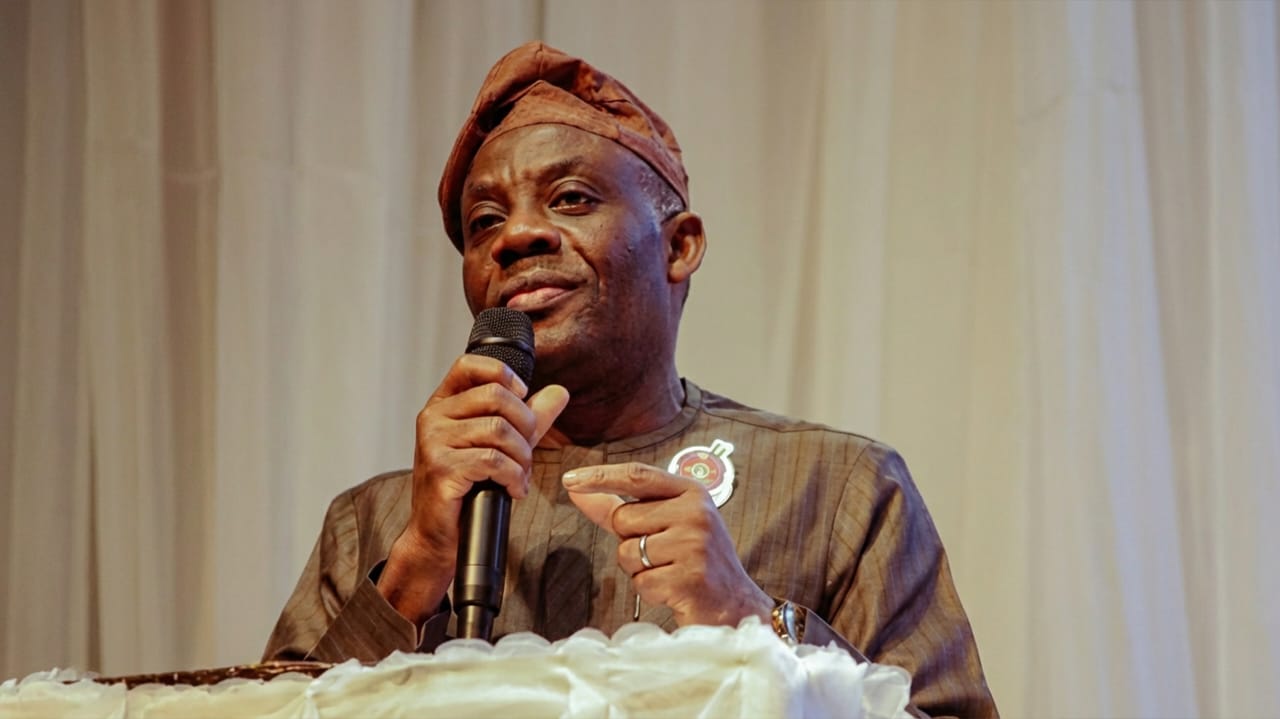
The Minister of Education, Dr Maruf Tunji Alausa, has said the Federal Government’s investment of more than N1 trillion in tertiary education over the past two years has significantly expanded access to higher education, ensuring that no qualified Nigerian is denied the opportunity to study because of financial hardship.
Alausa said the investments, coupled with reforms introduced by the President Bola Tinubu administration, are removing long-standing barriers to higher education while strengthening universities, polytechnics and colleges of education to produce graduates equipped for national development.
The minister spoke in Abuja during a meeting with members of the National Committee for the Advancement of Occupational Therapy, Audiology and Speech Therapy Education.
According to him, the administration’s education policies are centred on human capital development, with deliberate efforts to make quality higher education accessible to every qualified Nigerian irrespective of economic background.
“This President, President Bola Ahmed Tinubu, has opened up access to students so that not having money, or coming from an indigent family, or your parents being poor, will no longer stop you from achieving the opportunities you can achieve in life. Education is no longer a barrier for students in this country,” Alausa said.
He described the reforms as a strategic investment in the country’s future, noting that the government was not only expanding access but also upgrading facilities to improve the quality of teaching, learning and research.
The minister disclosed that the Federal Government has invested N250 billion in constructing new hostels across tertiary institutions to address accommodation shortages and provide a more conducive environment for learning.
He added that over N150 billion had also been committed to rehabilitating existing hostels, lecture theatres, engineering workshops and other academic facilities nationwide.
Alausa further revealed that the administration has invested more than N130 billion in upgrading medical schools and expanding their capacity to train healthcare professionals.
He said another N52 billion had been approved for modern equipment in 18 medical schools, while nearly N30 billion was being invested in establishing 11 state-of-the-art medical simulation laboratories to enhance practical clinical training.
To strengthen engineering education, the minister said almost N110 billion had been committed to constructing and rehabilitating engineering workshops as well as procuring modern equipment for federal universities of technology, conventional universities offering engineering programmes and polytechnics.
He described the interventions as among the most extensive investments ever made in Nigeria’s tertiary education sector, covering infrastructure renewal, specialised laboratories, workshops, equipment procurement and institutional capacity development.
“This is amazing. This is just mind-boggling what this President has done in rapidly transforming tertiary education,” he said.
According to the minister, the investments are designed to ensure that Nigerian tertiary institutions produce graduates with the practical knowledge, technical competence and innovative capacity required to drive industrialisation and economic growth.
Alausa also commended President Tinubu for prioritising education under the Renewed Hope Agenda.
“We thank President Bola Ahmed Tinubu for believing in the youth of this country and giving them all the opportunities for them to excel, to be useful to themselves, to be useful to their communities, to be useful to the country and to the global world at large,” he said.
Earlier, Chairman of the National Committee for the Advancement of Occupational Therapy, Audiology and Speech and Language Therapy Education, Dr Victoria Omua Amu, briefed the minister on the committee’s progress since its inauguration.
She said the committee had developed a one-year implementation plan, established governance structures and created specialised subcommittees to advance advocacy, academic collaboration, clinical training and manpower development.
Amu disclosed that six Nigerian universities currently offer Audiology programmes, five offer Occupational Therapy and three run Speech and Language Therapy programmes. She added that consultations were ongoing with the National Universities Commission (NUC), the Medical Rehabilitation Therapists Registration Board of Nigeria and other stakeholders to expand the programmes.
She, however, identified delays in the release of TETFund support as a major challenge affecting implementation.
Responding, Alausa reaffirmed the Federal Ministry of Education’s commitment to working with tertiary institutions and relevant stakeholders to deepen ongoing reforms and improve learning outcomes.
He maintained that the administration would continue investing in infrastructure, training and student support to ensure that financial constraints no longer prevent qualified Nigerians from accessing higher education.
📢 Follow National Periscope on WhatsApp
Get breaking news and updates directly on WhatsApp.
Join WhatsApp ChannelPost Disclaimer
All rights reserved. This material and other digital content on this website are not and do not represent the stance of National Periscope but the statements of newsmakers mentioned therein.
For your detailed news reportage... contact the Editor at Joel2oladele@gmail.com




CIPMN Holds Maiden Annual General Meeting, Calls For Adherence to Read more
NYSC fixes April 2 for physical verification of graduates from Read more
[caption id="attachment_24451" align="alignnone" width="1280"] Minister of Finance and Coordinating Minister Read more
FUTA postpones resumption indefinitely as students protest hike in tuition Read more