

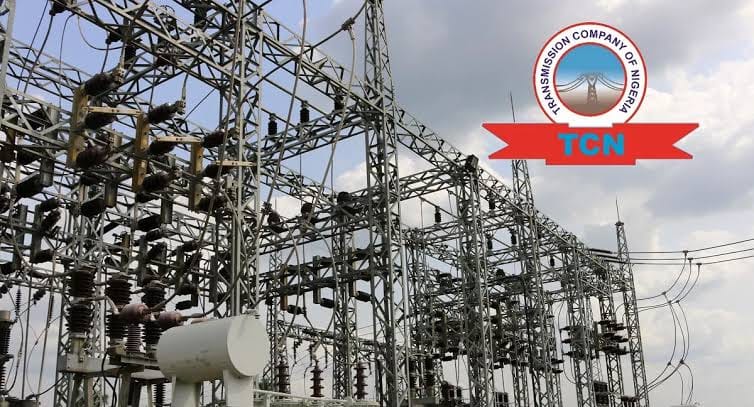
The Transmission Company of Nigeria (TCN) has rejected claims that limitations in the national grid are responsible for Nigeria’s persistent electricity supply challenges, insisting that official industry data show the country’s power shortfall is driven largely by inadequate generation rather than transmission constraints.
The company was reacting to a report published by THISDAY on July 28, 2026, in which the Association of Power Generation Companies (APGC) was quoted as saying more than 2,500 megawatts of electricity were being wasted daily because of grid unreliability and that the country’s stranded power crisis was a transmission, rather than a generation, problem.
In a statement issued on Thursday, TCN said the Nigerian Electricity Regulatory Commission’s (NERC) First Quarter 2026 report, which covered the same period referenced in the publication, did not support the claims by the generation companies.
According to TCN, NERC’s report showed that generating companies declared an average available generation capacity of 4,457.96MW during the first quarter of 2026, a figure close to the 4,500MW the APGC claimed the national grid could transmit.
The company argued that the figure represented the amount of electricity the power plants themselves made available for dispatch and not a transmission limit imposed by the national grid.
TCN also disputed claims that Nigeria has over 15,500MW of installed generation capacity, noting that NERC’s audited report put the installed capacity of the 28 grid-connected power plants at 13,625MW.
The transmission company maintained that its verified wheeling capacity currently stands at 8,700MW following sustained investments in transmission infrastructure, including transformers, substations and transmission lines across the country.
It said the capacity had already been demonstrated in practice, citing the record 5,801.84MW successfully transmitted on March 4, 2025, as well as other peak deliveries above 5,500MW.
“A grid said to be limited to 4,500MW could not, as a matter of physics, have carried any of these volumes,” the company stated.
TCN said it had continued to strengthen the national grid through major infrastructure projects, including the commissioning of 82 power transformers between January 2024 and November 2025, which added about 8,500MVA of transformation capacity nationwide.
It added that several transmission lines had been upgraded, while the recently commissioned Ihovbor-Benin and Ihovbor-Ajaokuta 330kV transmission lines increased wheeling capacity in the Benin corridor by more than 600MW and improved electricity evacuation from the Azura and Ihovbor power plants.
The company maintained that NERC’s own data showed the principal challenge in the electricity value chain remained power generation.
It noted that the regulator recorded a Plant Availability Factor of only 32.72 per cent in the first quarter of 2026, indicating that more than two-thirds of the country’s installed generation capacity was unavailable for dispatch because of gas supply constraints, mechanical faults and maintenance outages.
TCN pointed out that several power stations recorded extremely low availability during the review period, while hydropower generation also declined because of seasonal low water levels and scheduled maintenance at major hydro stations.
It also noted that the APGC had acknowledged that gas supply to thermal power plants had fallen below 43 per cent of daily requirements, a development it said reinforced NERC’s findings that generation constraints remained the sector’s biggest challenge.
The company further dismissed claims that between 2,500MW and 4,000MW of electricity was being stranded daily due to inadequate transmission capacity.
According to TCN, NERC’s report showed the national grid recorded a load factor of 92.26 per cent during the first quarter of 2026, meaning that only about 345MW—representing 7.74 per cent of the electricity declared available by generating companies—went undispatched on average.
It added that five generating plants achieved a 100 per cent load factor during the period, indicating that every megawatt they declared available was fully evacuated by the transmission network.
TCN also rejected claims that transmission losses ranged between 1,200MW and 1,300MW daily.
The company said NERC’s audited figures placed the Transmission Loss Factor at 7.96 per cent, equivalent to about 327MW on average, adding that most of the reported ₦2.61 billion underperformance cost related to generation capacity penalties rather than actual losses on transmission lines.
On the grid disturbances recorded in January 2026, TCN clarified that while the January 23 system collapse resulted from a busbar separation at the Sapele Transmission Station, NERC’s preliminary findings attributed the January 27 partial system collapse to inadequate reactive power support, which it described as a system stability issue involving generation and system operations.
The company also argued that the reported ₦2.28 trillion generation capacity payment shortfall was more closely linked to commercial and market inefficiencies than to transmission constraints.
It cited NERC’s findings that electricity distribution companies recorded Aggregate Technical, Commercial and Collection (ATC&C) losses of 37.44 per cent during the review period, alongside remittance shortfalls to the Nigerian Bulk Electricity Trading Plc and the Market Operator.
While acknowledging that Nigeria’s electricity supply industry remained under pressure and that continued investment in transmission infrastructure was necessary, TCN insisted that the evidence did not support attributing the country’s power crisis to the transmission network alone.
“What TCN disputes is the specific and repeated characterisation of the sector’s capacity gap as a transmission ‘wheeling’ or ‘evacuation’ failure,” the company said.
It urged stakeholders and industry commentators to anchor public discussions on NERC’s published data, maintaining that the regulator’s findings showed Nigeria’s “stranded power” challenge originated predominantly at the generation stage rather than the transmission network.
📢 Follow National Periscope on WhatsApp
Get breaking news and updates directly on WhatsApp.
Join WhatsApp ChannelPost Disclaimer
All rights reserved. This material and other digital content on this website are not and do not represent the stance of National Periscope but the statements of newsmakers mentioned therein.
For your detailed news reportage... contact the Editor at Joel2oladele@gmail.com







Crude Oil Production Declines by 5 Percent in February, Says Read more
“Defamation”: Suspended Minister, Betta Edu threatens to sue BBC The Read more
JOEL OLADELE, Abuja President Bola Tinubu on Sunday cautioned Nigerians Read more
The All Progressives Congress (APC) in Osun State says it Read more