

Nigeria’s trade with China rose by 35 per cent to $18 billion in the first half of 2026, as the Asian country’s new zero-tariff regime triggered a sharp increase in Nigerian exports to its market.
Chinese imports from Nigeria rose by 80 per cent to $2.3 billion during the period, with the increase coming barely three months after China began granting duty-free access to products from African countries with which it maintains diplomatic relations.
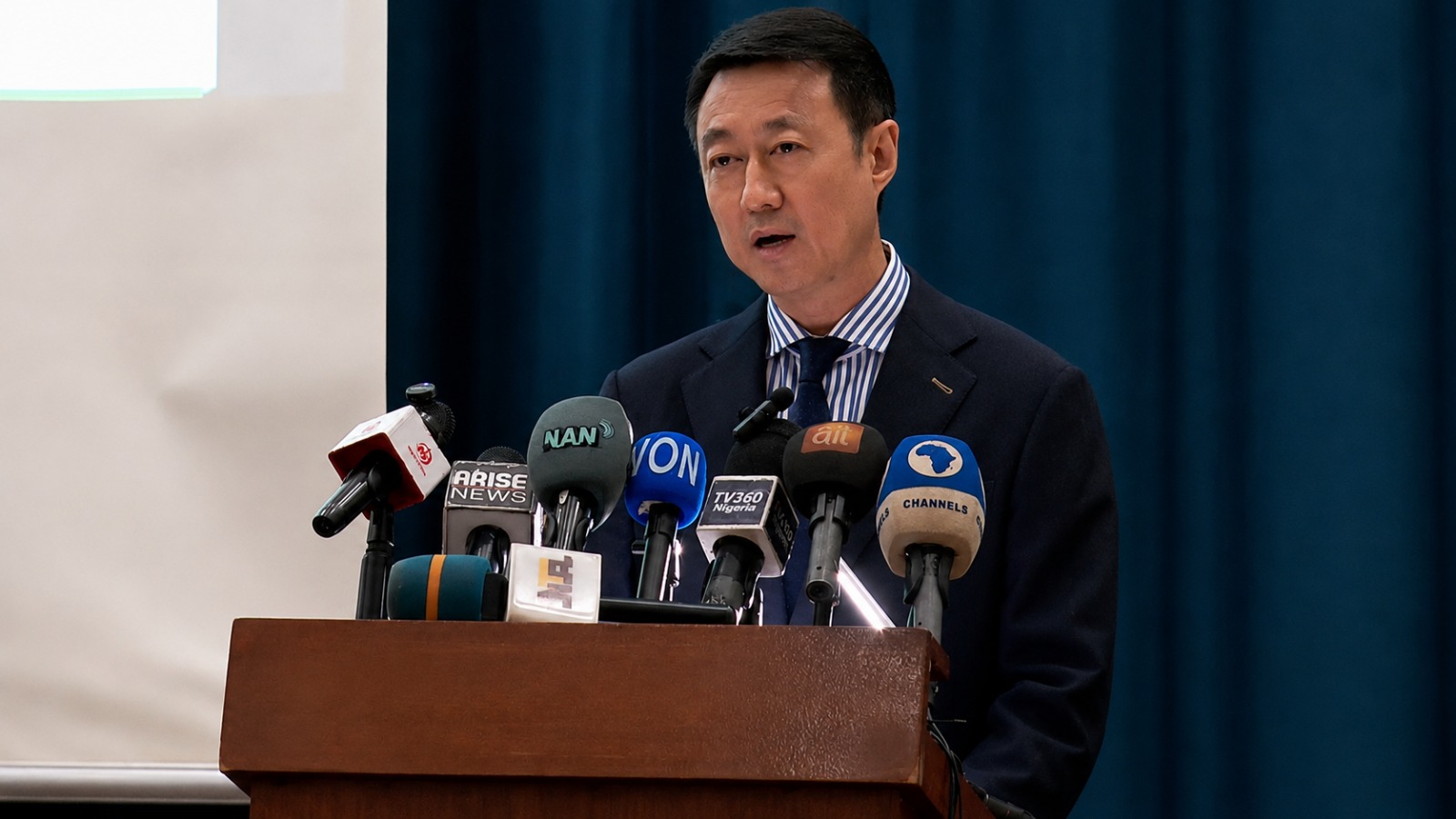
Chinese Ambassador to Nigeria, Yu Dunhai, disclosed the figures yesterday in Abuja at an international seminar organised by the Centre for China Studies.
The seminar, with the theme, “China’s Zero Tariff Treatment for African Countries and its Implications for Structural Economic Transformation in Africa,” examined how Africa could use the new trade arrangement to expand exports, attract investment and build productive capacity.
Dunhai said the zero-tariff policy, which took effect on May 1, was already generating measurable results across the continent.
He said China-Africa trade reached a record $207 billion in the first half of 2026, while Chinese imports from African countries stood at $29 billion between May and June, representing a 24 per cent increase compared with the same period last year.
The ambassador estimated that the policy had contributed to a six per cent rise in overall African exports to China.
“Nigeria’s performance has been especially striking. Total bilateral trade reached $18 billion in the first half of the year, up 35 per cent, while Chinese imports from Nigeria surged 80 per cent to $2.3 billion,” Dunhai said.
Beyond the increase in trade volumes, the envoy said Nigerian exporters were already recording savings from the removal of tariffs.
He explained that every 100 tonnes of Nigerian sesame exported to China now saves about $11,000 in tariff payments, while the country’s annual export of 7,000 tonnes of cattle bone granules saves almost $450,000.
He added that a single shipment of 23,000 tonnes of Nigerian liquefied propane saved about $300,000 in taxes on the first day of the new regime.
The development followed a protocol signed by Nigeria and China on Thursday covering inspection and quarantine requirements for Nigerian wild aquatic products entering the Chinese market.
Dunhai said the agreement would open another avenue for Nigerian exporters to benefit from China’s huge consumer market under the zero-tariff arrangement.
He, however, cautioned against limiting the initiative to increased exports of raw commodities, stressing the need to use expanded market access to drive industrialisation, local processing and value addition.
The ambassador called for stronger cooperation on trade facilitation, investment protection and quarantine standards to create a more predictable environment for businesses and investors.
Nigeria seeks value, not raw commodity exports
The Minister of Foreign Affairs, Ambassador Bianca Odumegwu-Ojukwu, said Nigeria must focus on converting access to the Chinese market into domestic production, industrial capacity and jobs.
The minister, represented by the Permanent Secretary, Ministry of Foreign Affairs, Ambassador Dunoma Ahmed, said the central issue for Nigeria was not merely the volume of exports but the value retained within the country.
“For Nigeria, however, the central question is not simply how much Africa can export to China, but what Africa will produce, how it will produce it, and how much value will be retained within African economies,” she said.
She said the Federal Government was determined to move the economy away from dependence on unprocessed commodity exports by promoting manufacturing, technology transfer, industrial value chains and employment.
According to her, Nigeria’s crude oil resources should support petrochemical and downstream industries, agricultural commodities should supply agro-processing and manufacturing, while solid minerals should form the basis for processing and industrial production.
The minister urged Chinese investors to establish production facilities in Nigeria, source inputs locally, develop Nigerian suppliers and transfer technology and skills.
“Nigeria is open for business, but increasingly, we seek investment that does more than extract. We seek investment that builds,” she said.
Agriculture targets Chinese market
The Minister of State for Agriculture and Food Security, Dr Aliyu Sabi Abdullahi, said the zero-tariff arrangement provided an opportunity to diversify Nigeria’s export base and accelerate agro-industrial development.
He noted that agriculture remained a major source of livelihoods but Nigeria had traditionally exported raw commodities and imported finished products at higher costs.
Abdullahi urged exporters to focus on processed products, including cassava derivatives, shea products, hibiscus, cashew, soybean products, spices, fruits and vegetables that meet international quality requirements.
He warned, however, that duty-free access alone would not guarantee increased exports.
“Zero tariffs alone do not guarantee success. While the removal of tariff creates opportunity, opportunities alone do not create prosperity,” Abdullahi said.
He identified productivity, processing capacity, logistics, storage, financing, quality assurance, traceability and compliance with sanitary and phytosanitary requirements as essential to competing effectively in the Chinese market.
The minister said the Federal Government was expanding agro-processing through the Special Agro-Processing Zones programme, with projects launched or under development in Kaduna, Cross River, Ogun and Gombe states.
He also cited ongoing agricultural mechanisation efforts, including the deployment of 2,000 Belarusian tractors and equipment, as part of efforts to raise productivity and improve economies of scale for smallholder farmers.
Africa must overcome structural constraints
Earlier, the Director of the Centre for China Studies, Charles Onunaiju, said Africa needed to tackle internal constraints if it was to maximise the opportunities created by China’s tariff concessions.
He said the policy should be seen as a starting point rather than an end in itself, arguing that African countries must improve infrastructure, harmonise standards, streamline customs procedures and strengthen productive capacity.
Onunaiju said China’s transition from a major manufacturing base into one of the world’s largest consumer markets offered African countries an opportunity to develop their own industrial capacity.
He urged African countries to leverage their large populations, youthful workforce and natural resources to build competitive manufacturing sectors rather than remain exporters of raw materials.
The seminar attracted policymakers, diplomats, manufacturers, farmers, traders, exporters and representatives of customs, financial, industrial and agricultural institutions to examine ways of translating China’s zero-tariff policy into sustainable economic growth.
📢 Follow National Periscope on WhatsApp
Get breaking news and updates directly on WhatsApp.
Join WhatsApp ChannelPost Disclaimer
All rights reserved. This material and other digital content on this website are not and do not represent the stance of National Periscope but the statements of newsmakers mentioned therein.
For your detailed news reportage... contact the Editor at Joel2oladele@gmail.com







Russia adds Ukraine President, Zelensky to ‘wanted criminals’ list Russia Read more
DICAN to Host Global Summit on Combating Foreign Information Manipulation Read more
FG hands over 50 tonnes of dates from Saudi to Read more
“State-sponsored kidnap” – U.S. group urges Biden to act on Read more