
The National Information Technology Development Agency (NITDA) has recorded about 2.76 million digital literacy training achievements since January 2022, as Nigeria works towards its target of 70 per cent digital literacy by 2027.
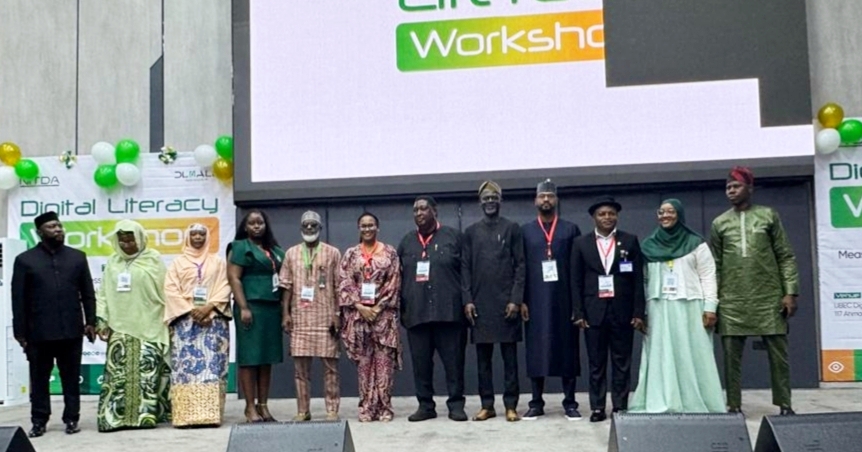
The Director-General of NITDA, Kashifu Inuwa Abdullahi, disclosed this on Tuesday at the 2026 National Digital Literacy Workshop in Abuja, where the agency unveiled a dashboard to track digital skills development across the country.
The platform has attracted reports from 248 organisations, with records covering all 36 states, the Federal Capital Territory and the country’s 774 local government areas.
However, women account for only 32.9 per cent of recorded participation, highlighting the need to widen access to digital skills training.
Nigeria’s National Digital Literacy Framework targets 70 per cent digital literacy by 2027 and 95 per cent by 2030.
Abdullahi said the dashboard would help the government identify skills gaps, coordinate training programmes and direct resources to communities with limited access to digital education.
“We are not simply introducing another technology platform. We are strengthening the foundation for evidence-based human capital development,” he said.
The workshop, themed “Measuring Progress, Strengthening Partnerships, Accelerating Impact,” also featured the launch of national digital literacy instruments, a review of the country’s progress, a demonstration of the Partner Integration API and the inaugural National Digital Literacy Awards.
Abdullahi said government agencies, state governments, technology companies, educational institutions and development partners had launched several digital skills initiatives, but poor coordination sometimes led to duplication.
“One organisation may be implementing an intervention in a community where another has already delivered similar training. Meanwhile, another community may remain completely underserved,” he said.
He urged organisations to register on the dashboard, submit reliable information about their programmes and update their records regularly.
The NITDA chief warned, however, that the number of people trained did not necessarily reflect their level of digital competence.
He said stakeholders must assess whether participants could apply their skills to improve their businesses, perform better at work and solve everyday problems.
The agency’s Digital Literacy for All (DL4ALL) initiative targets Nigerians in formal education, the workforce and the informal sector.
Under the informal-sector programme, which NITDA implements in partnership with the National Youth Service Corps, more than 20,000 trainers and over 803,000 trainees have been recorded.
The wider initiative aims to reach 50 million Nigerians through training and other interventions.
Abdullahi said digital literacy had become essential for improving productivity, expanding business opportunities, accessing public services and protecting citizens against online fraud.
He added that digital competence was increasingly important as artificial intelligence reshaped education, commerce, workplaces and public service delivery.
According to him, the initiative would also support the Federal Government’s ambition to build a $1 trillion economy by 2030 through skills development, innovation, industrialisation and economic diversification.
The Acting Permanent Secretary of the Federal Ministry of Communications, Innovation and Digital Economy, Engr. Adetunji O. Adeyemo, also called for stronger collaboration among government institutions, state governments, educational institutions, private businesses and development partners.
He said the ministry would continue to provide policy direction and improve coordination to ensure digital literacy programmes produced measurable results.
“Our success must ultimately not be measured only by the numbers of people trained, but by the confidence Nigerians acquire and how effectively they apply those skills to improve their lives,” Adeyemo said.
He also called for more reliable data to distinguish attendance at training sessions from demonstrated digital proficiency.
Adeyemo urged stakeholders to prioritise women, persons with disabilities and underserved communities to ensure that more Nigerians benefited from digital skills programmes.
NITDA established the National Digital Literacy Framework in 2023 to provide common standards and competencies for digital skills development. The agency launched DL4ALL in 2024 to expand access to training nationwide.
The framework covers six areas, including device and software operations, information and data literacy, communication and collaboration, digital content creation, digital safety and problem-solving.
It seeks to equip Nigerians across occupations and educational backgrounds with the skills to use digital technology safely and productively.
📢 Follow National Periscope on WhatsApp
Get breaking news and updates directly on WhatsApp.
Join WhatsApp ChannelPost Disclaimer
All rights reserved. This material and other digital content on this website are not and do not represent the stance of National Periscope but the statements of newsmakers mentioned therein.
For your detailed news reportage... contact the Editor at Joel2oladele@gmail.com







The Nigerian Communications Commission (NCC) has turned the spotlight on Read more
Maida urges Nokia to invest in Nigeria’s ICT The Executive Read more
MTN Suspends Xtratime Credit Service to Align with New Lending Read more
NDPC Investigates Remita, Sterling Bank Over Alleged Data Breach JOEL Read more