

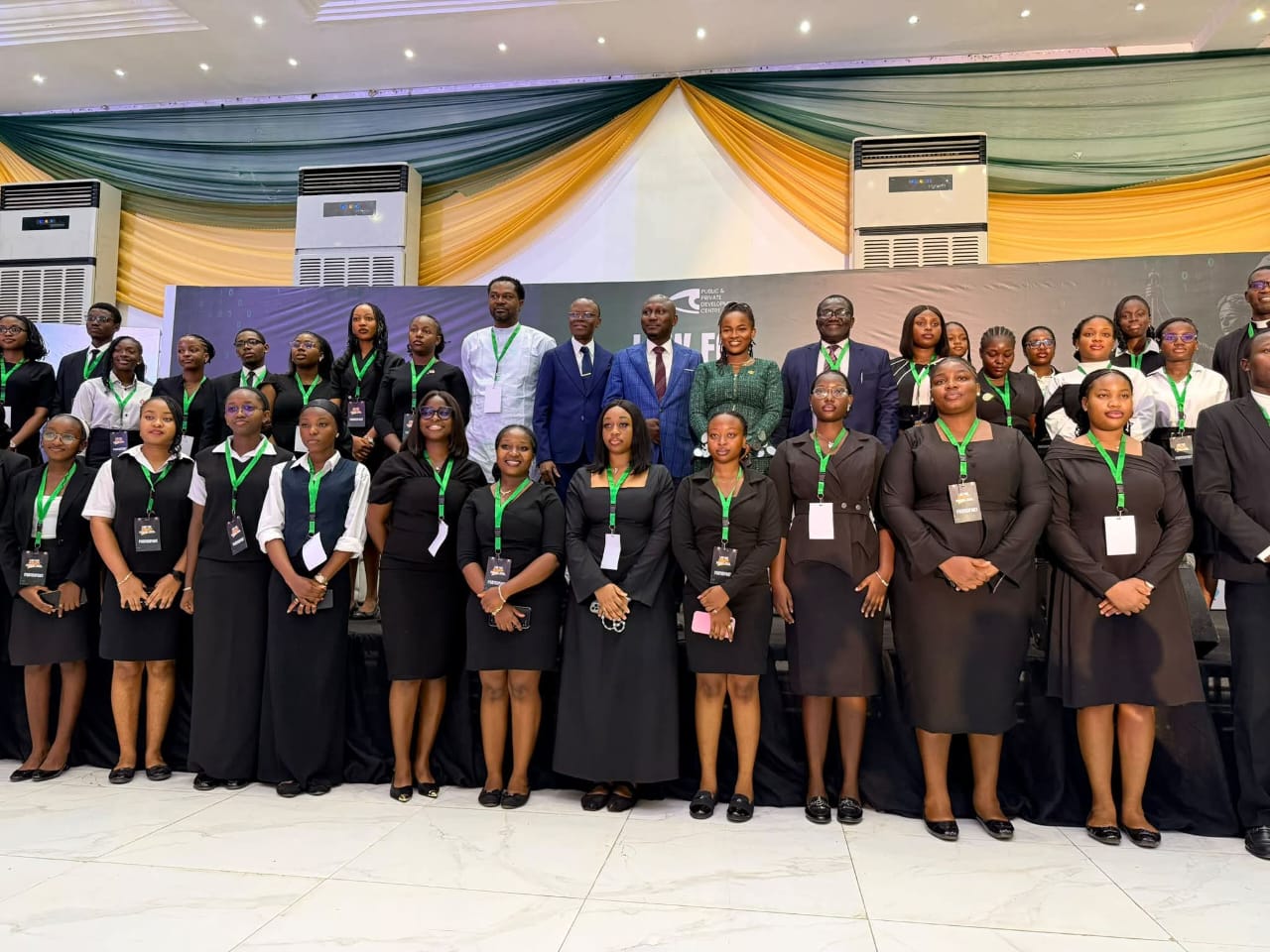
The Public and Private Development Centre (PPDC) has called for urgent reforms to Nigeria’s criminal justice system, warning against the prolonged detention of suspects without sufficient evidence.
The organisation said gaps in the administration of justice continued to threaten fundamental rights, particularly those of poor and vulnerable Nigerians who lack the resources to secure competent legal representation.
Its Executive Director, Lucy James Abagi, made the call at the 2026 Access to Justice Parliament in Abuja on Wednesday.
The event, themed “Balancing Security with Fundamental Rights: Terrorism, Technology and Access to Justice in Nigeria,” brought together government officials, judicial officers, lawyers, civil society organisations and technology experts.
Abagi said the fight against terrorism, kidnapping and other security threats must not undermine citizens’ rights, dignity and freedom.
She described insecurity and access to justice as governance concerns that require strong institutions, accountability and public trust. She added that protecting lives and promoting citizens’ welfare remained the government’s primary responsibility.
According to her, access to justice should extend beyond courtrooms and reflect the everyday realities of Nigerians.
She said citizens should be able to send their children to school without fear of abduction, cultivate their farms without threats of attacks and pursue opportunities without exposure to crime and exploitation.
Abagi also expressed concern over the treatment of detainees, particularly minors who had died in custody. She insisted that detention must never strip anyone of their humanity or fundamental rights.
“The death of detainees, including minors, in custody reminds us that deprivation of liberty must never become a violation of humanity,” she said.
Citing the Global Terrorism Index 2026, Abagi said Nigeria recorded 750 terrorism-related deaths in 2025, representing a 46 per cent increase from the previous year. The country also recorded 101 incidents during the period.
She said the statistics represented families and communities whose lives and livelihoods insecurity had disrupted. She stressed that every casualty mattered, regardless of the overall figures.
The PPDC executive director urged the government to tackle terrorism decisively while ensuring that security agencies operated within the law.
She identified the Terrorism Prevention and Prohibition Act 2022, the Cybercrimes Act 2015, as amended in 2024, and the Administration of Criminal Justice Act (ACJA) 2015 as essential legal safeguards.
Abagi also highlighted the scale of pre-trial detention in Nigeria, disclosing that 51,955 of the country’s 80,008 inmates were awaiting trial as of February 26.
She described the figures as a threat to human dignity and effective justice delivery. She called for better investigations, efficient case management and wider use of non-custodial sentencing.
The PPDC chief also outlined some of the organisation’s interventions to improve justice administration through technology.
She said the organisation had supported the automation of 78 courts across five states and 1,100 criminal case files and exhibits. It had also uploaded more than 1,022 files across nine courts.
In addition, PPDC facilitated the installation of three virtual court facilities, which had participated in more than 118 court sessions.
However, Abagi cautioned that technology alone could not guarantee justice without capable institutions and respect for citizens’ rights.
“The courtroom remains the place where justice may be determined, but society is where justice must first be experienced,” she said.
She urged stakeholders to strengthen accountability in counter-terrorism operations, tackle prolonged pre-trial detention, deploy technology responsibly and improve transparency and support for victims.
In his keynote address, Professor Sampson Ihesiene Erugo called for an immediate amendment of the ACJA 2015 to prevent security agencies from obtaining detention orders against suspects based solely on suspicion.
He specifically faulted the remand provisions that allow security agencies to obtain an initial 14-day detention order, with a possible further 14-day extension.
Erugo warned that the arrangement could expose innocent people to prolonged detention, especially those who lacked the financial means to engage lawyers or challenge their incarceration.
“You can’t have a section that permits the security agencies, by mere application, to have a magistrate grant detention of somebody on mere suspicion for 14 days,” he said.
The professor maintained that the provision required urgent review, arguing that poor Nigerians remained particularly vulnerable to abuses arising from weaknesses in the criminal justice system.
He also raised concerns about suspects facing serious allegations, including terrorism-related offences, who could spend extended periods in custody before authorities properly tested the evidence against them.
Erugo insisted that the presumption of innocence must apply to every suspect, irrespective of the seriousness of the allegations.
He further criticised the unequal access to legal representation, noting that wealthy defendants could afford experienced lawyers while indigent suspects often struggled to defend themselves.
The keynote speaker also urged the judiciary, police and other justice institutions to adopt technology to improve investigations, court administration and transparency.
Similarly, the Chairman of PPDC’s Board, Chibuzor Ekwekwo, said technology could reduce the financial and logistical barriers that prevent many Nigerians from accessing justice.
He noted that litigants and lawyers often incurred significant expenses travelling long distances to attend court proceedings.
Ekwekwo identified the transportation of inmates from custodial centres to courtrooms as another factor contributing to delays in criminal trials.
He said virtual hearings could enable detainees to participate in proceedings without physical transportation, thereby reducing delays and associated costs.
The arrangement, he added, could also minimise security risks involved in moving terrorism suspects between detention facilities and courtrooms.
The speakers called for closer cooperation among government institutions, security agencies, the judiciary and civil society groups to ensure that efforts to protect national security did not come at the expense of fundamental rights and access to justice.
📢 Follow National Periscope on WhatsApp
Get breaking news and updates directly on WhatsApp.
Join WhatsApp ChannelPost Disclaimer
All rights reserved. This material and other digital content on this website are not and do not represent the stance of National Periscope but the statements of newsmakers mentioned therein.
For your detailed news reportage... contact the Editor at Joel2oladele@gmail.com







Ogun Tribunal Judgement: Tolu Bankole congratulates Governor Dapo Abiodun, APC Read more
Families of Kaduna airstrike victims sue FG for N33 Billion Read more
JUST IN: S'Court reserves judgement in Kano governorship appeal The Read more
Alleged treason: FG discontinues trial of Sowore, Bakare The Federal Read more