

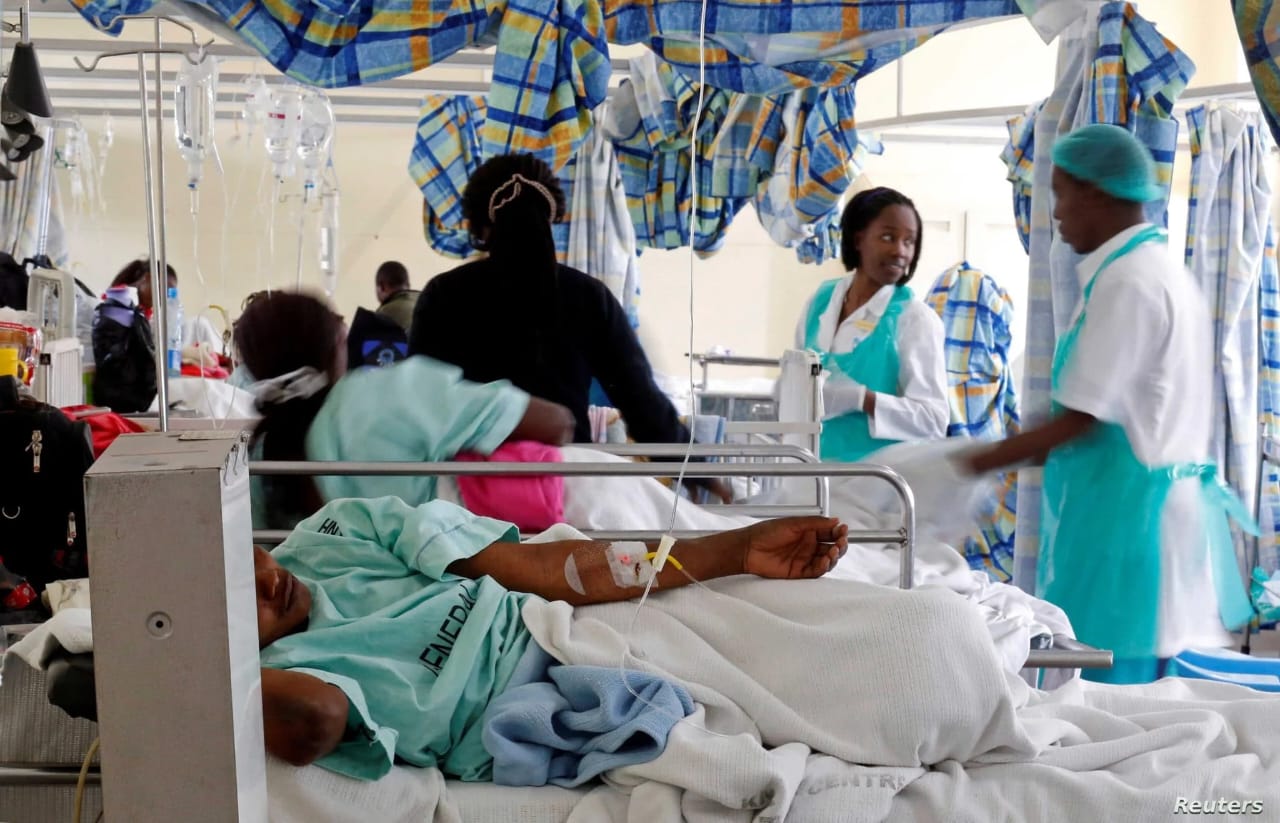
The European Union has allocated €1.5 million in emergency humanitarian assistance to Nigeria to support efforts to contain the country’s cholera outbreak, as health authorities confront a sharp rise in infections.
The funding is part of a €2.3 million package approved for Nigeria, Cameroon, the Central African Republic and Chad to strengthen responses to the disease across West and Central Africa.
The intervention was announced on Monday in a statement signed by the Press and Information Officer of the EU Delegation to Nigeria and ECOWAS, Modestus Chukwulaka.
Nigeria will receive the largest share of the package, with the funds targeted at expanding outbreak response teams, supplying cholera kits and improving water, sanitation and hygiene services in affected communities.
The money will also support the treatment of public water points and household water, strengthen disease surveillance in hard-to-reach areas and improve case management, risk communication and community sensitisation.
The intervention comes against the backdrop of a significant increase in cholera cases in Nigeria. The World Health Organisation (WHO) reported that Nigeria recorded 6,860 cases and 80 deaths between January 1 and May 31, 2026.
The WHO data showed that the situation worsened considerably in May, when Nigeria reported 5,798 new cases and 54 deaths, representing a sharp increase from the preceding month. Borno State was identified as the major driver of the national outbreak, accounting for 5,267 cumulative cases and 49 deaths across 10 local government areas as of May 31. Maiduguri and Jere were the worst-affected areas.
Across the African Region, WHO said 61,888 cholera cases and 1,230 deaths were reported in the first five months of 2026. The agency has cautioned that surveillance gaps and reporting delays mean the actual burden could be higher than the reported figures.
EU Commissioner for Preparedness and Crisis Management, Hadja Lahbib, said the emergency support was aimed at helping humanitarian partners respond quickly and protect communities most exposed to the disease.
“Cholera is preventable and treatable. Yet it still threatens lives when people lack something as basic as safe water and healthcare,” Lahbib said.
She added that the funding was coming at a time when humanitarian needs were rising while resources were becoming increasingly limited.
“Europe is not looking away. This emergency funding will help our partners act quickly, contain the outbreaks and protect the communities most at risk,” she said.
Beyond Nigeria, the EU package includes €500,000 for the Central African Republic, where the funds will be used to scale up case management and vaccination, strengthen water, sanitation and hygiene interventions, improve disease surveillance and support safe and dignified burials.
Cameroon will receive €100,000 to support outbreak containment, case management, additional cholera treatment units, oral rehydration points and essential medicines in badly affected communities.
Chad, meanwhile, will receive €200,000 to improve access to water, sanitation and hygiene facilities while strengthening community-based surveillance and case management.
The WHO has identified inadequate access to safe water, sanitation and healthcare as major factors that allow cholera to spread rapidly, particularly in areas affected by conflict, displacement, flooding and weak infrastructure.
The latest EU intervention adds to other international support for Nigeria’s outbreak response. In May, the EU and WHO launched a separate €4.2 million public health programme aimed at strengthening Nigeria’s capacity to detect and respond to disease outbreaks.
Cholera is an acute diarrhoeal infection caused by Vibrio cholerae bacteria and is commonly transmitted through contaminated food or water. Severe cases can result in rapid dehydration and death if treatment is delayed.
The EU said its latest intervention would therefore place emphasis not only on treating infected people but also on preventing further transmission through safe water, sanitation, hygiene, surveillance and public awareness.
The WHO said the regional outbreak remains a complex public health challenge, with conflict, displacement, climate-related events and inadequate infrastructure contributing to conditions that facilitate transmission.
📢 Follow National Periscope on WhatsApp
Get breaking news and updates directly on WhatsApp.
Join WhatsApp ChannelPost Disclaimer
All rights reserved. This material and other digital content on this website are not and do not represent the stance of National Periscope but the statements of newsmakers mentioned therein.
For your detailed news reportage... contact the Editor at Joel2oladele@gmail.com






Experts X-ray Phytobiotechology as panacea to climate change, food insecurity, Read more
14.3 Million Nigerians Abuse Drugs - NAFDAC Prof. Mojisola Adeyeye, Read more
Lassa fever: NCDC orders healthcare workers to take standard IPC Read more
Governor uncovers 'japa' doctors still on payroll collecting salaries [caption Read more