
The Federal Government has announced plans to deploy about 3,700 telecommunications towers and use satellite technology to extend connectivity to more than 20 million Nigerians living in communities without access to telecommunications services.
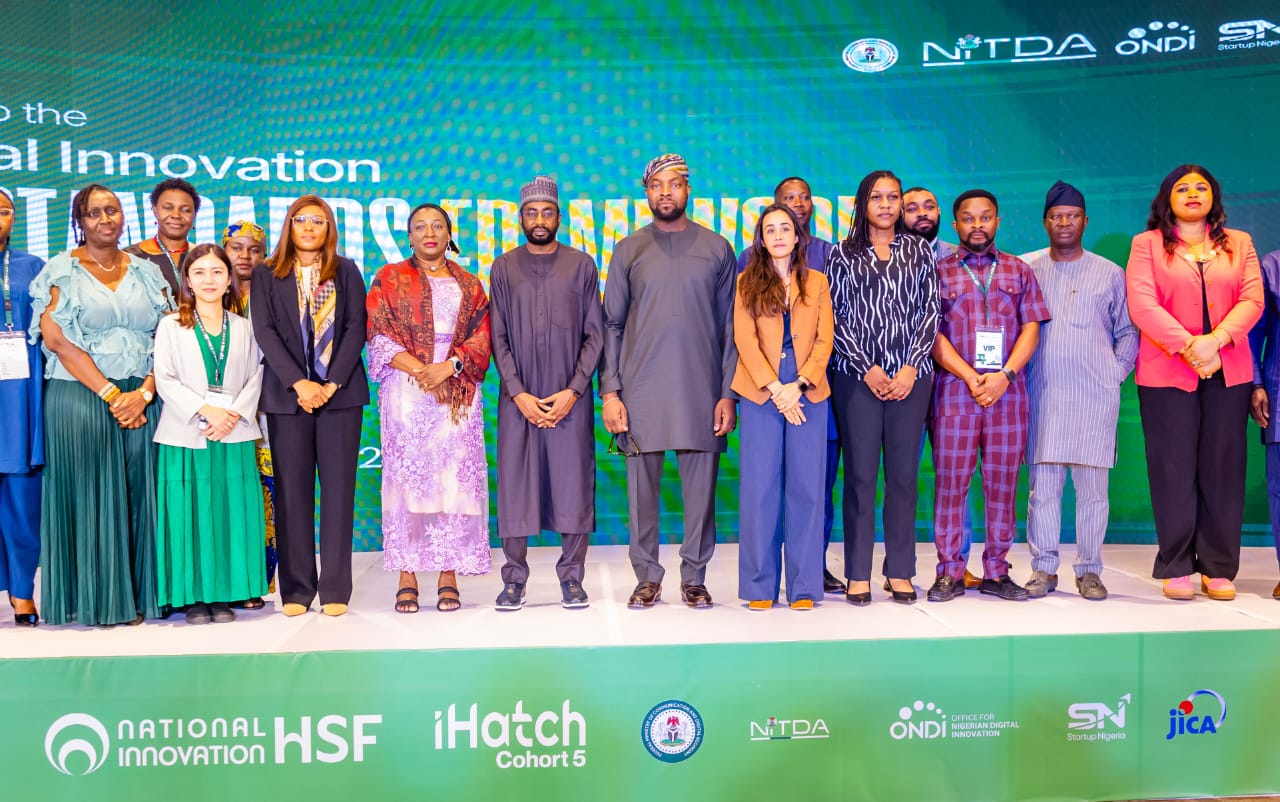
Minister of Communications, Innovation and Digital Economy, Dr Bosun Tijani, disclosed this on Thursday in Abuja at the National Innovation Hub Standards Framework Workshop.
Tijani said the initiative was part of the government’s broader plan to achieve ubiquitous digital infrastructure and ensure that no community was left behind in the country’s digital transformation.
He explained that while the government was investing heavily in fibre-optic infrastructure and telecommunications towers, satellite technology would be deployed to reach areas where conventional infrastructure could not be installed.
“There are some places where we can’t get to at all, so we can’t put towers there. But with satellites, you can reach those locations as well,” he said.
The minister said President Bola Tinubu had directed that everyone living in Nigeria should have access to telecommunications services, stressing that the government was committed to closing the country’s persistent connectivity gap.
He said more than 20 million Nigerians were currently living in communities without access to telecommunications services, making the planned deployment of 3,700 towers critical to the government’s connectivity agenda.
Tijani illustrated the challenge with his recent experience in Koko, in the Niger Delta, where he said he spent several hours without network connectivity during a visit to the community.
He said the experience demonstrated the reality faced daily by millions of Nigerians living in underserved and unserved locations.
The minister also disclosed that the government was investing in 90,000 kilometres of fibre-optic network under Project BRIDGE, which he said would rank among the longest fibre networks in Africa when completed.
According to him, the fibre deployment, tower installations and satellite connectivity are part of efforts to establish the foundational infrastructure required to support Nigeria’s digital economy.
He said the government had identified three layers critical to the use of technology in transforming the economy: foundational digital infrastructure, technology platforms and applications developed by innovators.
“The foundational layer is what we call infrastructure. Any country that has ambition around appropriating digital technology will be thinking around things like, do we have ubiquitous digital infrastructure?” he said.
Tijani listed fibre-optic networks, satellites, data centres and digital talent as some of the critical components of the foundation.
He said the second layer included digital systems such as data exchange, interbank settlement and digital identity, while the third comprised innovators and businesses developing applications and solutions for society.
The minister said the government was strengthening the first two layers to create an environment where technology companies could develop solutions capable of transforming agriculture, education, healthcare and other sectors.
He cited Nigeria’s interbank settlement system and digital identity infrastructure as examples of government-supported systems that had helped the financial technology sector to thrive.
Tijani said the growth of Nigeria’s fintech sector demonstrated what could happen when government provided the necessary infrastructure and regulatory frameworks for innovators.
The minister also disclosed that the government had established a standing committee to address the destruction of fibre-optic cables during construction activities.
He said digital infrastructure had been designated as critical national infrastructure, requiring greater protection and coordinated action by relevant government agencies.
According to him, officials of the Ministry of Communications, Innovation and Digital Economy, Ministry of Works and the Nigerian Communications Commission are working together to track incidents of fibre damage and develop measures to prevent their recurrence.
He said the initiative would also involve training law enforcement agencies, with support from the Office of the National Security Adviser.
“This is a very coordinated piece of work that Nigeria is now doing,” Tijani said.
He added that Project BRIDGE had a team that would study the experiences of countries such as Egypt and South Africa, which have developed extensive fibre networks, to identify best practices for Nigeria.
Tijani said protecting existing infrastructure was as important as deploying new ones, stressing that the government must invest in maintenance and security alongside expansion.
The minister said the connectivity drive was also aimed at creating an environment in which innovation could flourish across the country.
He described technology hubs and co-working spaces as critical parts of the digital ecosystem, noting that they provide spaces where entrepreneurs, innovators and other stakeholders can collaborate and develop solutions.
He said the government was therefore supporting the development of standards for innovation hubs to improve their capacity and ensure that they could support startups beyond Lagos and Abuja.
Director-General of the National Information Technology Development Agency, Kashifu Inuwa Abdullahi, said the National Innovation Hub Standards Framework was designed to distribute innovation more evenly across the country.
Abdullahi said more than 339 innovation hubs had been identified across the 36 states and the Federal Capital Territory, but noted that most were concentrated in Lagos, Abuja and a few other states.
He said the proposed framework would provide a pathway for hubs to assess their strengths, identify gaps and improve their operations.
According to him, the framework contains seven dimensions and about 35 categories through which hubs can assess themselves and determine their level of maturity.
“We are not saying we should build Yaba Tech everywhere. Every state is unique. We can look at the problems around each state and the strengths of each state to build on that,” he said.
Abdullahi said the framework was not intended to be prescriptive but to provide guidance for hubs to develop according to their local circumstances.
He said the government was also working with the Ministry of Education to integrate digital skills into formal education, while encouraging greater collaboration between universities and industry.
National Coordinator, Office for Nigerian Digital Innovation, Victoria Fabumi, said the framework would strengthen the support system required for startups to grow.
She described startups as the “babies” of the innovation ecosystem and hubs as the “mothers” responsible for nurturing them.
Fabumi said the framework would help spread innovation beyond major urban centres and create opportunities for young people in states including Zamfara, Yobe, Osun and Jigawa.
The European Union Delegation to Nigeria and ECOWAS also endorsed the initiative, with its representative, Tolba Ikram, describing innovation hubs as the “connective tissue” of the digital economy.
Ikram said Nigeria had one of Africa’s largest innovation ecosystems, with 339 hubs across the 36 states and the FCT.
He said a common standard was necessary to ensure that the ecosystem remained sustainable as it expanded.
Ikram disclosed that the EU was supporting Nigeria’s digital ecosystem under its broader Global Gateway strategy, with more than €820 million committed for the 2021–2027 period.
Tijani said the combined investment in digital infrastructure and the innovation ecosystem would help the government achieve its ambition of building a $1 trillion economy.
He said technology-driven businesses would create jobs, generate tax revenue and reduce Nigeria’s dependence on oil and gas as the main driver of economic growth.
“The bigger our economy gets, the more jobs we create, the more taxes we are able to capture, the more money we have available to deliver roads and services to our people,” he said.
📢 Follow National Periscope on WhatsApp
Get breaking news and updates directly on WhatsApp.
Join WhatsApp ChannelPost Disclaimer
All rights reserved. This material and other digital content on this website are not and do not represent the stance of National Periscope but the statements of newsmakers mentioned therein.
For your detailed news reportage... contact the Editor at Joel2oladele@gmail.com





Religious Leaders Calls For Ethical Use of AI in Nigeria Read more
NCC Plans Free Internet Access for Educational Websites The Nigerian Read more
[caption id="attachment_23655" align="alignnone" width="300"] (L-R) Prof. Olalekan Yinusa, Executive Director, Read more
TIkTok ban: US declares virtual war on China, and 175 Read more