

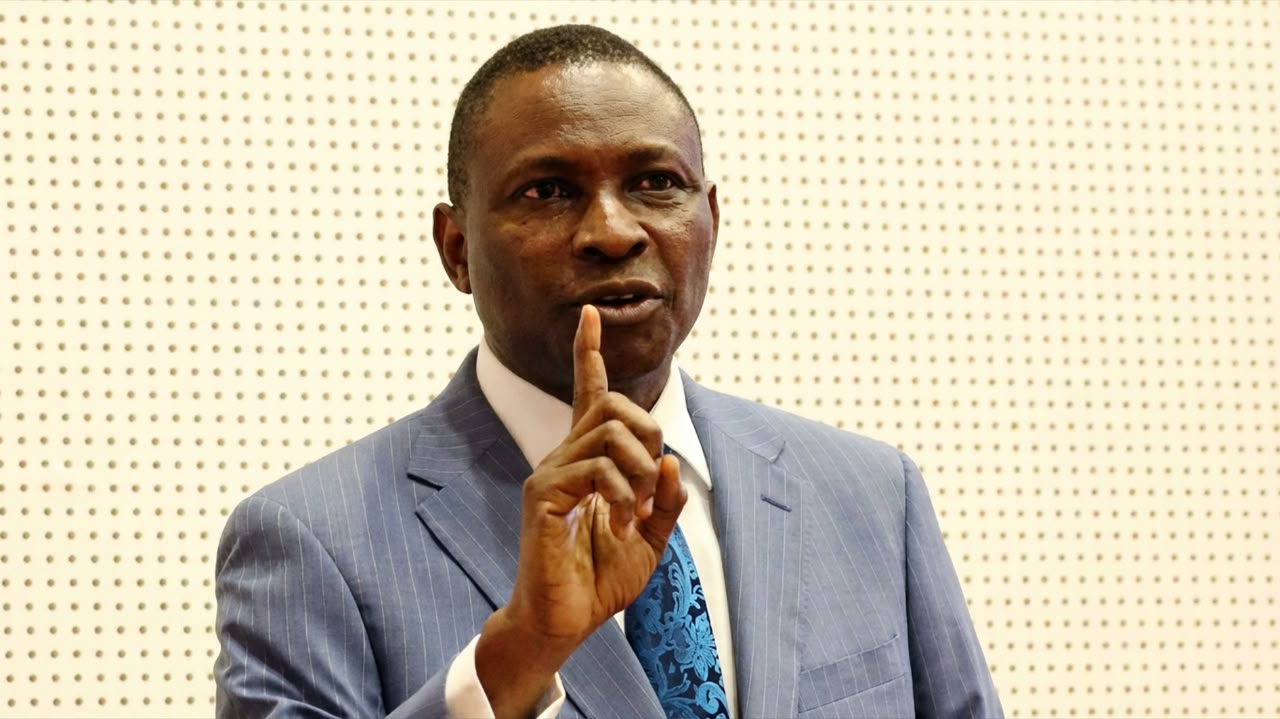
The Chairman of the Economic and Financial Crimes Commission(EFCC), Ola Olukoyede, has raised concerns over corruption among some religious leaders.
He also questioned the continued use of titles such as Pastor, Imam, Reverend and Bishop for people facing financial crime allegations.
Olukoyede spoke in Abuja at a meeting of the Nigeria Inter-Religious Council(NIREC), where the EFCC launched an interfaith anti-corruption manual.
He said EFCC case files contain numerous suspects identified with religious titles. Some of those cases, he added, have ended in convictions and imprisonment.
“I have advocated for review of the title we give to men of God. Maybe if it is possible for us to remove that title, pastor and imam,” Olukoyede said.
The EFCC chairman said religious institutions carry a major responsibility in Nigeria’s fight against corruption.
He urged churches and mosques to examine the sources of donations and wealth brought before them.
According to him, religious expansion should not provide cover for unexplained wealth or proceeds of crime.
Olukoyede cited a situation involving a public servant who allegedly built a multimillion-naira mosque beyond what his known income could support.
“If a public servant says he has built a mosque that is worth more than his earnings in the next 500 years, and you go there to dedicate it, you are dedicating the proceeds of crime,” he said.
He also warned religious leaders against accepting huge donations without asking questions about their sources.
“If he says he is giving you N550 million and you don’t ask questions, and you say, ‘God bless you,’ you are blessing the proceeds of crime,” he said.
The EFCC boss recalled an encounter with a suspect who introduced himself with several religious titles during a visit to his office.
Olukoyede said he stopped the suspect from using the titles and asked directly whether he had misappropriated public funds.
He added that the suspect later faced five charges.
The EFCC chairman stressed that the commission would pursue financial crimes regardless of the religious identity of those involved.
“If you think you’re a Christian or you’re a pastor here and you commit financial crime, I will be your enemy. I won’t be your friend,” he declared.
Olukoyede also recalled an investigation into the Christian Pilgrims Board and Muslim Pilgrims Board during his earlier service at the EFCC.
He said investigators uncovered serious financial irregularities involving funds released by the government to sponsor pilgrims.
According to him, about 75 per cent of the funds had allegedly been diverted by officials of the organisations.
He said some officials also registered private companies in countries where pilgrimages took place, creating conflicts of interest.
“The message should begin with us as leaders before we even go down to our followers. If as leaders we do the right thing, the followers will emulate us,” he said.
The EFCC chairman urged religious organisations to keep their institutional funds separate from the personal finances and businesses of their leaders.
He specifically mentioned offerings, zakat and other funds belonging to religious bodies.
Olukoyede said those resources should remain in institutional accounts rather than move into private businesses.
He argued that the anti-corruption campaign must go beyond arrests and prosecutions.
“The EFCC can investigate a person’s conduct. Faith communities can influence that person’s character,” he said.
He also called for a change in how society treats unexplained wealth, particularly within religious communities.
“Integrity is not foolishness. Honest labour is not failure,” Olukoyede said.
The EFCC chairman disclosed that the commission had dismissed more than 40 employees over corruption findings and other serious misconduct.
He said an agency fighting corruption must also maintain high standards of integrity within its own ranks.
Olukoyede further highlighted the commission’s fraud-risk assessment and control initiative.
He said the EFCC now places greater emphasis on preventing the theft of public funds before it occurs.
According to him, the commission monitors government fund releases, their application and the execution of projects.
He maintained that corruption should not receive religious, ethnic or political protection.
“Financial crimes have no religion. Corruption has no tribe. Fraud does not become Christian or Muslim because of the identity of the person accused of committing it,” he said.
Olukoyede urged pastors, imams and other religious leaders to use the new manual to educate their followers on the legal and moral consequences of corruption.
He said Nigeria’s religious diversity should strengthen the country’s commitment to justice, ethical conduct and good governance.
The EFCC chairman also challenged churches and mosques to question the culture of celebrating wealth without examining its source.
“We must ask difficult questions. What message do we send when unexplained wealth commands more respect than integrity?” he asked.
Sultan backs EFCC position
The Sultan of Sokoto and Co-Chairman of NIREC, Muhammadu Sa’ad Abubakar III, also called for a united religious response to corruption.
The Sultan said no cleric, religious leader or influential Nigerian should enjoy protection from the law when found culpable.
He urged religious leaders to support the anti-corruption campaign because, according to him, God condemns corruption.
Abubakar also warned against using proceeds of corruption to fund religious activities or sponsor pilgrims.
“You cannot steal money and then send people to Jerusalem and Mecca with corrupt money, and then you think God will accept your deeds. No,” he said.
The Sultan urged anti-graft agencies to pursue suspects regardless of their religious status, relationships or influence.
“Whoever is involved, even our brothers, our sisters, our fathers, our friends, those involved, should face the law,” he said.
He also warned religious leaders against intervening in legitimate legal proceedings involving their colleagues or followers.
“If he is facing the law, don’t tell me he is the pastor of so-and-so church, he is the chief monk of so-and-so national mosque. We don’t want to hear that,” Abubakar said.
The Sultan further called for stronger understanding between Christians and Muslims.
He described NIREC as an important platform for dialogue and national cohesion, urging Nigerians to move beyond merely tolerating one another.
“Understanding is more important than toleration,” he said.
Abubakar also urged religious leaders to pray for Nigeria’s political leaders regardless of their political differences.
He cautioned clerics against using their pulpits to promote or denigrate political candidates.
Instead, he urged religious communities to encourage peaceful participation and pray for leaders to govern effectively.
The Sultan said continued Christian-Muslim dialogue remains important to Nigeria’s stability and development.
📢 Follow National Periscope on WhatsApp
Get breaking news and updates directly on WhatsApp.
Join WhatsApp ChannelPost Disclaimer
All rights reserved. This material and other digital content on this website are not and do not represent the stance of National Periscope but the statements of newsmakers mentioned therein.
For your detailed news reportage... contact the Editor at Joel2oladele@gmail.com



Binance accuses Nigerian officials of demanding $150m bribe Global cryptocurrency Read more
Emefiele printed N684.5m with N18.9bn, says EFCC in fresh charges Read more
Transparent Governance Key to Nigeria’s Growth, ICPC Declares JOEL OLADELE, Read more
JOEL OLADELE, Abuja The Independent Corrupt Practices and Other Related Read more