
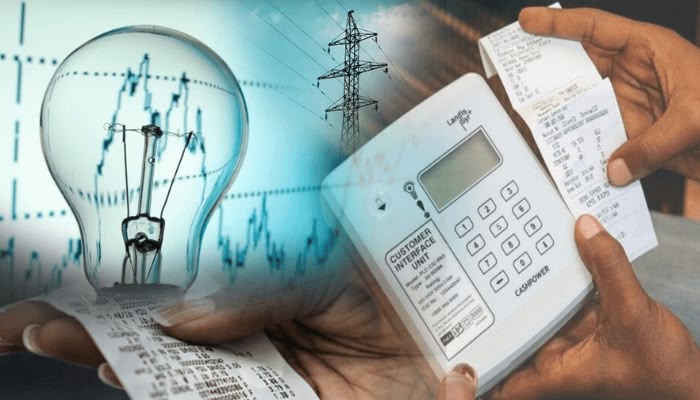
The Federal Government incurred N679.58 billion in electricity subsidy obligations in the first half of 2026, representing a 35.27 per cent decline from the N1.05 trillion recorded in the corresponding period of 2025.
The Nigerian Electricity Regulatory Commission (NERC) disclosed this in its second quarter (Q2) 2026 report, which showed that the government’s subsidy obligation continued to fall between the first and second quarters.
According to the report, the government incurred N321.26 billion in subsidy obligations in Q2, compared with N358.32 billion in the first quarter (Q1).
NERC attributed the quarter-on-quarter decline largely to a reduction in electricity offtake by Distribution Companies (DisCos).
The commission said energy offtake by the DisCos fell by 3.40 per cent between Q1 and Q2, contributing to the lower subsidy obligation during the period.
“It is important to note that due to the absence of cost reflective tariffs across all DisCos, the Government incurred a subsidy obligation of N321.26 billion; this represents a N37.06 billion (-10.34%) reduction in FGN subsidy compared to 2026/Q1 (N358.32 billion),” NERC said.
The commission said the Q2 subsidy accounted for 49.60 per cent of the total invoices issued by electricity generation companies (GenCos). In Q1, the figure stood at 51.95 per cent.
The report also showed that the Nigerian Bulk Electricity Trading (NBET) invoice to the DisCos fell from N331.40 billion in Q1 to N326.46 billion in Q2 after adjustments under the applicable DisCos’ remittance obligation framework.
The DisCos remitted N306.62 billion against the Q2 invoice, representing a 93.92 per cent remittance performance.
NERC said the figure marked a slight decline from the 94.29 per cent performance recorded in Q1, when the DisCos remitted N312.48 billion against an invoice of N331.40 billion.
Despite the overall decline in remittance performance, seven DisCos achieved full remittance to NBET during the second quarter.
They were Benin, Eko, Enugu, Ibadan, Ikeja, Port Harcourt and Yola DisCos.
However, Kano, Jos and Kaduna DisCos recorded remittance rates below 70 per cent during the quarter.
Kano posted 66.51 per cent, while Jos and Kaduna recorded 62.39 per cent and 50.10 per cent respectively.
NERC’s quarter-on-quarter assessment showed mixed movements among the DisCos.
Yola recorded the largest improvement at 16.45 percentage points, followed by Ibadan at 6.38 percentage points, Kaduna at 5.52 percentage points and Enugu at 0.68 percentage points.
On the other hand, Kano recorded an 18.66 percentage point decline, while Jos fell by 4.71 percentage points. Abuja also recorded a marginal decline of 1.02 percentage points.
The commission also reviewed payments made by DisCos to the Market Operator (MO) for energy transmission and administrative services.
NERC said the Market Operator issued cumulative invoices of N83.92 billion to the DisCos during Q2, against which the companies remitted N78.82 billion.
The payment represented a 93.92 per cent remittance performance, an improvement from the 93.28 per cent recorded in Q1.
In the first quarter, the DisCos remitted N83.74 billion against an invoice of N89.78 billion issued by the Market Operator.
According to the commission, most of the DisCos achieved full remittance to the Market Operator in Q2.
Abuja, Yola and Ibadan recorded 99.93 per cent, 99.34 per cent and 98.73 per cent respectively.
Kano posted 69.72 per cent, while Jos and Kaduna recorded 67.09 per cent and 57.86 per cent respectively.
The figures also showed weaker performance by Kano and Jos compared with Q1.
Kano’s remittance performance to the Market Operator fell by 14.97 percentage points, while Jos recorded a decline of 5.32 percentage points.
The latest figures come amid ongoing efforts to improve the financial sustainability of Nigeria’s electricity market, where the gap between the cost of supplying electricity and the revenue recovered from consumers continues to influence government subsidy obligations.
The Q2 report indicates that although the subsidy burden remains substantial, the government’s obligation in the first half of 2026 was significantly lower than the level recorded during the same period last year.
📢 Follow National Periscope on WhatsApp
Get breaking news and updates directly on WhatsApp.
Join WhatsApp ChannelPost Disclaimer
All rights reserved. This material and other digital content on this website are not and do not represent the stance of National Periscope but the statements of newsmakers mentioned therein.
For your detailed news reportage... contact the Editor at Joel2oladele@gmail.com






ECOWAS, Ecobank Invest in Alternative Energy Solutions Empowerment The Economic Read more
[caption id="attachment_24439" align="alignnone" width="1280"] Minister of Power, Joseph Olasunkanmi Tegbe, Read more
Petrol prices: Nigeria ranks among cheapest as new report unveils Read more
Massive protests by Bayelsa Community over ocean surge, threatens oil Read more