

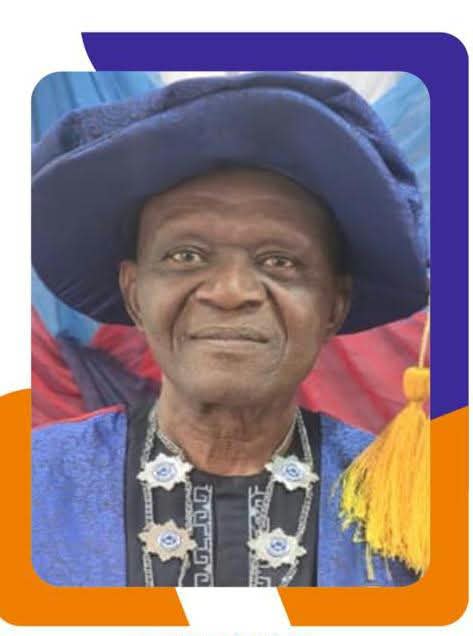
The Federal Government has designated the Nigerian Academy of Education (NAE) as the country’s apex institution for digital literacy and the development of human capital for a future-ready economy.
The designation gives the Academy a central role in shaping education policies and developing the digital skills framework needed to prepare Nigerians for emerging technologies and changing workplace demands.
President of the Academy, Emeritus Professor Olugbemiro Jegede, announced the development at the opening of the NAE 2026 Annual Congress in Abuja. The event attracted the Minister of Education, lawmakers, heads of educational agencies and other stakeholders.
Under its new mandate, the Academy will help drive the integration of Artificial Intelligence (AI), emerging technologies and innovative teaching methods into Nigeria’s education system.
Jegede said the country could no longer rely on gradual reforms to address the growing challenges facing its education sector. He argued that technological advancement and changing economic realities required fundamental changes to existing educational structures.
“Nigeria stands at a volatile crossroads where obsolete educational paradigms collide with an unforgiving 21st-century reality. The era of comfortable, incremental reforms is over,” he said.
The NAE president said the Academy would move beyond routine policy advice and take a more active role in addressing longstanding weaknesses in the education system.
He called on the Federal Government to urgently review the National Policy on Education, noting that its provisions require significant updates to reflect contemporary realities.
Jegede also urged the government to enforce existing laws and regulations guiding the composition of governing boards of educational institutions and parastatals.
On teacher development, he advocated a fundamental restructuring of teacher education and professional training. He said the country must also overhaul classroom teaching methods to improve learning outcomes.
The Academy president further called for policies that would guarantee equitable access to digital technologies in schools, regardless of their geographical locations.
He stressed that achieving meaningful reform would require stronger collaboration among the Federal Ministry of Education, state ministries, the legislature and other relevant institutions.
Jegede also challenged newly inducted members and Fellows of the Academy to translate their academic experience into practical solutions to the country’s educational challenges.
“The Academy has no room for sedentary scholars or armchair theoreticians. Nigeria requires your raw intellect and your immediate, unyielding involvement to reshape our pedagogical destiny,” he said.
He urged members to contribute their expertise towards improving digital competencies, promoting emerging technologies and building an education system capable of producing a globally competitive workforce.
Meanwhile, the 2026 Annual Congress featured the investiture of four distinguished academics as Fellows of the Academy.
One of the recipients was the Academy’s First Vice-President, Professor Josiah Olusegun Ajiboye, who received the honour in recognition of his academic contributions and standing in the education sector.
The congress also honoured deceased members and relatives of Fellows, particularly the late Professor David Adamu Baikie, a founding member of the Academy.
Others remembered included the late Mrs Lassa and Mr Omotayo Olarinoye.
The Academy’s leadership reaffirmed its commitment to sustaining the contributions of its departed members through academic excellence and continued efforts to advance education in Nigeria.
Jegede said the success of the Academy’s new national responsibility would depend on its ability to move beyond policy recommendations and contribute directly to improving education delivery.
He added that developing the human capital required to drive Nigeria’s future economy must remain central to the country’s education reforms.
📢 Follow National Periscope on WhatsApp
Get breaking news and updates directly on WhatsApp.
Join WhatsApp ChannelPost Disclaimer
All rights reserved. This material and other digital content on this website are not and do not represent the stance of National Periscope but the statements of newsmakers mentioned therein.
For your detailed news reportage... contact the Editor at Joel2oladele@gmail.com






 as the country's apex institution for digital literacy.)
UTME: Police, JAMB uncover fake websites; issue warning to candidates Read more
Medical tourism, school bills cost Nigeria $1.58bn in six months Read more
Covenant, UI, FUTA secures top ranking universities in Nigeria. Covenant Read more
The Director-General of the National Youth Service Corps (NYSC), Brigadier Read more