

The Federal Government has intensified efforts to reform Nigeria’s education sector, with fresh investments in student financing, teacher development, technical skills, digital learning and infrastructure.
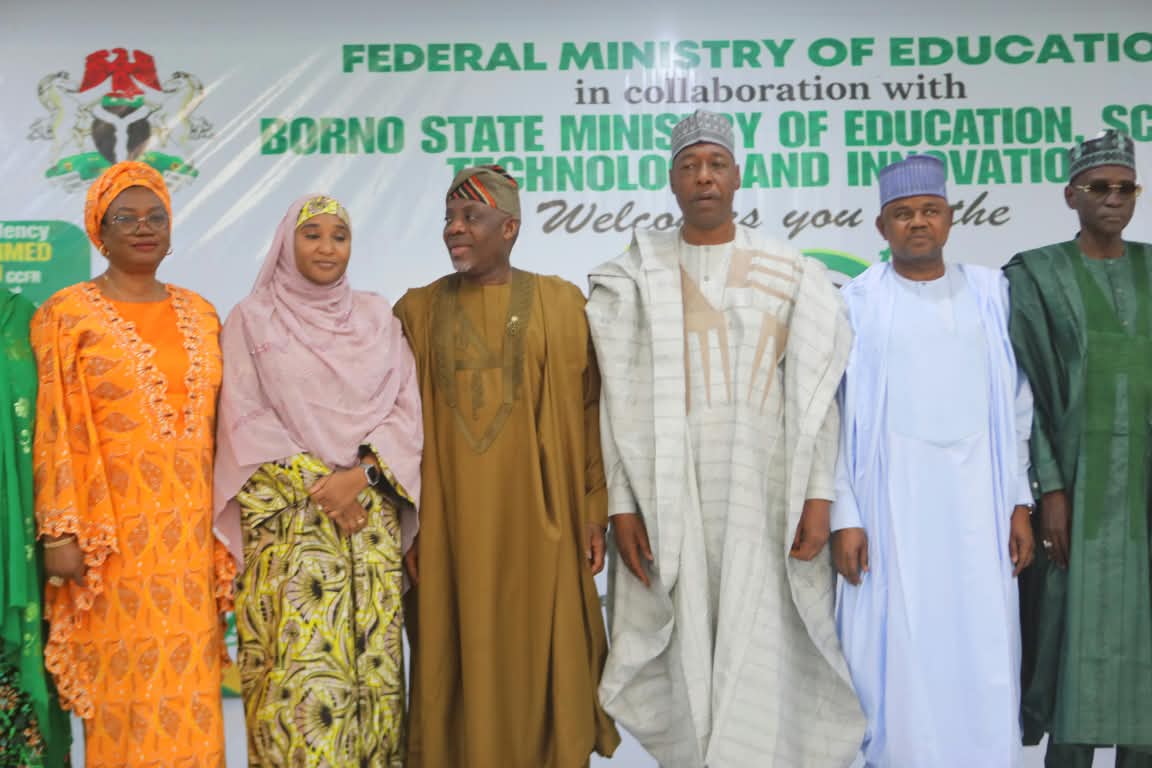
The Minister of Education, Dr. Maruf Tunji Alausa, disclosed this at the ministerial session of the 70th National Council on Education (NCE) meeting in Maiduguri, Borno State.
He said the reforms align with President Bola Ahmed Tinubu’s Renewed Hope Agenda and seek to improve access to quality education while preparing young Nigerians for changing economic demands.
Alausa highlighted several interventions across basic, secondary and tertiary education. These include the $532 million HOPE for Basic Education programme and the expansion of the Adolescent Girls’ Learning and Empowerment Project from 18 to 21 states.
He also identified ongoing efforts to provide alternative learning opportunities for displaced children and other disadvantaged groups.
On student financing, the minister disclosed that the Nigerian Education Loan Fund (NELFUND) had processed about 2.65 million applications and disbursed approximately ₦379 billion.
Similarly, the Federal Government’s Technical and Vocational Education and Training (TVET) programme has attracted more than 2.8 million applications, reflecting growing interest in skills acquisition and vocational education.
The minister further announced major funding commitments to improve tertiary education infrastructure. These include ₦55 billion for medical education infrastructure and ₦150 billion for the revitalisation of tertiary institutions.
Government has also committed ₦32 billion to needs-assessment projects in public colleges of education. In addition, it released ₦39 billion to 166 public tertiary institutions under the Needs Assessment programme.
On teacher development, Alausa said more than 80,000 teachers were undergoing certification and licensing through the Teachers Registration Council of Nigeria (TRCN).
He disclosed that the government aims to achieve 75 per cent teacher certification by the end of 2027. It also plans to certify all senior secondary school teachers by 2028.
The minister said improving education requires more than building classrooms. He stressed the importance of teacher welfare, professional development, accountability and effective learning systems.
Digital education also featured prominently in the government’s reform agenda. Alausa revealed that 34 solar mini-grids now serve tertiary institutions, while plans are underway to extend independent solar power to all federal tertiary institutions by 2028.
He added that the government had committed more than ₦11 billion to digital skills development and introduced zero-rated access to approved educational platforms.
Furthermore, over 40,000 geo-located schools have entered digital education management systems. The initiative will strengthen school monitoring, improve planning and support security measures.
Alausa urged education stakeholders to turn the Council’s discussions into practical policies that would deliver measurable improvements across the country.
He also praised Borno State for increasing school enrolment from approximately 770,000 learners in 2018 to about 1.8 million.
The minister attributed the growth to purposeful leadership, investment in school facilities and improved security. He commended Governor Babagana Umara Zulum and the people of the state for their commitment to education.
He also praised the public schools he visited in Borno, noting that some facilities could compete favourably with those of private schools.
In his remarks, Governor Zulum welcomed the Federal Government’s education reforms, particularly its efforts to improve access, strengthen teacher motivation and address the gap between graduates’ skills and labour-market demands.
He said closer collaboration between educational institutions and industries would help graduates acquire relevant skills and improve their employment prospects.
According to him, technical and vocational education offers an important pathway to tackling unemployment by equipping young people with practical skills.
The governor also commended NELFUND for expanding access to higher education, assuring that his administration would continue to invest in schools, technical institutions and teacher welfare.
Zulum disclosed that his government was establishing 27 high-skilled colleges across the state. He said 15 of the institutions had been completed, while work on the remaining facilities should finish before the end of the year.
He explained that the colleges would promote practical skills and provide pathways for learners in non-formal education to progress into the formal system.
Their programmes will cover literacy, numeracy, digital learning and other relevant areas of skills development.
The governor stressed that sustained teacher recruitment, improved welfare and stable leadership remain essential to achieving meaningful progress in the education sector.
Also speaking, the Minister of State for Education, Prof. Suwaiba Said Ahmad, thanked the Borno State Government for hosting the national meeting.
She commended Zulum’s investment in modern school facilities, particularly in communities affected by insurgency and other forms of conflict.
According to her, rebuilding educational infrastructure in such communities helps restore hope, dignity and opportunities for children whose schooling suffered disruptions.
She also acknowledged the contributions of education administrators, heads of agencies, vice-chancellors, provosts, rectors, development partners and civil society organisations.
Earlier, the Borno State Commissioner for Education, Science, Technology and Innovation, Engr. Lawan Abba Wakilbe, welcomed delegates to the meeting.
He described the gathering as an important moment in the state’s education history, noting that Borno previously hosted the National Council on Education in 1971 and 1985.
Wakilbe expressed optimism that the meeting’s theme, “Infrastructure Development and Teacher Motivation for Improved Learning Outcomes,” would produce practical recommendations for strengthening education delivery nationwide.
He said the state government had intensified investments in school infrastructure, teacher recruitment and professional development.
The commissioner disclosed that Borno currently has more than 1.8 million learners, 5,792 usable classrooms and 129 functional senior secondary schools, compared with just 34 in 2019.
The 70th National Council on Education meeting brings together federal and state education ministers, commissioners, permanent secretaries, heads of education agencies and other stakeholders.
The participants are expected to examine policies and strategies that will improve infrastructure, teacher motivation, access to education and learning outcomes across Nigeria.
📢 Follow National Periscope on WhatsApp
Get breaking news and updates directly on WhatsApp.
Join WhatsApp ChannelPost Disclaimer
All rights reserved. This material and other digital content on this website are not and do not represent the stance of National Periscope but the statements of newsmakers mentioned therein.
For your detailed news reportage... contact the Editor at Joel2oladele@gmail.com





FUTA Alumnus Pens Emotional Appreciation to Dean Who Helped Him Read more
Teenage student stabs Ondo female civil servant to death A Read more
21-year-old undergraduate commits suicide over failed relationship It all unfolded Read more
The National Examinations Council (NECO) has alerted the public to Read more