

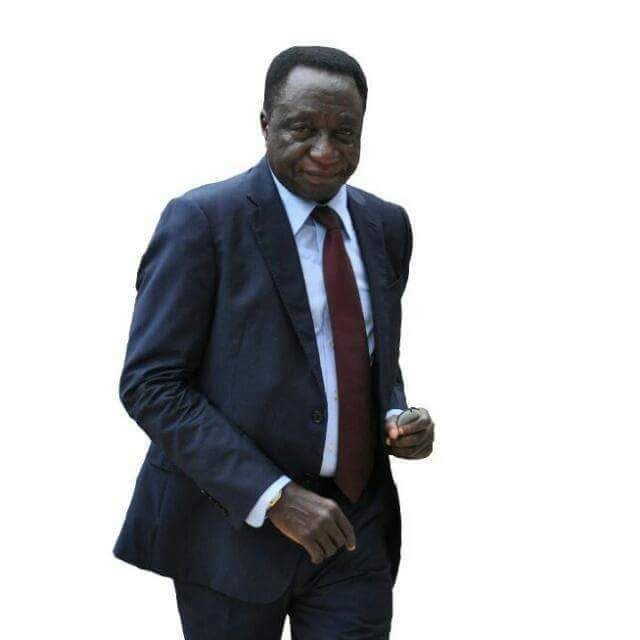
Institutions are the shadows of the individuals who build them. When the National Examinations Council (NECO) recently gathered to celebrate its Silver Jubilee; marking 25 years of educational assessment excellence in Nigeria, it did more than just recount data and numbers. By processing over 35 million candidates since its inception in 1999, NECO proved that local capacity, when properly structured, can match global standards.
However, the emotional high point of that historic milestone was the presentation of the Lifetime Achievement Award to its pioneer Registrar, Emeritus Professor Adedibu Ojerinde, OON.
For close observers of Nigeria’s educational history, this national recognition was a long-overdue tribute to a visionary architect whose sheer ingenuity reshaped the landscape of psychometrics in Africa. Long before he bestrode national public institutions, Professor Ojerinde built the rock-solid bedrock of his stellar academic career at the prestigious Obafemi Awolowo University (OAU); the legendary “Great Ife.”
It was from the intellectual corridors of Ife that his genius blossomed, powered by a world-class academic pedigree that saw him attain his PhD from the elite Cornell University in Ithaca, New York State, USA, as far back as May 1978. Armed with Ivy League training, he returned to impact his fatherland, culminating in a historic milestone in October 1986, when he was appointed as Nigeria’s first-ever Professor of Tests and Measurement.This was not just a personal title; it was a pioneering academic breakthrough for the entire nation.
Stepping into the helm of NECO at its creation in 1999, Professor Ojerinde used this precise domain expertise to birth an indigenous examination body from scratch amidst global skepticism.
Through structural innovation and an unyielding belief in Nigerian intellect, he transformed NECO into a formidable, credible national institution. For these monumental services to the nation, the Federal Government rightfully decorated him with the prestigious National Honor of Officer of the Order of the Niger (OON) in 2012.
Yet, the trajectory of Nigerian public service often reveals a painful paradox: a country that breaks the hearts of its builders. A troubling corollary must be stated: if Professor Ojerinde was deemed worthy of an OON as far back as 2012 for his pristine service, why was he subsequently subjected to waves of systemic vilification? The answer lies in the classic quote: “The Greeks know what is good, but the Romans practice it.” In the theatre of Nigerian public administration, those who conceptualize and sweat to implement ground-breaking reforms are often sidelined, while historical revisionists attempt to hijack their intellectual property.
Nowhere is this revisionism more glaring than in the history of the Joint Admissions and Matriculation Board (JAMB), where Professor Ojerinde was appointed Registrar in 2007. Today, public commentators frequently witness the fallacy of later successors claiming credit for the introduction of the Computer-Based Test (CBT) platform. It is a historical distortion that needs to be corrected once and for all by those who know the truth.
Professor Ojerinde did not just introduce CBT; he meticulously engineered its progressive rollout when his eventual successors were nowhere near the picture. He navigated the transition pragmatically to avoid system shock, deploying a three-tier implementation strategy: offering candidates the options of Paper/Pencil Testing in 2012, transitioning to a hybrid Computer/Paper model in 2013, and achieving a 100% full Computer-Based Test (CBT) operation across Nigeria by 2014.
This digital disruption permanently shattered the infrastructure of syndicates specializing in mass cheating, restored institutional integrity to JAMB, and democratized testing for millions of young Nigerians. To surrender this monumental intellectual property to later-day administrative occupants would be an injustice to history.
To truly appreciate the weight of Professor Ojerinde’s legacy, however, one must look beyond the boardroom successes in Minna and Abuja. One must look at the roots that watered this genius. Professor Ojerinde is a proud, quintessential son of the Oke-Ogun zone in Oyo State; a region known for producing intellectual heavyweights, dedicated public servants, and disciplined agrarian communities.
Reflecting his deep-rooted commitment to his people, he holds iconic cultural titles, serving as the ‘Oluomo of Igboho’ and the ‘Asiwaju of Oke-Ogun’. His global and national exploits were equally recognized by the cradle of Yoruba civilization, as the late Ooni of Ife, His Imperial Majesty Oba Okunade Sijuwade, Olubuse II, formally conferred upon him the title of ‘Aare Fimogboye of the Source’.
His journey from the rolling hills of Igboho to the absolute pinnacle of national public service serves as an enduring inspiration for millions of youths across Oyo State, proving that geopolitical origin is no barrier to continental excellence.
However, as we celebrate a native son who gave so much to national development, it brings us to a point of sober reflection regarding the infrastructure of his home terrain. The Oke-Ogun zone, which constitutes over 60% of Oyo State’s landmass, has consistently poured its human, intellectual, and agricultural capital into the Nigerian project. Yet, it remains structurally underserved in critical public amenities, particularly tertiary healthcare.
It is a beautiful twist of timing that while the nation celebrates Professor Ojerinde’s legacy through NECO’s Silver Jubilee, the Bill for the Establishment of the Federal Medical Center (FMC) in his hometown of Igboho; championed by Honorable Olumide Ojerinde is currently awaiting presidential assent on the desk of President Bola Ahmed Tinubu.
There could be no greater, more poetic honor to the people of this region than for the federal government to match academic celebration with practical infrastructure. Assenting to the Igboho FMC bill would ensure that the home zone which produced the pioneer of NECO, the first Professor of Tests and Measurement, and the true father of CBT in Nigeria is no longer left behind in national healthcare distribution.
Emeritus Professor Adedibu Ojerinde’s Lifetime Achievement Award is a victory for every Nigerian who believes in public institutional excellence. But more intimately, it is a badge of honor for Oyo State and the courageous people of Oke-Ogun. As our national examination bodies step into the future, our nation must step into a new era of developing the borderland communities that raise these exceptional leaders. Honoring the architect means preserving the soil from which he came.
DAVID ALANI IGE
Institutional Archivist & Public Commentator
Phone:07039641096
Location:Igboho, Oyo State.
📢 Follow National Periscope on WhatsApp
Get breaking news and updates directly on WhatsApp.
Join WhatsApp ChannelPost Disclaimer
All rights reserved. This material and other digital content on this website are not and do not represent the stance of National Periscope but the statements of newsmakers mentioned therein.
For your detailed news reportage... contact the Editor at Joel2oladele@gmail.com






A well-researched and timely tribute. History is best preserved when facts are allowed to speak louder than revisionism. Prof. Ojerinde’s legacy remains firmly etched in Nigeria’s educational landscape.
An Open Letter to Mr. Abimbola Tooki, Special Adviser on Read more
JAMB sanctions officials for asking female candidate to remove hijab Read more
A Mother to All: Transformative Footprints of Sefinat Usman Ododo Read more
[caption id="attachment_21566" align="alignnone" width="720"] Environmentalist and Member of the APC Read more