
The Federal Government on Wednesday flagged a renewed national child health initiative, warning that persistent gaps in immunisation coverage are contributing significantly to poor learning outcomes among school-aged children across the country.
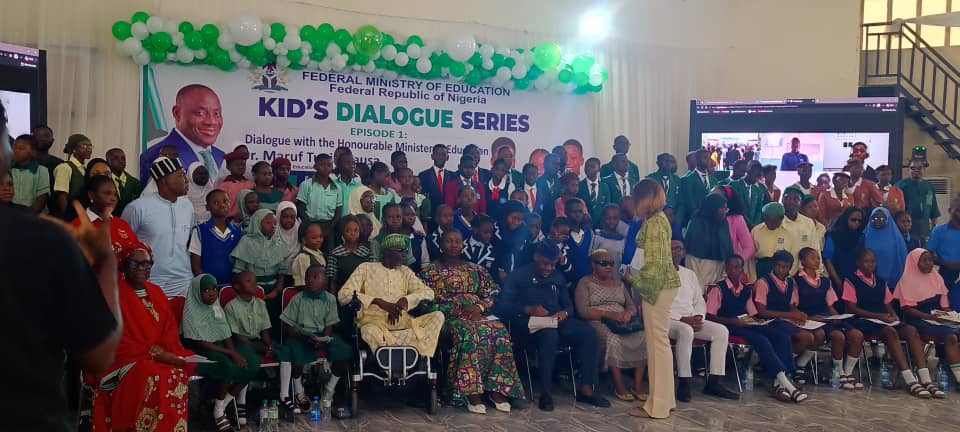
The initiative was unveiled at Government Science Secondary School, Pyakasa, Maitama, Abuja, under the “Kids Dialogue Series Episode 1,” with the theme “Empowering Youth Voices to Shape Health, Learning and Well-being in Nigeria.”
The Minister of Education, Dr. Tunji Alausa, who led the programme, said Nigeria’s education system cannot deliver optimal results if preventable diseases continue to undermine the health of children.
He said evidence from schools and health institutions shows a strong link between vaccine-preventable diseases and reduced school attendance, learning difficulties, and long-term developmental challenges.
“Your health is Nigeria’s first exam,” Alausa told the students, urging them to take responsibility for knowing their vaccination status and prioritising preventive healthcare.
The programme featured emotional testimonies from survivors of vaccine-preventable diseases, who shared personal experiences of prolonged illness, disability, and lifelong complications linked to conditions that could have been prevented through routine immunisation.
Some of the survivors recounted spending months in hospital care or living with permanent impairments such as blindness, hearing loss, and physical disability.
Alausa said the testimonies were deliberately included to help students understand the real-life consequences of immunisation gaps rather than treating health messages as abstract policy discussions.
“These conditions could have been avoided. Hearing these stories directly made a strong impact on the students,” he said.
He added that the Federal Government under President Bola Tinubu is prioritising human capital development through integrated reforms in education and healthcare aimed at improving both learning outcomes and productivity.
According to him, healthy children are more likely to remain in school, perform better academically, and contribute meaningfully to national development.
“Our children are the future leaders of this country. They must be healthy, educated and globally competitive,” he said.
The minister also highlighted ongoing efforts to strengthen routine immunisation programmes targeting diseases such as measles, polio, and Human Papillomavirus (HPV), noting that modern vaccines now provide protection against certain cancers.
“We now have vaccines that can prevent cancer. The HPV vaccine is one of them,” he added.
Health officials at the event said improving vaccine uptake remains critical to reducing preventable child mortality and closing performance gaps in the education sector.
The programme brought together officials from the National Primary Health Care Development Agency (NPHCDA), education stakeholders, civil society organisations, and health advocates.
The Executive Director/Chief Executive Officer of NPHCDA, Dr. Muyi Aina, urged students to take ownership of their health by tracking their vaccination status and adopting healthy lifestyles.
He described young people as key drivers of community health awareness, encouraging them to act as “health champions” among their peers.
“My responsibility includes ensuring primary healthcare services for all of you, including immunisation,” he said during an interactive session with students.
Dr. Aina engaged participants in discussions around the HPV vaccine, which helps prevent cervical cancer, asking how many students had received it and encouraging greater awareness.
He explained that primary healthcare remains the foundation of Nigeria’s health system, stressing the need for stronger collaboration between the education and health sectors to improve outcomes.
The NPHCDA boss also said the “Kids Dialogue Series” is designed to empower students to participate in shaping health policy conversations while promoting behavioural change at an early age.
The session ended with an open forum where students asked questions about vaccination access, school health services, and preventive care, reflecting growing curiosity about health and wellbeing among young Nigerians.
The Federal Government said the initiative would be expanded to schools nationwide as part of a sustained effort to improve child health awareness and strengthen learning outcomes through better health interventions.
📢 Follow National Periscope on WhatsApp
Get breaking news and updates directly on WhatsApp.
Join WhatsApp ChannelPost Disclaimer
All rights reserved. This material and other digital content on this website are not and do not represent the stance of National Periscope but the statements of newsmakers mentioned therein.
For your detailed news reportage... contact the Editor at Joel2oladele@gmail.com






[caption id="attachment_25513" align="alignnone" width="1600"] Minister of Education, Dr Tunji Alausa Read more
The Federal Government has unveiled plans to establish six world-class Read more
NBTE To Inspect WMO-NiMet Regional Training Centre For Accreditation of Read more
The Joint Admissions and Matriculation Board has released the 2026 Read more