

The journey through Kogi State begins on roads that tell two different stories.
One is the familiar narrative of a state that serves as Nigeria’s gateway between the North and the South, where thousands of vehicles traverse its highways daily, carrying people, goods and agricultural produce. The other is a quieter story unfolding beyond the major corridors, in university campuses, rural communities, healthcare facilities and township roads, where years of unmet expectations are gradually giving way to new investments.
It was this second story that came into sharper focus during the latest leg of the Presidential Media Tour of Projects, as journalists travelled across Kogi to inspect projects delivered through a combination of Federal Government interventions and state-funded initiatives.
The nationwide tour, organised by the Renewed Hope Ambassadors (RHA) in collaboration with the Presidential Media Team, was conceived to move public discourse beyond official statements by allowing journalists to physically verify projects across the country.
Earlier phases took participants to the North-West, where they inspected sections of the Abuja-Kaduna-Kano Highway, the Kaduna-Kano-Maradi rail corridor and irrigation schemes in Jigawa and Kebbi states, before the exercise continued in the South-East. Kogi became the first stop in the North-Central region.
What emerged from several days of inspections was not merely an inventory of roads, schools and public buildings. Rather, it was a picture of how cooperation between the Federal Government and Kogi State is increasingly shaping development priorities across sectors.
The projects varied widely in scale and purpose, yet they were connected by a common thread: federal reforms creating fiscal space for states, federal interventions complementing state investments, and state governments responding with projects designed to improve education, healthcare, transportation and agriculture.
That relationship was perhaps most visible in the education sector.
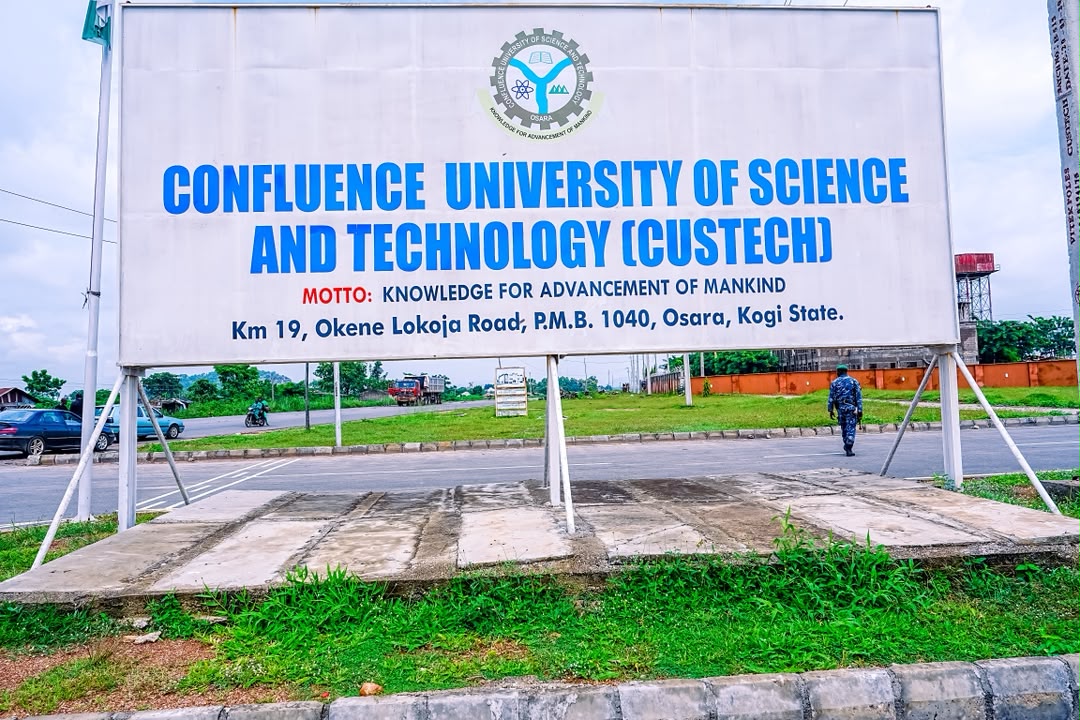
At the Confluence University of Science and Technology (CUSTECH), Osara, a university that admitted just over 200 students when it opened in 2021 now accommodates almost 6,000 students spread across nine faculties and 56 accredited programmes.
The growth is reflected not only in enrolment but also in physical infrastructure.
Laboratories equipped with modern scientific equipment stand beside newly completed lecture theatres, hostels and specialised facilities for medical education. Security systems, including CCTV surveillance, have become part of the institution’s expanding infrastructure, while construction continues in line with a long-term development master plan.
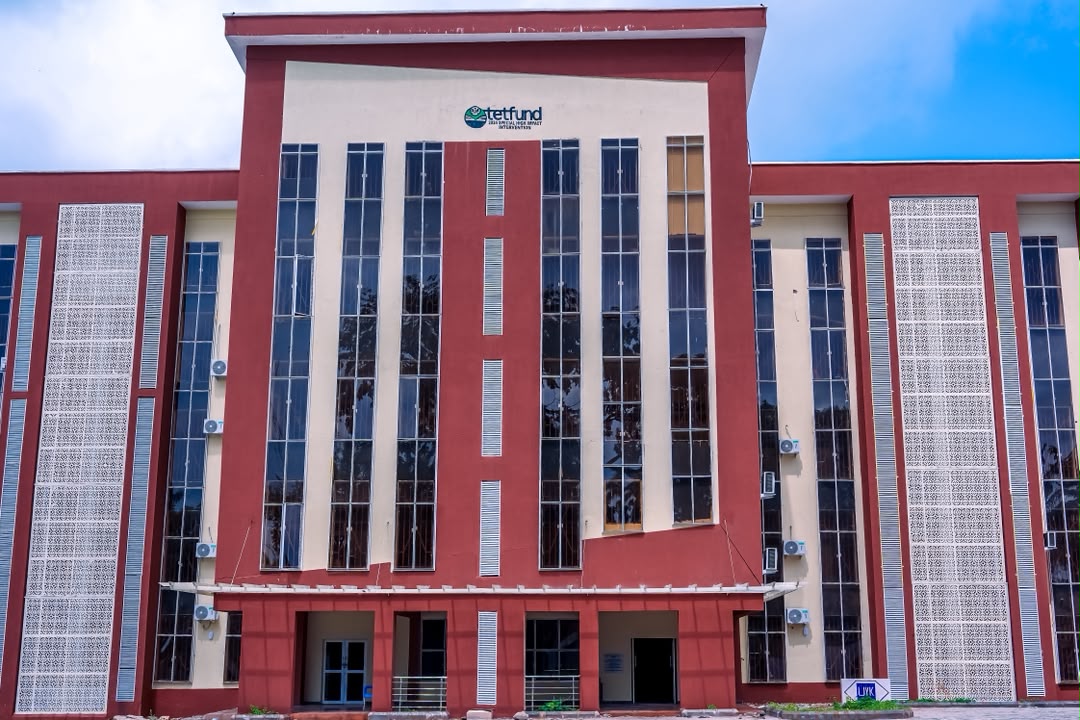
The university’s evolution has been driven by consistent support from the Kogi State Government alongside interventions from the Tertiary Education Trust Fund (TETFund), illustrating how federal and state investments can reinforce one another.
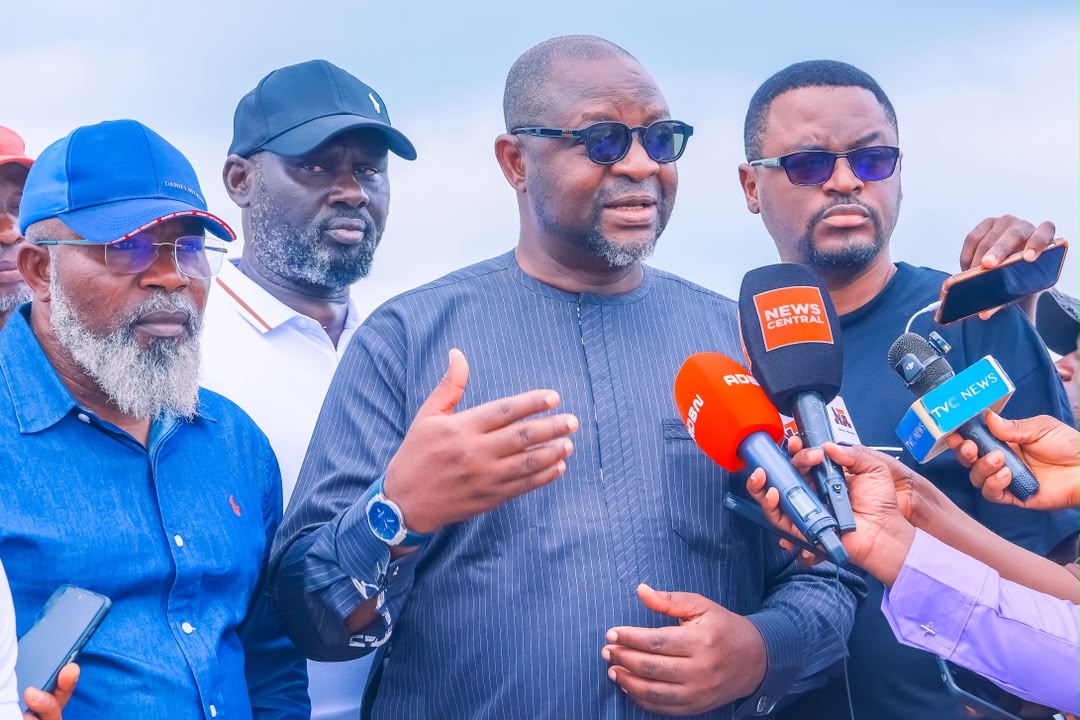
Leading the delegation, the Special Adviser to the President on Media and Public Communications, Sunday Dare, described the institution as evidence of the Federal Government’s commitment to education.
“The President has repeatedly said that the best weapon against poverty is education. What we have seen here is a testimony to that belief,” he said.
Yet the story of education in Kogi extends beyond the university.
Nearby, the GYB Model Science Secondary School at Nagazi has become part of a broader strategy linking quality secondary education with specialised university training.
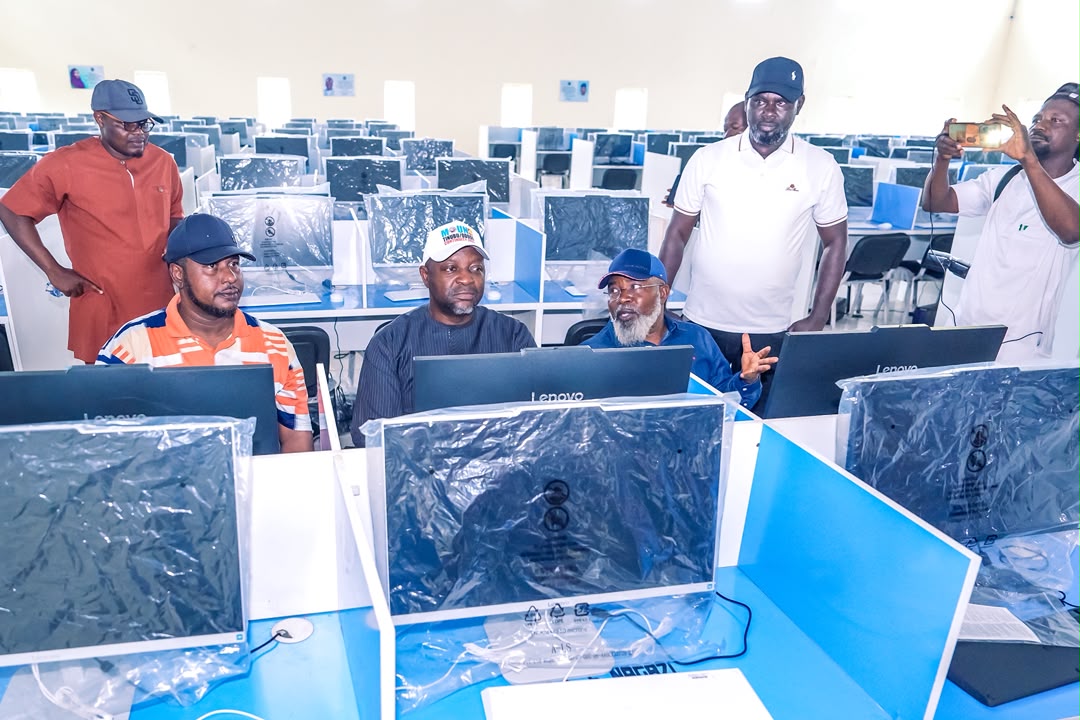
The school, commissioned earlier this year, already accommodates more than 1,700 students in modern classrooms supported by science laboratories, technical workshops and a computer-based testing centre equipped with about 300 computer systems.
It is one of three model science schools strategically located across Kogi’s senatorial districts to prepare students for careers in science, technology and engineering.
State officials say the schools complement policies that make education largely free from primary through secondary levels, including payment of examination fees for students sitting WAEC, NECO and JAMB in public schools.
For Commissioner for Works, Abdulsalami Ozigi Deedat, such investments have been strengthened by improved fiscal capacity resulting from recent Federal Government reforms.
“We must appreciate Mr President because without the resources now available to the states, projects of this magnitude would have been difficult to deliver,” he observed.
The Federal Government’s contribution to higher education is equally evident at Prince Abubakar Audu University (PAAU), Anyigba, where another intervention is changing students’ experiences.
Since the introduction of the Nigerian Education Loan Fund (NELFund), more than 20,000 students of the institution have benefited from the programme.
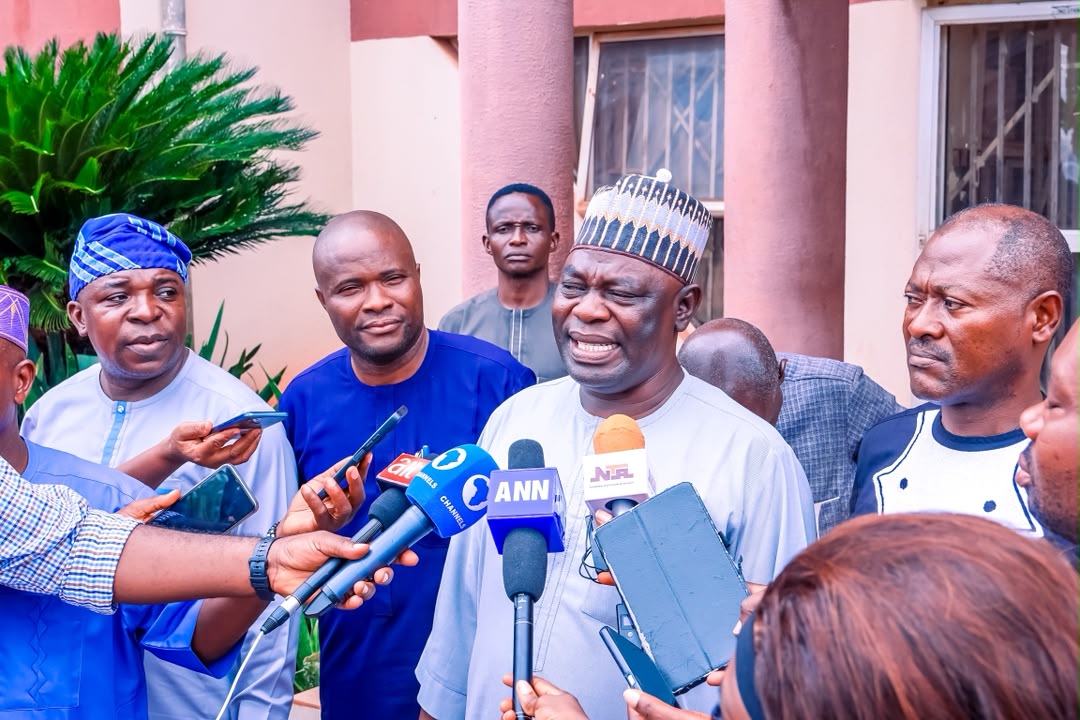
According to the university’s Deputy Vice-Chancellor (Administration), Prof. Sani Abdullahi, the scheme has reduced financial pressures on families while enabling students to remain focused on their studies.
He recalled that the latest upkeep allowance reached beneficiaries while examinations were underway.
“The students were jubilating because their pockets were dry. It came at the right time and enabled them to focus on their examinations instead of worrying about money,” he said.
University officials also credited TETFund with expanding research capacity and transforming academic infrastructure through new faculty buildings, lecture theatres and a modern Senate complex.
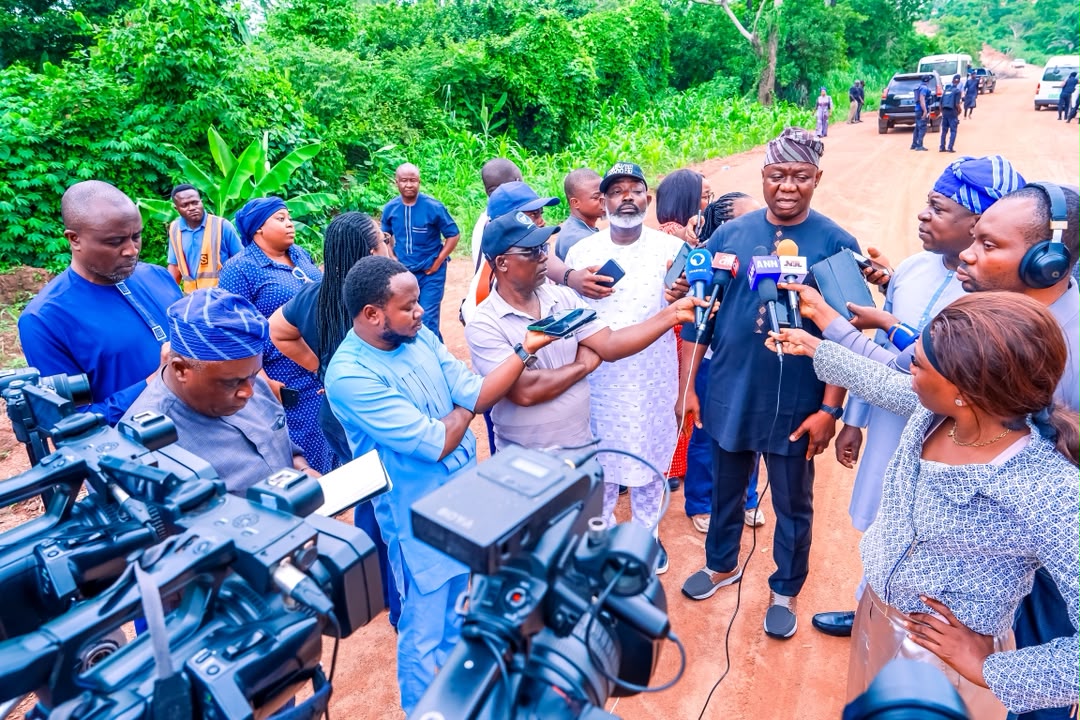
From education, the tour moved into rural Kogi, where the meaning of infrastructure becomes less academic and far more personal.
In Dekina Local Government Area, construction is progressing on the Iyale-Ogane-Enugu road, designed to reconnect farming settlements that have endured decades of poor accessibility.
For many residents, the project represents the fulfilment of promises that successive administrations failed to honour.
Standing beside the road, community member Amodu Joseph Silvas reflected on what the project means to generations of farmers.
“This road has been a prayer by our forefathers. Unfortunately, many of them are not alive to witness what we are seeing today,” he said.
For years, poor roads made it difficult to move harvested crops to markets, leaving many farmers with significant post-harvest losses.
The first phase of the project covers more than 11 kilometres, while the broader network is expected to stretch to about 60 kilometres, linking remote agricultural communities with commercial centres.
Commissioner for Agriculture Timothy Ojoma described the road as strategic infrastructure capable of transforming agricultural productivity by improving access to markets and encouraging investment in farming communities.
Equally significant, he said, has been improved security across areas that were once regarded as vulnerable, creating conditions for increased farming activities.
The pattern continues in Yagba West, where completed township roads have altered movement within communities that had waited decades for durable road infrastructure.
The Egbe-Mekun township road, completed in less than a year, has become one of the administration’s most visible projects in western Kogi.
Unlike earlier surface treatments, the road features full asphalt pavement, modern drainage systems and hydraulic structures designed for long-term durability.
Officials of the Kogi State Road Maintenance Agency (KOGROMA) said construction was executed through direct labour while engaging local youths and sourcing most building materials from host communities.
Beyond improving transportation, the approach created employment opportunities during construction and injected income directly into local economies.
Traditional ruler, the Ighare of Okwaa Egbe, Adedoyin Bolaji, believes the road reflects broader improvements taking place within the local government.
Besides infrastructure, he pointed to improvements in security, regular payment of pensions and increased government presence in the area.
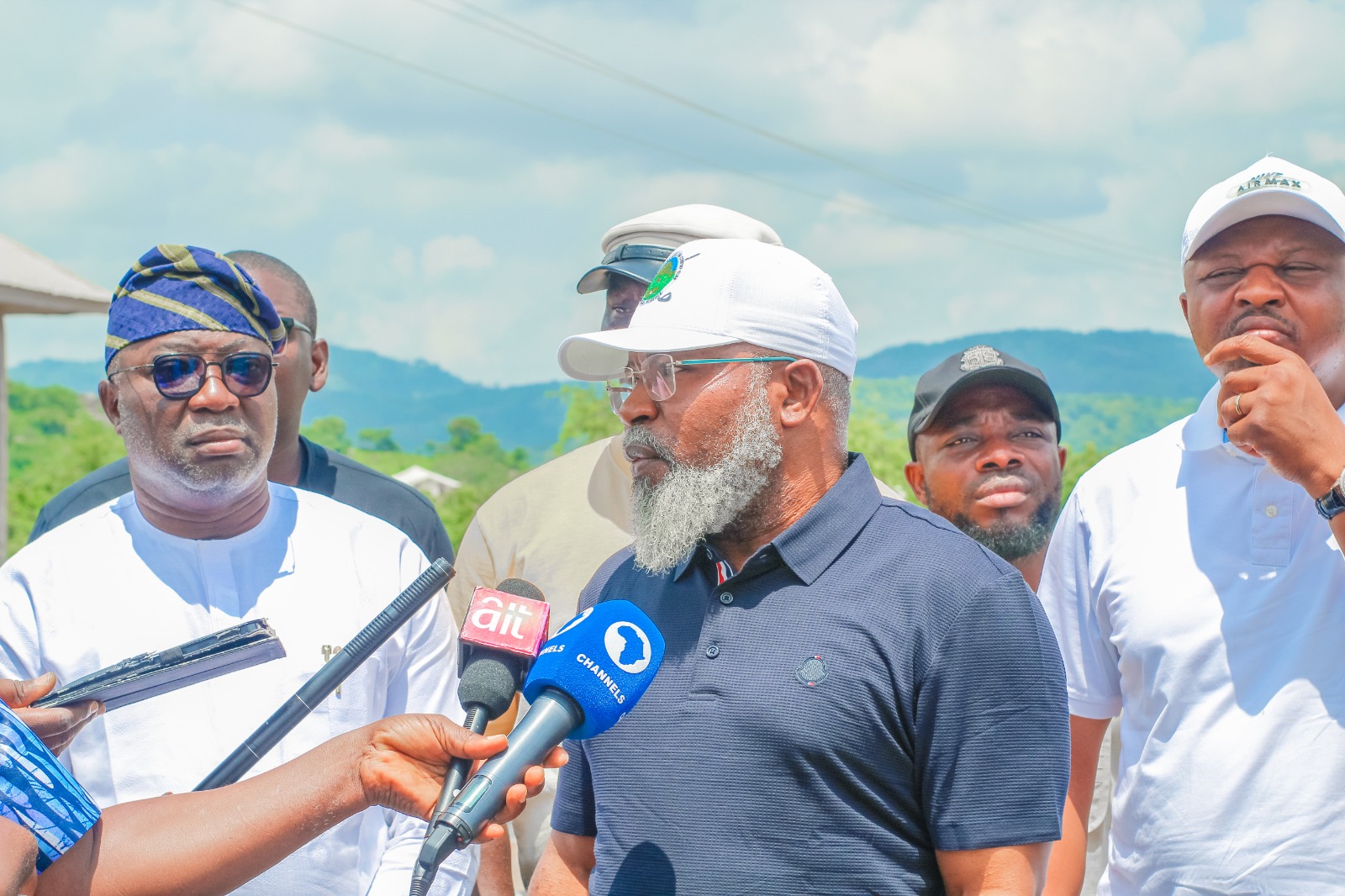
The delegation also inspected reconstruction works along the Abuja-Lokoja-Benin Highway, one of Nigeria’s busiest federal road corridors.
For decades, the highway represented one of the country’s most problematic transport routes, with heavy traffic, deteriorating pavement and frequent accidents.
Although reconstruction remains ongoing, visible progress across different sections has renewed optimism that one of Nigeria’s most strategic economic corridors is gradually returning to acceptable standards.
For a transit state such as Kogi, improvements on federal highways complement investments in rural and township roads, strengthening connections between farms, markets, schools and neighbouring states.
The broader significance of those connections became increasingly clear as the tour progressed.
Better roads support agriculture.
Improved universities produce skilled manpower.
Student loans keep young people in school.
Federal education interventions strengthen state institutions.
Together, they form an interconnected development ecosystem rather than isolated government projects.
That reality informed much of the conversation among officials accompanying the tour.
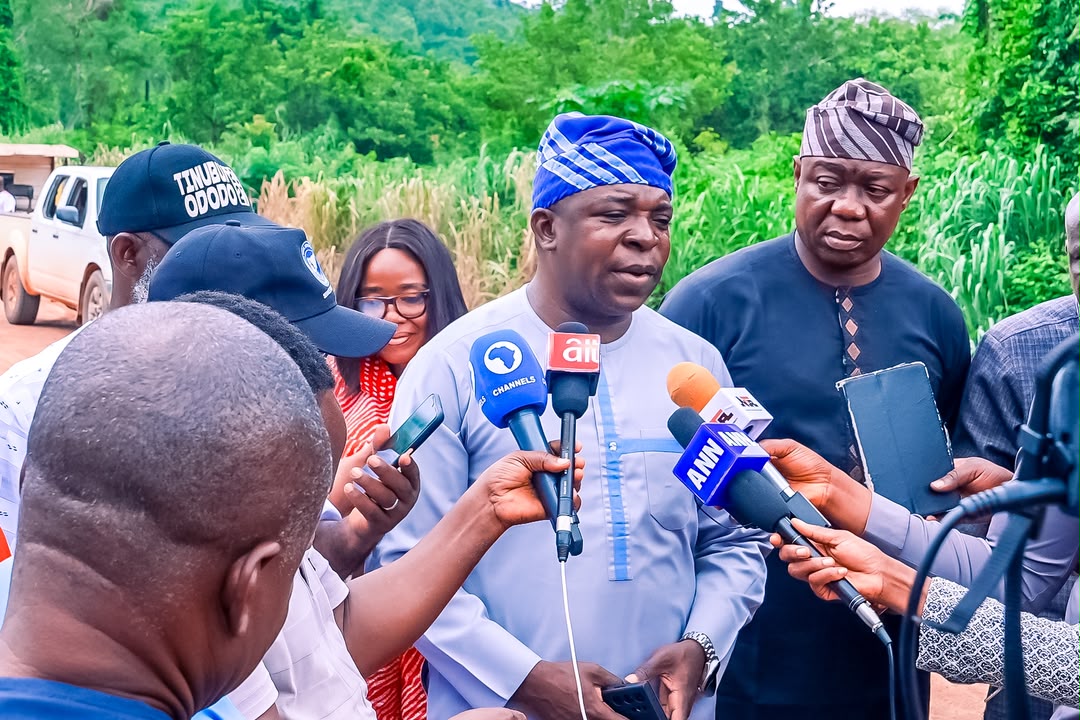
Senior Special Assistant to the President on Media and Publicity, Temitope Ajayi, argued that the projects demonstrated how national reforms and state implementation could reinforce one another.
According to him, greater fiscal capacity has enabled states to invest more heavily in infrastructure while Federal Government programmes continue to complement those efforts.
Sunday Dare expressed a similar view.
“The Renewed Hope Agenda is delivering results in health, infrastructure, education, agriculture, manufacturing, oil and gas. We have seen evidence of that here in Kogi State, where the collaboration between the Federal Government and the state is making a real difference in the lives of the people,” he said.
Perhaps the most striking aspect of the Kogi tour, however, was not the scale of individual projects but the connections between them.
The university producing future scientists depends on model secondary schools preparing students for admission.
Those schools become more accessible because roads are improving.
Farmers benefit from the same road network transporting students and goods.
Federal interventions in higher education reinforce state investments in physical infrastructure.
The outcome is a development pattern in which projects support one another rather than exist in isolation.
That does not mean every challenge has disappeared.
Major highways remain under construction. Some rural roads are still being extended, while many communities continue to expect additional investments in healthcare, water supply and electricity.
The true success of these projects will ultimately depend on sustained maintenance, prudent management and continuity beyond the present administration.
Nevertheless, for communities that once relied on promises more than projects, the evidence on the ground has begun to reshape expectations.
The significance of the Presidential Media Tour therefore lies not merely in showcasing government achievements but in allowing public claims to be tested against physical reality.
In Kogi, that reality is found in expanding classrooms at Osara, students receiving financial support in Anyigba, asphalt roads reaching long-isolated farming communities in Dekina, improved township roads in Yagba West and reconstruction work along one of Nigeria’s busiest highways.
Individually, each project tells only part of the story.
Taken together, they reveal a quieter but more significant transformation; one driven not by a single institution or level of government, but by an evolving partnership between the Federal Government and Kogi State that is gradually translating policy into infrastructure and infrastructure into opportunities for ordinary citizens.
📢 Follow National Periscope on WhatsApp
Get breaking news and updates directly on WhatsApp.
Join WhatsApp ChannelPost Disclaimer
All rights reserved. This material and other digital content on this website are not and do not represent the stance of National Periscope but the statements of newsmakers mentioned therein.
For your detailed news reportage... contact the Editor at Joel2oladele@gmail.com

There's Functional Local Government Administration in Kogi - Ododo's Spokesman Read more
[caption id="attachment_23170" align="alignnone" width="420"] Rev. Gbade Alabi[/caption] There are very Read more
Ahmed Muhammed Munir: The Young Engineer Redefining Representation in Lere Read more
Ex-PDP Spokesman Metuh Joins Tinubu Campaign Team [caption id="attachment_20507" align="alignnone" Read more