

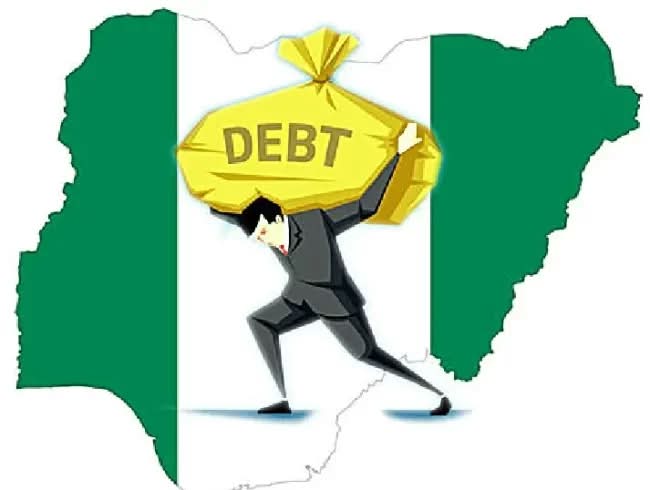
Nigeria’s total public debt climbed by N7.44 trillion between March and June 2026, reaching N166.79 trillion, according to the latest figures from the Debt Management Office (DMO).
The debt stock rose from N159.35 trillion at the end of the first quarter to N166.79 trillion by June 30.
Domestic borrowing accounted for the larger share, standing at N91.59 trillion or 54.91 per cent of the total.
In dollar terms, the country’s public debt stood at $120.93 billion at the end of the second quarter.
The figure comprised $54.52 billion in external debt and $66.41 billion in domestic debt.
The DMO used the Central Bank of Nigeria’s official exchange rate of N1,379.1842 to the dollar on June 30 to convert the external debt.
Federal Government dominates debt stock
The Federal Government remained the largest borrower, accounting for the bulk of the country’s debt.
Its external debt stood at N65.77 trillion, representing 39.44 per cent of the total public debt.
The states and the Federal Capital Territory (FCT) jointly accounted for N9.42 trillion in external debt, representing 5.65 per cent.
Domestic debt followed a similar pattern, with the Federal Government owing N87 trillion.
That amount represented 52.16 per cent of Nigeria’s total public debt. States and the FCT owed another N4.59 trillion, or 2.75 per cent.
Overall, the Federal Government’s debt stood at about N152.77 trillion, compared with N14.01 trillion owed by the states and the FCT.
FGN bonds account for bulk of domestic debt
Federal Government bonds remained the biggest component of the government’s domestic debt portfolio.
The outstanding value of FGN bonds stood at N64.84 trillion, accounting for 74.53 per cent of Federal Government domestic debt.
Naira-denominated FGN bonds made up N41.47 trillion, while securitised Ways and Means advances stood at N22.11 trillion.
The Federal Government’s domestic US dollar bond had a naira value of N1.27 trillion after conversion at the prevailing exchange rate at the end of June.
Treasury Bills accounted for another N19.48 trillion, representing 22.39 per cent of the domestic debt.
Other instruments included FGN Sukuk valued at N1.19 trillion and FGN savings bonds worth N122.45 billion.
The government’s green bond stock stood at N47.36 billion, while promissory notes amounted to N1.22 trillion.
The promissory notes comprised N206.82 billion in naira-denominated instruments and N1.01 trillion in foreign currency-denominated notes.
The DMO also listed N100 billion under other instruments, specifically UFTF FGN securities.
Debt stock rises sharply over three years
Nigeria’s public debt stood at N159.35 trillion on March 31, compared with N159.28 trillion at the end of December 2025.
The latest figure also shows a substantial rise from the N87.38 trillion recorded on June 30, 2023.
Between December 2023 and December 2025, external debt increased from $42.49 billion to $51.86 billion.
Domestic debt also rose during the period, climbing from N59.1 trillion to N89.4 trillion.
The latest figures show that domestic borrowing remains the larger component of Nigeria’s public debt, while the Federal Government continues to account for most of the country’s total obligations.
📢 Follow National Periscope on WhatsApp
Get breaking news and updates directly on WhatsApp.
Join WhatsApp ChannelPost Disclaimer
All rights reserved. This material and other digital content on this website are not and do not represent the stance of National Periscope but the statements of newsmakers mentioned therein.
For your detailed news reportage... contact the Editor at Joel2oladele@gmail.com






The Federal Government has renewed its optimism about achieving a Read more
Bagudu raises investor's hope, says exchange rate will stabilise The Read more
FG, States, LGCs Share N1.727trn FAAC Revenue in November JOEL Read more
[caption id="attachment_25526" align="alignnone" width="825"] Marginal drop in inflation[/caption] Nigeria’s headline Read more