
The Federal Government and the European Union (EU) have concluded negotiations on a readmission agreement aimed at strengthening migration management and tackling irregular migration.
The agreement followed nearly 10 years of negotiations between both parties. It will provide a framework for the return of Nigerians who have no legal grounds to remain in EU member states.
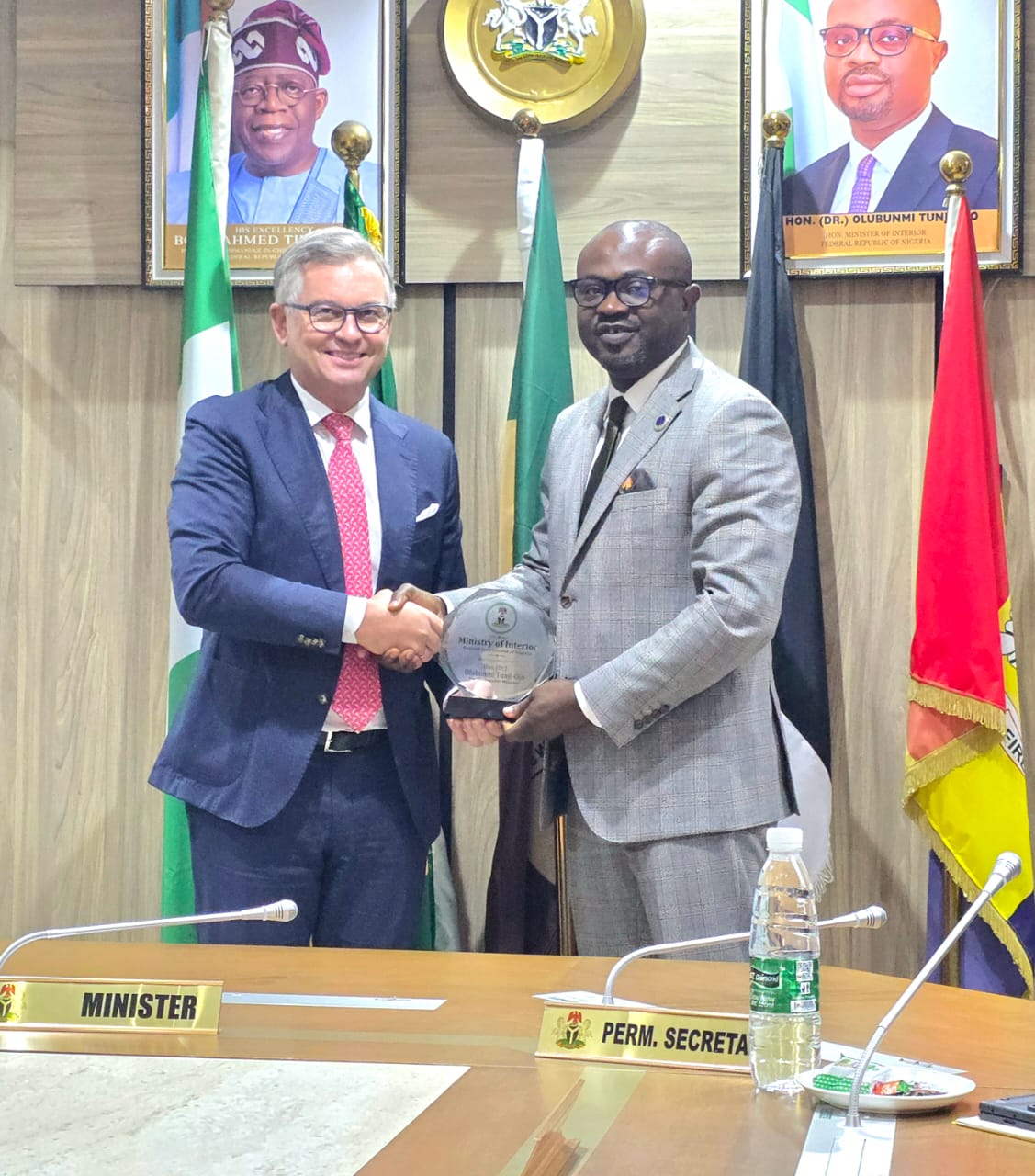
Minister of Interior, Olubunmi Tunji-Ojo, disclosed this during a meeting with the EU Commissioner for Internal Affairs and Migration, Magnus Brunner, and his delegation in Abuja, ahead of the formal signing of the agreement.
Tunji-Ojo described the development as an important milestone in Nigeria-EU relations. He said it would promote orderly, dignified and mutually beneficial migration while strengthening cooperation between both sides.
The minister assured the EU delegation that Nigeria would fulfil its obligations under the agreement. He maintained that the government neither encouraged illegal migration nor supported activities that undermined mutual trust between countries.
He also stressed the need to establish confidence between Nigeria and its international partners before considering measures to ease migration procedures. According to him, stronger bilateral relations would create better opportunities for legal migration.
On implementation, Tunji-Ojo highlighted ongoing efforts to modernise the country’s migration and border management systems through automation and the integration of national identity databases.
He said the initiative would help relevant authorities establish the nationality of returnees more quickly, particularly where individuals lack valid travel documents.
The minister identified three categories of persons covered by the readmission arrangement. They include Nigerians with valid travel documents, those who travelled with documents but subsequently lost or destroyed them, and individuals who travelled without identification.
He said the government was developing mechanisms to verify their identities through available national records.
Tunji-Ojo disclosed that Nigeria had transferred more than 17 billion migration records into its integrated system as part of efforts to automate migration processes.
He added that Nigeria had introduced similar arrangements with the United Kingdom, while discussions continued with the United States to establish a comparable system.
On border security, the minister called for stronger international cooperation and real-time intelligence sharing to combat human trafficking, migrant smuggling and other transnational crimes.
He argued that individual countries could not effectively tackle such challenges without coordinated international action.
The minister also disclosed improvements in correctional service reforms, saying the number of repeat offenders dropped from about 13,000 in 2023 to approximately 1,600 last year.
In his remarks, Brunner described the conclusion of negotiations as a major development in Nigeria-EU relations, adding that it could open the door to wider cooperation.
He commended Nigeria’s efforts to modernise its border security architecture and expressed the EU’s readiness to strengthen collaboration through its border management agency.
The commissioner identified police cooperation, combating human trafficking and migrant smuggling, and expanding legal migration opportunities as priority areas for further engagement.
He disclosed that about 260,000 Nigerians currently reside legally in EU countries, stressing the need to create more opportunities for safe and regular migration.
Also speaking, a member of the EU delegation, Johannes Lucher, acknowledged the difficulties surrounding the negotiations, noting that Nigeria had sought to incorporate additional areas of cooperation into the agreement.
These included combating human trafficking, drug trafficking and developing legal migration pathways.
Lucher, however, said both parties would begin discussions on the additional areas following the conclusion of the readmission agreement.
He further disclosed that the EU had provided almost €100 million in additional funding to support broader cooperation, with discussions expected to begin with Nigerian migration and security officials.
Both delegations reaffirmed their commitment to strengthening bilateral relations, building mutual confidence and finding practical solutions to shared migration and security challenges.
📢 Follow National Periscope on WhatsApp
Get breaking news and updates directly on WhatsApp.
Join WhatsApp ChannelPost Disclaimer
All rights reserved. This material and other digital content on this website are not and do not represent the stance of National Periscope but the statements of newsmakers mentioned therein.
For your detailed news reportage... contact the Editor at Joel2oladele@gmail.com



Nigeria Denies Alleged Plot to Destabilize Niger Republic Government JOEL Read more
Nigeria congratulates Angola on National Day JOEL OLADELE, Abuja Nigeria’s Read more
Protests Erupt in South Africa Over ‘Coronation’ of Nigerian as Read more
DICAN Issues Retraction over Erroneous Attribution to Belgian Envoy JOEL Read more