

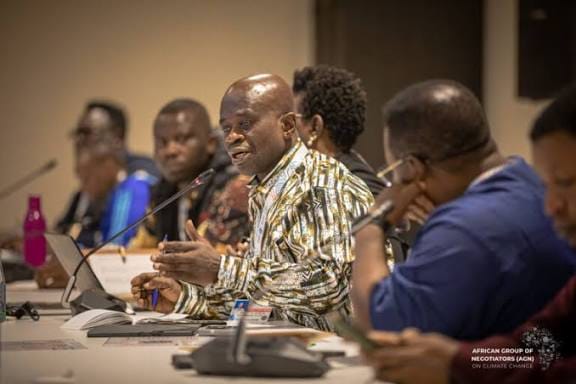
African negotiators arrived at COP31 in Antalya, Türkiye, with priorities shaped by the continent’s economic and developmental realities: scaled-up adaptation finance, predictable support for loss and damage, and an energy transition.
However, when the gavel fell on 22 November, after negotiations extended more than two days beyond their scheduled conclusion, delegates couldn’t reach a consensus on the proposed Antalya Pact.
Without an overarching political agreement, Africa’s core demands remained unmet. Although technical texts were adopted on adaptation, finance and the just transition, they did not deliver the binding financial commitments many African countries had sought.
The absence of an overarching agreement weakened the political signal from Antalya, although progress was made across individual negotiating tracks.
For African countries, however, the significance of the conference rests less on the number of decisions reached than on whether they can deliver the financial resources needed to address the effects of climate change.
This is where the outcomes remain uncertain. Although adaptation finance featured prominently in the negotiations, a proposed pathway to triple annual adaptation finance by 2035 stalled without an agreed baseline or accountability arrangements.
The Antalya-to-Addis Ababa Roadmap on Adaptation and Resilience Finance was also not adopted after negotiators failed to reach agreement on the wider political package.
These unresolved financing questions extend beyond adaptation. Negotiators advanced a framework for the Just Transition Mechanism but left its core financing arrangements unresolved, while discussions over developed countries’ financial obligations under Article 9.1 of the Paris Agreement continued without providing the certainty developing countries need.
For African countries, the implications are practical. Delays in establishing predictable financing arrangements constrain the ability of governments to invest in climate-resilient infrastructure, protect agricultural livelihoods and prepare communities for increasingly severe environmental shocks.
Diplomatic commitments, however significant, cannot build sea walls, restore degraded farmland or irrigate drought-affected farms without the resources to implement them.
The implications are particularly serious in regions already affected by insecurity, including the Sahel, the Horn of Africa and the Lake Chad basin.
In these areas, erratic rainfall, prolonged drought and the loss of productive farmland place additional pressure on communities whose livelihoods depend heavily on access to land and water.
These pressures become more difficult to manage where governance institutions are weak, displacement is widespread, and competition over natural resources is already a source of tension.
In the absence of effective local dispute-resolution mechanisms, disagreements over access to farmland, grazing routes and water sources can intensify, particularly between farming and pastoralist communities. Climate change does not independently cause these conflicts, but it can aggravate the economic and institutional conditions in which they emerge.
These pressures make adaptation finance more than a development concern; they place it within the broader question of conflict prevention and security.
World military expenditure reached approximately $2.9 trillion in 2025, according to the Stockholm International Peace Research Institute, while new pledges to the Adaptation Fund at Antalya totalled roughly $50 million, alongside $200 million announced across Global Environment Facility funds.
Although these figures represent different funding categories and are not directly comparable, the disparity points to an imbalance in global priorities: far greater resources are mobilised to manage the consequences of insecurity than to address vulnerabilities that can contribute to it.
However, mobilising more adaptation finance is only part of the challenge. For African countries, the terms on which that finance is provided can determine whether climate action strengthens economic security or deepens existing fiscal vulnerabilities.
The funding question is therefore inseparable from sovereign debt. African governments have consistently pressed for predictable, grant-based public finance, particularly for adaptation and loss and damage.
Unlike solar farms or transmission grids, which can generate revenue to repay investors, many adaptation priorities, including coastal defences and public drought relief, deliver public goods that rarely generate direct financial returns.
Loss and damage present an even greater challenge, covering destruction that communities can neither prevent nor adapt to.
Expecting heavily indebted countries to take on further commercial borrowing to recover from climate disasters risks deepening fiscal distress, particularly in economies that have contributed least to historical greenhouse gas emissions.
This does not mean private investment and concessional lending have no place in Africa’s climate transition. They can support projects with viable returns, from regional power pools and climate-resilient agribusiness to the domestic processing of critical minerals.
Attracting such investment requires regulatory clarity, transparency and credible project preparation. However, private finance cannot substitute for public grants where commercial returns do not exist.
The challenge, therefore, is not simply to demand more finance, but to build the institutional capacity and diplomatic alliances required to access it on terms that reflect Africa’s development priorities.
Ahead of COP32 in Addis Ababa in 2027, African governments should accelerate the accreditation of national implementing agencies and strengthen their capacity to access climate funds directly.
They should also work through institutions such as the African Development Bank to prepare regional projects capable of attracting appropriate financing.
Equally important is reconciling competing national interests, particularly between hydrocarbon-dependent economies seeking to protect development revenues and small island states and agrarian economies facing existential climate risks.
At Addis Ababa, African negotiators must turn these priorities into a coordinated diplomatic agenda. This requires building alliances with climate-vulnerable countries across the Global South while pursuing complementary demands through different international platforms.
Within the UNFCCC’s Article 9.1 work programme and forthcoming climate-fund replenishment negotiations, African delegations should press for measurable, grant-based adaptation finance targets, more accessible accreditation processes and delivery arrangements that enable regional institutions and capable national agencies to reach vulnerable communities, including those in conflict-affected areas.
Beyond the climate negotiations, governments should press bilateral and multilateral creditors, alongside private lenders, to incorporate pre-agreed climate-resilient debt clauses into sovereign lending arrangements, allowing temporary payment suspensions following major climate disasters.
Antalya demonstrated that consensus on climate language does not guarantee the means to act on it. Addis Ababa must therefore demonstrate that climate cooperation can deliver more than negotiated commitments: it must provide the financial means for African countries to adapt, protect vulnerable communities and pursue economic transformation without being pushed further into debt.
About the Author: Lara Raji is the Founder of CulmeArts, an Abuja-based organisation working at the intersection of culture, arts, innovation and social impact, with a focus on African identity and global engagement.
📢 Follow National Periscope on WhatsApp
Get breaking news and updates directly on WhatsApp.
Join WhatsApp ChannelPost Disclaimer
All rights reserved. This material and other digital content on this website are not and do not represent the stance of National Periscope but the statements of newsmakers mentioned therein.
For your detailed news reportage... contact the Editor at Joel2oladele@gmail.com







Green Skills For Youths: Importance Of Youth Engagement For A Read more
Oronsaye Report: Embracing Bold Decisions for the Nation to Flourish Read more
The legality or otherwise of revocation of titles to land Read more
[caption id="attachment_22912" align="alignnone" width="786"] Director of Works and Physical Planning Read more