
JOEL OLADELE, Abuja
After years of repeated delays and failed deadlines, the Federal Government has announced plans to officially launch Nigeria’s nationwide Digital Switch Over (DSO) programme in June, signalling a fresh push to complete the country’s transition from analogue to digital television broadcasting.
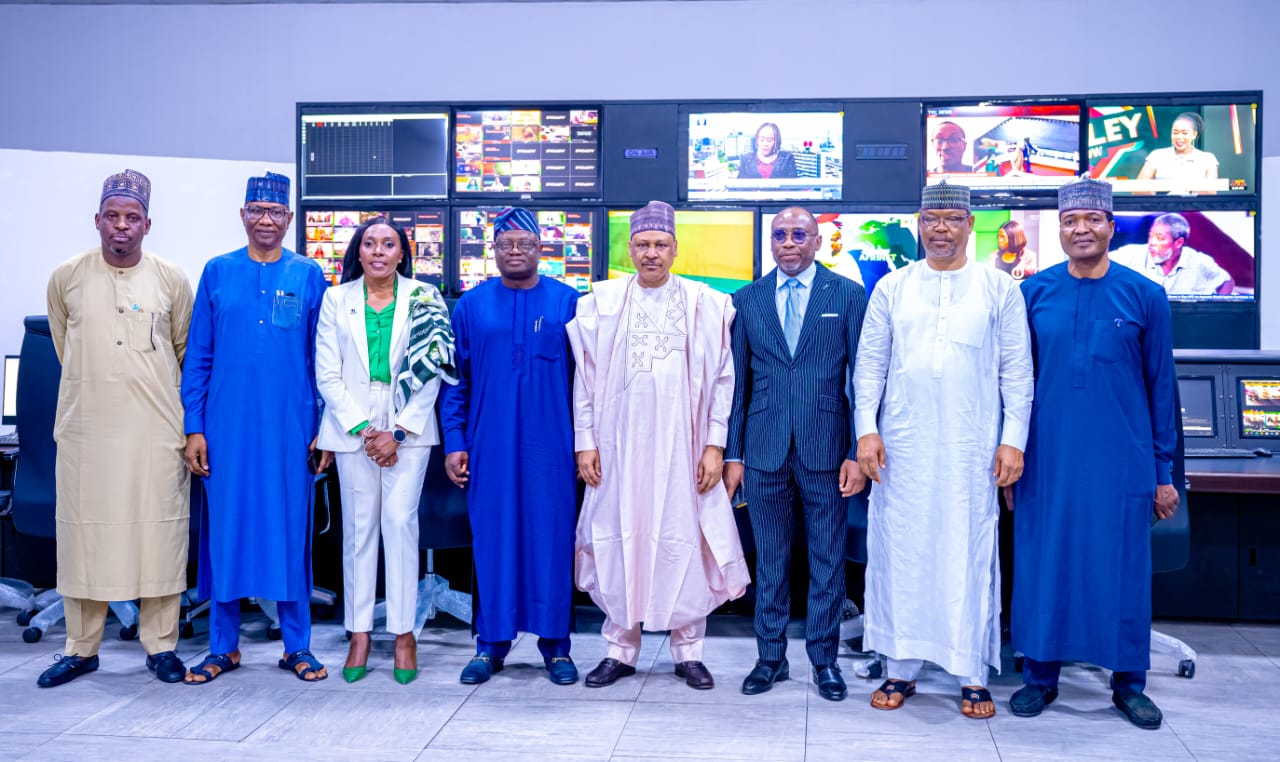
Minister of Information and National Orientation, Mohammed Idris, disclosed this in Abuja during an inspection tour of facilities at the Nigerian Communications Satellite Limited (NIGCOMSAT), where government officials assessed infrastructure prepared for the digital broadcasting rollout.
Idris described the planned launch as a major milestone for Nigeria’s broadcast industry, saying the migration to digital television would improve viewing quality, expand access to channels and modernise audience measurement systems.
“The digital switchover is here. Everybody now can watch whatever he wants to watch in real time and cleanly. Free TV everywhere for everybody,” the minister said.
Nigeria began its journey toward digital broadcasting more than a decade ago following a directive by the International Telecommunications Union (ITU), which urged member countries to migrate from analogue to digital terrestrial broadcasting.
The transition was expected to improve picture and sound quality, increase channel availability and release spectrum space for telecommunications services.
Despite several launch dates announced by previous administrations, the process suffered setbacks caused by funding constraints, infrastructure deficiencies, policy inconsistencies and challenges linked to the distribution of set-top boxes and signal transmission systems.
During the facility tour, Idris said the Tinubu administration had revived the process through collaboration involving the Ministry of Information and National Orientation, NIGCOMSAT and the National Broadcasting Commission (NBC).
According to him, the new platform would transform broadcasting operations and advertising systems through real-time audience measurement technology.
“Now science is at play. If you are now viewing any particular station, you know who is viewing what, how many people are viewing,” he stated.
The minister explained that the system would provide broadcasters and advertisers with reliable data on audience behaviour, enabling more targeted programming and advertising decisions.
He also said the digital migration would break monopoly within the television distribution space and encourage competition among broadcasters and content producers.
“Competition is going to set in. Everybody is going to compete. Content is going to grow. Viewership, hopefully, will also grow,” Idris added.
He further noted that the new platform would deliver High Definition (HD) television signals while allowing viewers to access channels through mobile applications and satellite-enabled services across Nigeria and parts of sub-Saharan Africa covered by NIGCOMSAT.
Idris said government had also addressed some of the major cost issues that affected earlier DSO attempts, especially challenges surrounding encrypted set-top boxes.
“Government has already taken off some of these costs,” he said.
Managing Director and Chief Executive Officer of NIGCOMSAT, Jane Egerton-Idehen, said the organisation was focused on ensuring uninterrupted service delivery and sustained technology upgrades.
“It is important for us that the service delivery is perfect and the technology is continuous,” she said.
Egerton-Idehen disclosed that approval had already been secured for the launch of two additional satellites aimed at strengthening Nigeria’s digital communications infrastructure.
“The work has only just started. The work has only just begun,” she added.
On his part, Director-General of the National Broadcasting Commission, Dr Charles Ebuebu, said the upgraded DSO platform was designed to align with emerging technologies and changing viewing habits.
He explained that the service would combine satellite broadcasting and mobile application technology to ensure nationwide access beyond the eight cities covered during the pilot phase.
“Rather than restricting content to just eight cities, we are all over Nigeria and beyond,” Ebuebu said.
According to him, the platform is expected to debut with about 100 television channels, while discussions are ongoing with additional content producers ahead of the official launch.
“We are going to have 100 channels by the day of launch and even more because there are more content producers that are talking to us,” he said.
Ebuebu also disclosed that the NBC had established six regional studios across the country to support local content production and reduce pressure on producers outside major cities.
He added that the commission was setting up a multilingual national call centre to assist viewers in major Nigerian languages, including Hausa, Igbo, Pidgin English and English.
“We are making it easy. In all, we want to create the market for Nigeria. One platform for Nigeria,” he stated.
Nigeria’s first pilot digital switch-on was launched in Jos, Plateau State, in April 2016, with Abuja following later that year.
Subsequent rollouts were carried out in states including Kwara, Kaduna, Enugu, Osun and Lagos, but nationwide implementation remained stalled despite repeated government assurances.
Industry stakeholders believe the renewed effort could finally bring Nigeria’s prolonged digital migration process to completion while creating new opportunities for broadcasters, advertisers, filmmakers and content creators.
📢 Follow National Periscope on WhatsApp
Get breaking news and updates directly on WhatsApp.
Join WhatsApp ChannelPost Disclaimer
All rights reserved. This material and other digital content on this website are not and do not represent the stance of National Periscope but the statements of newsmakers mentioned therein.
For your detailed news reportage... contact the Editor at Joel2oladele@gmail.com

SPDC: We’ll remove bottlenecks to attract investments – Tinubu President Read more
Economic hardship: Tinubu has silenced APC leaders — Lukman Former Read more
Emefiele printed N684.5m with N18.9bn, says EFCC in fresh charges Read more
U.S. Catholic Bishops, Others Hail Pope Leo XIV U.S. bishops Read more