

•Section 21, Chapter II Hold Key to National Rebirth — Analysts
By Olusegun Babalola
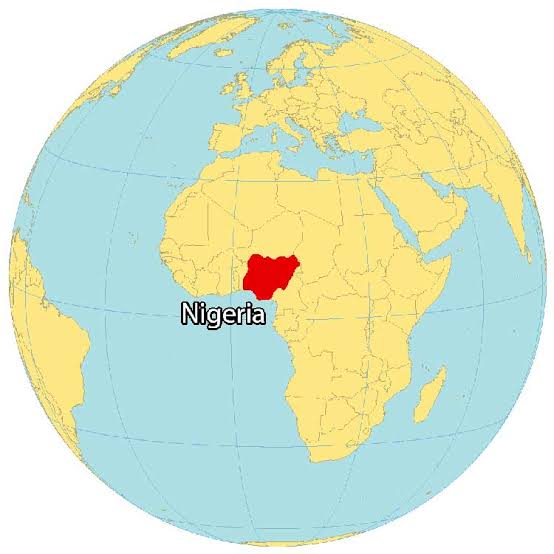
Nigeria may have finally discovered why the country has struggled for decades to translate its rich cultural heritage into political stability, economic prosperity and global influence.
The answer, analysts say, lies in the misunderstood Section 21 of the 1999 Constitution.
The debate has gained fresh momentum following the declaration by Social Democratic Party (SDP) presidential candidate, Prince Adewole Adebayo, that implementing Chapter II of the Constitution would form the cornerstone of his political agenda.
Speaking during the SDP National Convention in Bauchi on May 9, 2026, Adebayo insisted that Nigeria’s future depends on fully implementing the “Fundamental Objectives and Directive Principles of State Policy” captured in Chapter II.
At the centre of the discussion is Section 21, which mandates the Nigerian state to protect, preserve and promote Nigerian cultures while encouraging scientific and technological advancement rooted in cultural values.
However, political scholars argue that Nigeria fundamentally misunderstood the meaning of “culture.”
Rather than treating culture as a living system of governance, accountability and social organization, successive governments reduced it to festivals, dances, beads, exhibitions and tourism displays.
This, according to analysts, explains why Nigeria failed to replicate the economic rise witnessed in countries such as China, India, Singapore, Japan and South Korea.
Popular global affairs commentator, Fareed Zakaria, famously described the emergence of these nations as the “Rise of the Rest.”
But experts insist their success did not come from capitalism alone.
Instead, these countries combined ancient civilizational traditions with modern economic and political systems to create powerful developmental states.
China’s “Socialism with Chinese Characteristics,” introduced by former leader Deng Xiaoping, blended Confucian traditions of discipline, moral authority and social order with aggressive market reforms and industrial growth.
India equally strengthened local governance through constitutional reforms rooted in its traditional Panchayati Raj system.
Singapore, Japan and South Korea followed similar models by combining strong cultural ethics with modern governance and capitalist enterprise.
Observers say the result was economic transformation backed by social legitimacy and national cohesion.
Nigeria, however, moved in the opposite direction.
Although FESTAC ’77 under former President Olusegun Obasanjo projected African culture globally, critics argue that it celebrated culture mainly as entertainment and symbolic heritage.
The festival showcased music, dances, fabrics and artistic performances but failed to integrate indigenous governance traditions into Nigeria’s constitutional structure.
Traditional institutions such as emirates, obaships, village councils and councils of elders were retained ceremonially but stripped of meaningful constitutional authority.
The consequence, analysts warn, is that Nigeria ended up with a modern state disconnected from its civilizational roots.
Nobel Laureate Wole Soyinka once described this contradiction as “glamourised fossilism” a situation where culture survives only as spectacle without political relevance.
Today, experts argue that global politics has entered the age of “civilizational states,” where nations derive power not only from military strength or economic output but from the strength of their cultural identity and constitutional traditions.
They insist that Section 21 must therefore move beyond cultural preservation to become a tool for constitutional and administrative reform.
According to them, indigenous principles such as communal accountability, consensus-building, moral leadership and social responsibility should be integrated into governance structures, especially at the local level.
Without such reforms, they warn, Nigeria may continue remaining rich in heritage but weak in power.
Supporters of Prince Adewole Adebayo believe his focus on Chapter II could provide Nigeria with a fresh opportunity for national renewal.
For them, the challenge before Nigeria is no longer merely preserving culture as memory, but transforming it into a living constitutional force capable of driving development, legitimacy and national progress.
Until then, Nigeria may continue watching the “Rise of the Rest” from the sidelines instead of becoming part of it.
📢 Follow National Periscope on WhatsApp
Get breaking news and updates directly on WhatsApp.
Join WhatsApp ChannelPost Disclaimer
All rights reserved. This material and other digital content on this website are not and do not represent the stance of National Periscope but the statements of newsmakers mentioned therein.
For your detailed news reportage... contact the Editor at Joel2oladele@gmail.com



Why Nigeria, Argentina friendly clash is canceled The highly anticipated Read more
Foreign Affairs Ministry ignores leaked memo, says Tinubu undertakes visit Read more
Nigeria Seeks Global Mining Partnership to Boost Economy JOEL OLADELE, Read more
SDP Forum of State Chairmen Backs National Chairman's Suspension •Says Read more