

The Federal Government has dismissed claims that more than N8 trillion was spent outside the country’s approved budget, insisting that the interpretation of the International Monetary Fund’s (IMF) 2026 Article IV Consultation Report is inaccurate and misleading.
The government maintained that all public expenditure is undertaken within the constitutional and legal framework approved by the National Assembly, stressing that it does not operate a “shadow budget.”
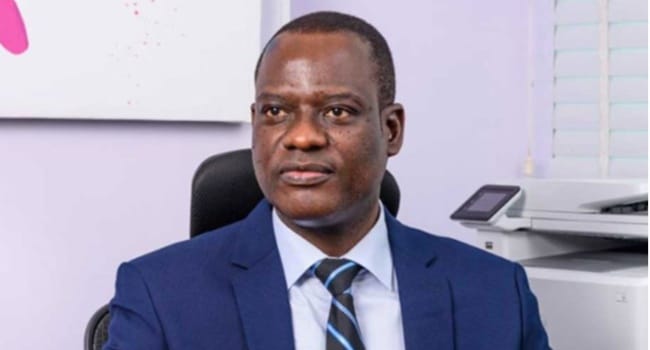
In a statement issued on Sunday, the Minister of Finance and Coordinating Minister of the Economy, Taiwo Oyedele, said recent commentaries alleging that about two per cent of Nigeria’s Gross Domestic Product—estimated at over N8 trillion—was spent outside the budget had misrepresented the position of the International Monetary Fund (IMF).
According to the minister, the allegations wrongly suggested that the Federal Government had secretly expended public funds without legislative approval.
“For the avoidance of doubt, the Federal Government does not operate a ‘shadow budget’ or expend public funds outside the constitutional and statutory framework established for public finance,” the statement said.
Edun explained that Sections 80 to 83 and 162 of the 1999 Constitution provide that public funds can only be withdrawn and spent in accordance with laws passed by the National Assembly.
He noted that federal expenditure is implemented through duly enacted Appropriation Acts, Supplementary Appropriation Acts and other statutory approvals.
The minister also explained that some capital projects naturally extend beyond one fiscal year and are implemented through approved rollover provisions, adding that such arrangements should not be interpreted as off-budget spending.
He argued that allegations of unlawful expenditure running into trillions of naira should be backed by concrete evidence, including the identification of specific projects allegedly executed without appropriation.
“To be meaningful, assertions of this magnitude must be supported by verifiable facts rather than conjecture,” he said.
Oyedele further explained that Nigeria’s public finance system includes statutory transfers, first-line charges and intervention mechanisms established through Acts of the National Assembly.
These, he said, include statutory allocations to agencies established by law, approved capital expenditure for some government agencies and the Federal Capital Territory, debt servicing obligations, revenue collection costs and legally approved interventions for security, infrastructure, disaster response and other national priorities.
According to him, such expenditures are lawful, properly disclosed in fiscal reports and remain subject to oversight, audit and accountability processes.
He added that differences in the way such expenditures are presented under international fiscal reporting standards should not be mistaken for illegal spending outside the budget.
The minister also rejected suggestions that the reported amount represented an increase in Nigeria’s fiscal deficit.
He explained that a fiscal deficit is determined by the relationship between government revenue and expenditure, not by the financing mechanism adopted for approved projects.
Oyedele said the International Monetary Fund’s observations related mainly to the comprehensiveness, timing and presentation of fiscal reporting rather than the legality of government spending.
He noted that Nigeria was already implementing reforms to align its budget presentation with international fiscal reporting standards.
The minister recalled that President Bola Tinubu had, during the presentation of the 2026 Appropriation Bill to the National Assembly on December 19, 2025, requested lawmakers to discontinue the practice of operating multiple and overlapping budgets in favour of a single harmonised framework.
He said the Federal Government remained committed to prudent fiscal management, transparency and accountability, adding that reforms in revenue administration, treasury management, budget credibility and digitalisation had been acknowledged by the International Monetary Fund, other multilateral institutions, international credit rating agencies and investors.
While welcoming public scrutiny of government finances, Oyedele urged commentators to ensure that public debate was guided by facts and a proper understanding of Nigeria’s constitutional and fiscal framework.
He reaffirmed the government’s commitment to transparency, adherence to the rule of law and continued collaboration with the National Assembly and other oversight institutions to strengthen public financial management.
📢 Follow National Periscope on WhatsApp
Get breaking news and updates directly on WhatsApp.
Join WhatsApp ChannelPost Disclaimer
All rights reserved. This material and other digital content on this website are not and do not represent the stance of National Periscope but the statements of newsmakers mentioned therein.
For your detailed news reportage... contact the Editor at Joel2oladele@gmail.com



NOA Targets 200 Radio Stations, 72 Languages for New Tax Read more
Shettima woos more foreign investors to Nigeria in Davos [caption Read more
Senate Sets to make CBN more transparency, accountable The Senate Read more
Despite complaints, Nigeria has cheapest food in West Africa – Read more