

The Federal Government has accounted for N15.8 trillion saved from fuel subsidy removal between June 2023 and December 2025, saying the reform helped prevent a deeper fiscal crisis.
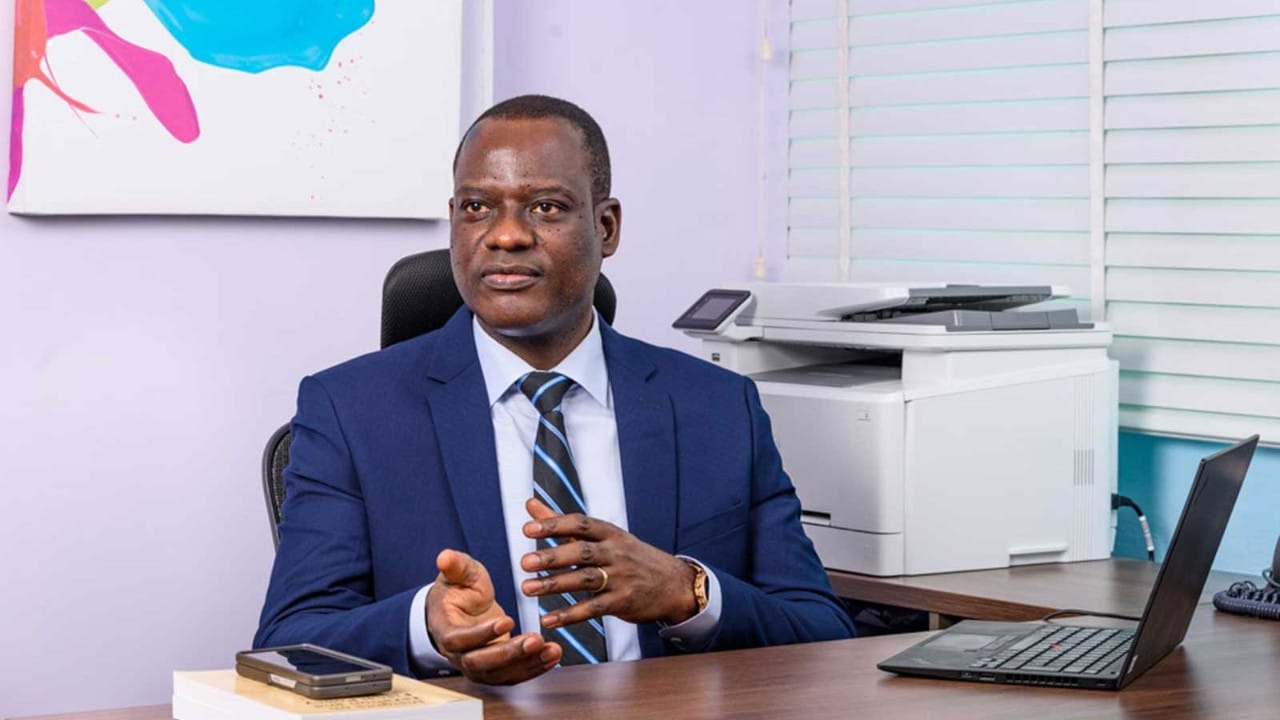
Minister of Finance and Coordinating Minister of the Economy, Taiwo Oyedele, disclosed this yesterday in Abuja while presenting the government’s “Nigeria Reform Scorecard”, which assessed the gains, costs and impact of major economic reforms under President Bola Tinubu’s administration.
Of the N15.8 trillion subsidy savings mobilised for the Federation, N5.4 trillion accrued to the Federal Government, while N10.4 trillion was shared among states and local governments.
The minister said the Federal Government also generated N3.1 trillion in incremental independent revenue, mainly through remittances from government-owned entities, while incremental borrowing contributed N11.9 trillion.
These sources brought the Federal Government’s total incremental resources during the period to N20.4 trillion.
Against this, the government incurred N30.64 trillion in incremental expenditure, with N9.39 trillion spent on wage adjustments, minimum wage increases and allowances for public servants.
Another N9.37 trillion went into external debt servicing arising from naira depreciation, while N6.5 trillion was allocated to strategic infrastructure.
Oyedele explained that borrowing accounted for 58 per cent of the N20.4 trillion incremental resources, subsidy savings 27 per cent and other revenue 15 per cent.
Two-thirds of the N30.64 trillion incremental expenditure was funded from the new resources, while about N10 trillion came from the existing revenue base.
The figures, the minister maintained, showed that subsidy removal was not primarily a revenue-raising measure but part of a broader effort to address corruption, distortions and fiscal pressures created by the subsidy regime and multiple foreign exchange rates.
The Reform Scorecard assessed 25 indicators across fiscal sustainability, external stability, investment climate, social impact, and growth and productivity.
It compared the country’s position in May 2023 with its current position and a counterfactual projection of where key indicators could have been had the subsidy regime, multiple exchange rates and unchecked Ways and Means financing continued.
The assessment showed headline inflation at 15.91 per cent in June 2026, compared with 22.41 per cent in May 2023, while food inflation declined from 24.82 per cent to 17.52 per cent.
Gross foreign reserves increased from about $35 billion to $52.5 billion, while net reserves rose from roughly $3 billion to $34.8 billion.
Stock market capitalisation also grew from about N31 trillion to approximately N150 trillion, while real GDP growth rose from 2.31 per cent to 3.89 per cent.
Oyedele further noted that S&P Global upgraded Nigeria’s sovereign credit rating to B in May, describing it as the country’s first upgrade in 14 years.
Nigeria also exited the Financial Action Task Force grey list in October 2025 and the European Union’s Anti-Money Laundering and Combating the Financing of Terrorism Deficiency List in January 2026.
The minister, however, acknowledged that the reforms came with significant costs for households and businesses.
The Monetary Policy Rate increased from 18.5 per cent to 26.5 per cent, while petrol prices rose from about N185 per litre to between N1,100 and N1,400.
“A scorecard that only lists wins is not a scorecard – it is a campaign leaflet, and we did not come here to give you one,” Oyedele declared.
According to the government’s counterfactual assessment, retaining the pre-reform trajectory could have left petrol unavailable at the former official price while pushing black-market prices above N3,000 per litre.
The minister also pointed to the increase in the national minimum wage from N30,000 to N70,000 and the provision of support to more than 1.5 million students through the Nigeria Education Loan Fund (NELFUND).
Cash transfers, subsidised mortgages, agricultural interventions and the new tax regime were also listed among measures aimed at cushioning the effects of the reforms.
The scorecard further indicated that 27 states struggled to reliably pay salaries in May 2023, compared with none currently in that position.
The premium between the official and parallel exchange rates, which was once above 60 per cent, had also fallen to below five per cent.
Despite the improvements, Oyedele acknowledged that household welfare and poverty remained areas requiring further intervention.
He described them as “unfinished business”, saying the next phase of the reforms would focus on translating macroeconomic stability into tangible improvements in household welfare.
Responding to questions on government borrowing and debt refinancing, the minister defended the administration’s strategy, explaining that the recent transaction was structured to refinance more expensive debt at a lower cost.
The borrowing, he added, had received National Assembly approval, while the Ministry of Finance and Debt Management Office would publish frequently asked questions on the transaction.
On NELFUND, Oyedele urged parents to verify whether their children had benefited from the programme, which provides tuition support and monthly stipends on an interest-free basis.
He reiterated that more than 1.5 million students had benefited from the scheme.
Addressing concerns about government expenditure, the minister said the Federal Government had introduced spending cuts and efficiency measures, noting that the N20.4 trillion in incremental resources was insufficient to fund the N30.64 trillion in additional expenditure.
About N10 trillion, he explained, was therefore sourced from the existing revenue base.
Oyedele also disclosed plans for a central portal through which Nigerians would be able to access the development plans, annual projects and audited accounts of the country’s 774 local governments.
On complaints over delayed budget releases and unpaid contractors, he explained that the government had prioritised personnel costs and debt servicing because of limited resources, leaving capital expenditure to absorb much of the shortfall.
He added that the government had prioritised smaller contractors and paid more than 1,000 of them in recent weeks.
Oyedele rated the administration’s reform performance seven out of 10, saying a higher score would be justified when income levels begin to rise faster than prices, economic growth reaches at least seven per cent and Nigeria’s GDP approaches $1 trillion.
“We are not here to pretend these reforms were painless. We are here to show you, honestly and with the numbers, what they cost, the benefits they delivered, and the harm they prevented,” he said.
Earlier, Minister of Information and National Orientation, Mohammed Idris, said the briefing was organised to provide Nigerians with “clear and factual information” on the resources freed by the removal of fuel subsidy and how they had been deployed.
Idris acknowledged the sacrifices associated with the policy, noting that individuals, families, businesses and communities had been forced to make significant adjustments.
He stressed that Nigerians had the right to know the financial implications of major economic decisions and how resources freed through the reforms were being utilised.
“This is fundamentally about transparency and accountability,” Idris said.
📢 Follow National Periscope on WhatsApp
Get breaking news and updates directly on WhatsApp.
Join WhatsApp ChannelPost Disclaimer
All rights reserved. This material and other digital content on this website are not and do not represent the stance of National Periscope but the statements of newsmakers mentioned therein.
For your detailed news reportage... contact the Editor at Joel2oladele@gmail.com




Oil Price Hits $79 Per Barrel, Surpasses Nigeria’s 2026 Budget Read more
FG Begins Overhaul of Power Distribution Companies with Pilot Scheme Read more
‘Devilish conspiracy’, Air Peace Boss slams foreign airlines over price Read more
National dialogue: IGP, CSOs kick against state police, as Tinubu, Read more