
•Reps Warn Distribution Companies Over Unpaid Market Obligations
•June Collections Drop 7.8% Amid Worsening Liquidity Crisis
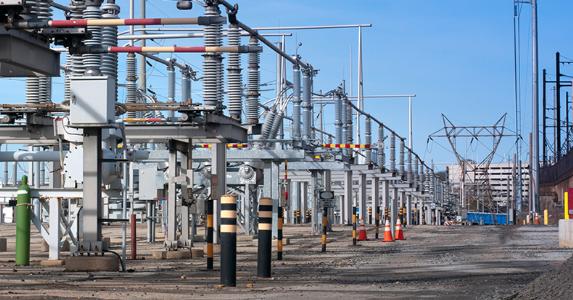
Nigeria’s power sector is facing fresh financial pressure as electricity distribution companies (DisCos) recorded a N123.87 billion gap between the value of electricity supplied to them and the revenue they collected from customers in June 2026.
The development has heightened concerns over the liquidity challenges confronting the electricity market, coming at a time the House of Representatives has warned distribution companies with outstanding market obligations to urgently settle their debts.
According to the latest commercial performance factsheet released by the Nigerian Electricity Regulatory Commission (NERC), the DisCos received electricity valued at N315.73 billion during the month but succeeded in collecting only N191.86 billion from consumers.
The N123.87 billion difference represents revenue that failed to return to the distribution companies after electricity had been supplied to them, underscoring the difficulty operators face in converting energy supplied and bills issued into actual cash.
The situation deteriorated compared with May, with total revenue collections falling by 7.82 per cent, a sharper decline than the 4.02 per cent reduction in the volume of energy received by the companies.
Collection efficiency consequently fell to 79.71 per cent, representing a decline of 2.61 percentage points from the previous month.
The billing figures also showed that the companies were unable to fully bill for the electricity supplied to them. The DisCos billed customers N240.71 billion in June, translating to a billing efficiency of 76.24 per cent, a marginal decline of 0.63 percentage points from May.
More worrying for the operators was the amount they were able to recover from the bills issued.
The average revenue collected per kilowatt-hour stood at N96.63, compared with the allowed average tariff of N130.15. This resulted in a recovery efficiency of 74.24 per cent, down 3.07 percentage points from the preceding month.
The performance figures varied considerably across the 11 distribution companies.
Benin Electricity Distribution Company (BEDC) recorded the strongest collection performance, with a collection rate of 94 per cent. Eko Electricity Distribution Company and Port Harcourt Electricity Distribution Company also recorded relatively strong recovery efficiencies of 87.04 per cent and 86.33 per cent respectively.
The situation was considerably weaker among some northern operators.
Kaduna Electricity Distribution Company recorded a recovery efficiency of 37.03 per cent and collection efficiency of 46.13 per cent, while Kano Electricity Distribution Company posted recovery efficiency of 44.04 per cent and collection efficiency of 42.16 per cent.
Jos Electricity Distribution Company recorded collection efficiency of 55.18 per cent.
The decline was also significant in some of the country’s larger distribution networks. Ikeja Electricity Distribution Company recorded a 14.54 percentage-point drop in recovery efficiency, which fell to 80.08 per cent.
Abuja Electricity Distribution Company similarly recorded a decline of 10.87 percentage points, ending the month with recovery efficiency of 73.98 per cent.
The figures indicate that while billing remains a challenge, the more serious problem confronting the distribution segment is the inability to collect payment after customers have been billed.
Reps Warn DisCos Over Unpaid Market Obligations
Against this backdrop, the House of Representatives Committee on Power has stepped up pressure on DisCos with outstanding financial obligations, warning that continued defaults could threaten the liquidity and sustainability of the electricity market.
The committee chairman, Victor Nwokolo, raised the concern during an oversight visit to the headquarters of the Nigerian Independent System Operator (NISO) in Abuja.
The lawmakers were at the NISO headquarters where they witnessed a public hearing on outstanding market obligations involving selected electricity distribution companies.
The hearing, chaired by NISO Executive Director, Market Operations, Engineer Edmond Eje, was part of the system operator’s ongoing engagements with DisCos over unpaid obligations, events of default and other compliance matters within the Nigerian Electricity Market.
The companies involved include Benin Electricity Distribution Company, Enugu Electricity Distribution Company, Ibadan Electricity Distribution Company, Jos Electricity Distribution Company, Kaduna Electricity Distribution Company, Port Harcourt Electricity Distribution Company and Kano Electricity Distribution Company.
Nwokolo expressed concern over the accumulation of debts by the affected companies, stressing that prolonged failure to meet their financial obligations could have serious consequences for the electricity market.
He urged the DisCos to make every effort within their capacity to settle their outstanding obligations and comply with the rules governing the market.
The lawmaker’s warning comes against the backdrop of the NERC figures showing that a substantial portion of the value of electricity supplied to DisCos in June failed to translate into revenue collected.
The development has raised concerns about the ability of market participants to meet their own financial obligations when revenue continues to fall short of the value of electricity supplied.
Speaking during the engagement, NISO Managing Director and Chief Executive Officer, Abdu Bello Mohammed, commended the committee for its oversight role and support for reforms in the power sector.
He said the establishment of NISO was a major outcome of reforms introduced under the Electricity Act 2023, which provided the framework for the unbundling of the Transmission Company of Nigeria and the creation of an independent system operator.
Mohammed said NISO had developed a comprehensive five-year development plan aimed at strengthening system operations, improving electricity market operations, enhancing system planning and supporting better coordination of the national power system.
He also stressed the need for stronger collaboration among the National Assembly, NISO and other institutions in the electricity supply industry to tackle the structural and financial challenges affecting the sector.
According to him, improved liquidity across the electricity market would strengthen the capacity of market participants to meet their obligations, sustain their operations and ultimately contribute to improved service delivery to consumers.
He called for continued support and constructive oversight from the National Assembly, noting that sustained cooperation among stakeholders would be critical to strengthening the electricity market, stabilising the national grid and advancing efforts to achieve a more reliable and sustainable electricity supply.
The latest developments point to a growing financial strain within the power sector, with the DisCos caught between the challenge of collecting payments from consumers and the obligation to meet their own financial commitments in the electricity market.
With N123.87 billion in June alone failing to translate from electricity supplied into cash collected, and lawmakers demanding that defaulting DisCos clear their debts, the issue of liquidity is emerging as one of the critical challenges that must be addressed if ongoing efforts to reform Nigeria’s electricity market are to deliver sustainable improvements.
📢 Follow National Periscope on WhatsApp
Get breaking news and updates directly on WhatsApp.
Join WhatsApp ChannelPost Disclaimer
All rights reserved. This material and other digital content on this website are not and do not represent the stance of National Periscope but the statements of newsmakers mentioned therein.
For your detailed news reportage... contact the Editor at Joel2oladele@gmail.com




Court stops Multichoice from increasing DStv, GOtv rates A Competition Read more
ECOWAS Mediation Delegation Arrives Niger Princess-Ekwi Ajide Abuja As part Read more
The Nigerian Army has revealed how a coordinated security operation Read more
Inflation: Meet Zimbabwe govt for solution, Obasanjo tells FG •Advocates Read more