
The Federal Government has opened applications for the second cohort of the Student Venture Capital Grant, with 50 student-led businesses set to receive up to N50 million each in equity-free funding.uggrsr
The initiative, backed by President Bola Ahmed Tinubu’s administration, aims to help young Nigerians turn innovative ideas into viable businesses.
Minister of Education, Dr Maruf Tunji Alausa, is leading the programme as part of efforts to strengthen student entrepreneurship and create more opportunities for young innovators.
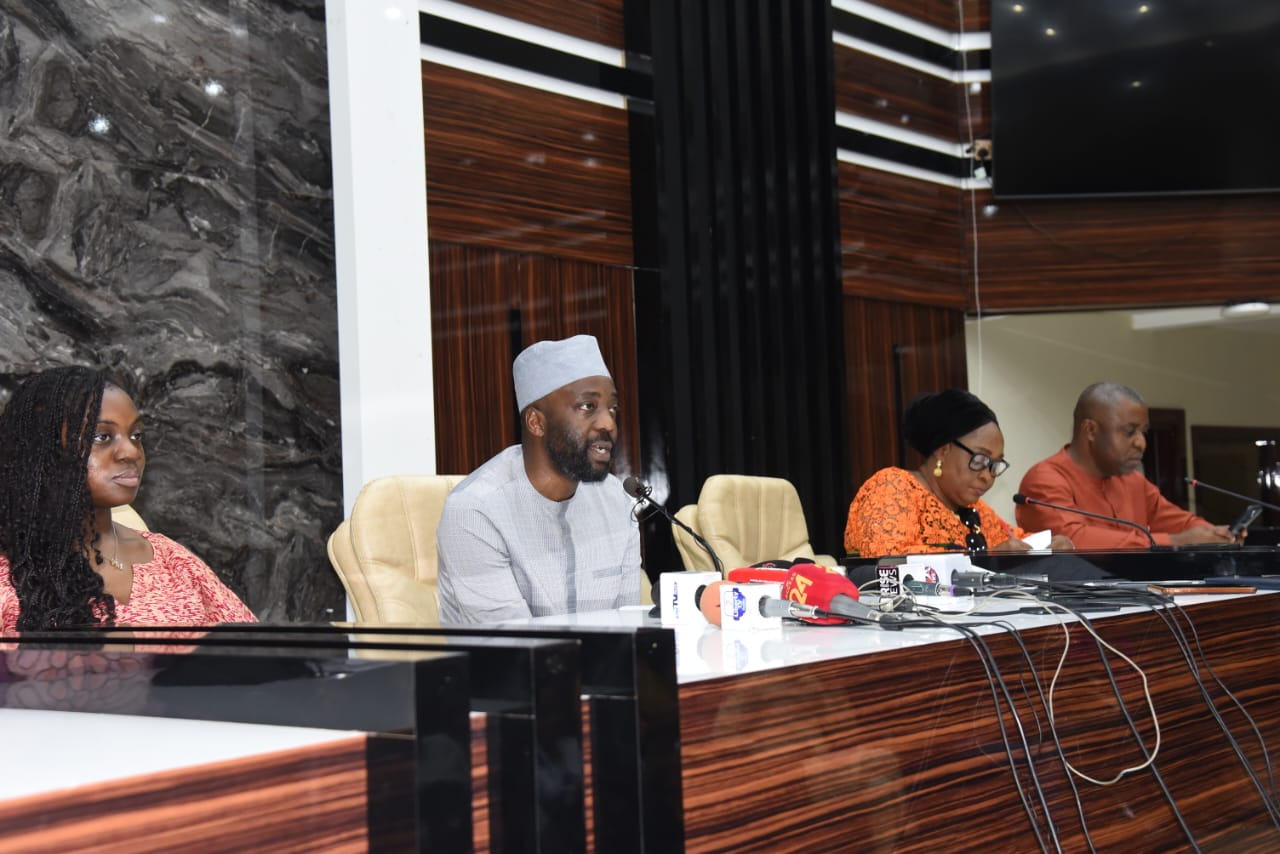
The National Project Coordinator of the S-VCG, Adebayo Onigbanjo, announced the opening at a press briefing in Abuja on Friday, ahead of the nationwide campus mobilisation campaign.
According to Onigbanjo, the campaign will run from September 6 to 30, 2026, and will take the programme directly to students across the country.
It will particularly target students developing solutions in science, technology, engineering, mathematics and medicine.
The S-VCG team plans to visit nine tertiary institutions across the six geopolitical zones. They include the University of Abuja, Nile University, Abubakar Tafawa Balewa University and Bayero University Kano.
Others are Kano University of Science and Technology, Federal Polytechnic Nekede, Ambrose Alli University, University of Lagos and Covenant University.
The ministry will also activate a Campus Ambassador Programme in 20 other institutions to widen awareness of the grant.
Consequently, the ministry has urged vice-chancellors, rectors, provosts, lecturers and student leaders to identify promising innovators and encourage them to apply.
For the second cohort, the organisers have introduced a more rigorous selection process. Applications will undergo AI-assisted screening and assessment by 10 human evaluators.
Shortlisted applicants will then pitch their ventures virtually before an Evaluation Committee. Finalists will proceed to a bootcamp and make in-person presentations.
“A six-month mentorship programme will also support successful beneficiaries after the funding stage. The programme will connect student entrepreneurs with experienced organisations and business leaders,” the ministry noted.
The partners come from sectors including technology, logistics, e-commerce, health and education. They include Lafarge, Chowdeck, Powerhouse, HostAfrica, Klasha, LifeBank, Future Africa, GetEquity and OneHealth.
The expanded support model reflects the ministry’s focus on helping student entrepreneurs beyond access to funding. It will also provide mentorship, business networks and practical support to help beneficiaries grow.
The second cohort builds on the response to the inaugural programme, which attracted 17,914 registrations from 404 institutions across Nigeria.
The first application cycle opened in November 2025 and received entries from all 36 states and the Federal Capital Territory.
Public institutions accounted for 348 of the registrations, while 56 came from private institutions. Male applicants made up 52 per cent, while female participation stood at 48 per cent.
After the initial application stage, 3,014 completed submissions went through AI-assisted screening and review by 10 human evaluators.
Sixty-five finalists subsequently advanced to a three-day bootcamp held from March 27 to 29, 2026. They presented their ventures before venture capitalists, industry experts and academic leaders.
The S-VCG, also known as the Next Moonshot Initiative, forms part of the Ministry of Education’s Nigeria Education Sector Renewal Initiative.
It falls under the initiative’s STEMM pillar, which focuses on research, innovation and entrepreneurship. The programme operates in partnership with Tertiary Education Trust Fund, Bank of Industry and Afara Initiative.
The grant is open to students working on innovations in areas such as health, agriculture, education, technology, energy, logistics and e-commerce.
Applicants must currently attend a Nigerian university, polytechnic or college of education. They must also be at least in 300 level or its equivalent.
Students below 300 level can still participate as members of teams led by eligible students.
“Applicants must have a business name or company registered with the Corporate Affairs Commission. Their projects must also have moved beyond the proof-of-concept stage and show clear real-world potential,” Onigbanjo said.
Applications are currently open through svcg.education.gov.ng and will close on September 30, 2026.
The ministry said it would continue working with tertiary institutions, development partners and private sector organisations to expand opportunities for student innovators.
The programme is expected to help more young Nigerians move their ideas from the classroom into the marketplace while contributing to entrepreneurship and economic development.
📢 Follow National Periscope on WhatsApp
Get breaking news and updates directly on WhatsApp.
Join WhatsApp ChannelPost Disclaimer
All rights reserved. This material and other digital content on this website are not and do not represent the stance of National Periscope but the statements of newsmakers mentioned therein.
For your detailed news reportage... contact the Editor at Joel2oladele@gmail.com






CIPMN Holds Maiden Annual General Meeting, Calls For Adherence to Read more
Terrorists k!ll final year female student of Bayero University kidnapped Read more
[caption id="attachment_25368" align="alignnone" width="2560"] Turbaning of the NECO Registrar, Prof. Read more
[caption id="attachment_22516" align="alignnone" width="836"] Minister of Education, Tunji Alausa[/caption] The Read more