
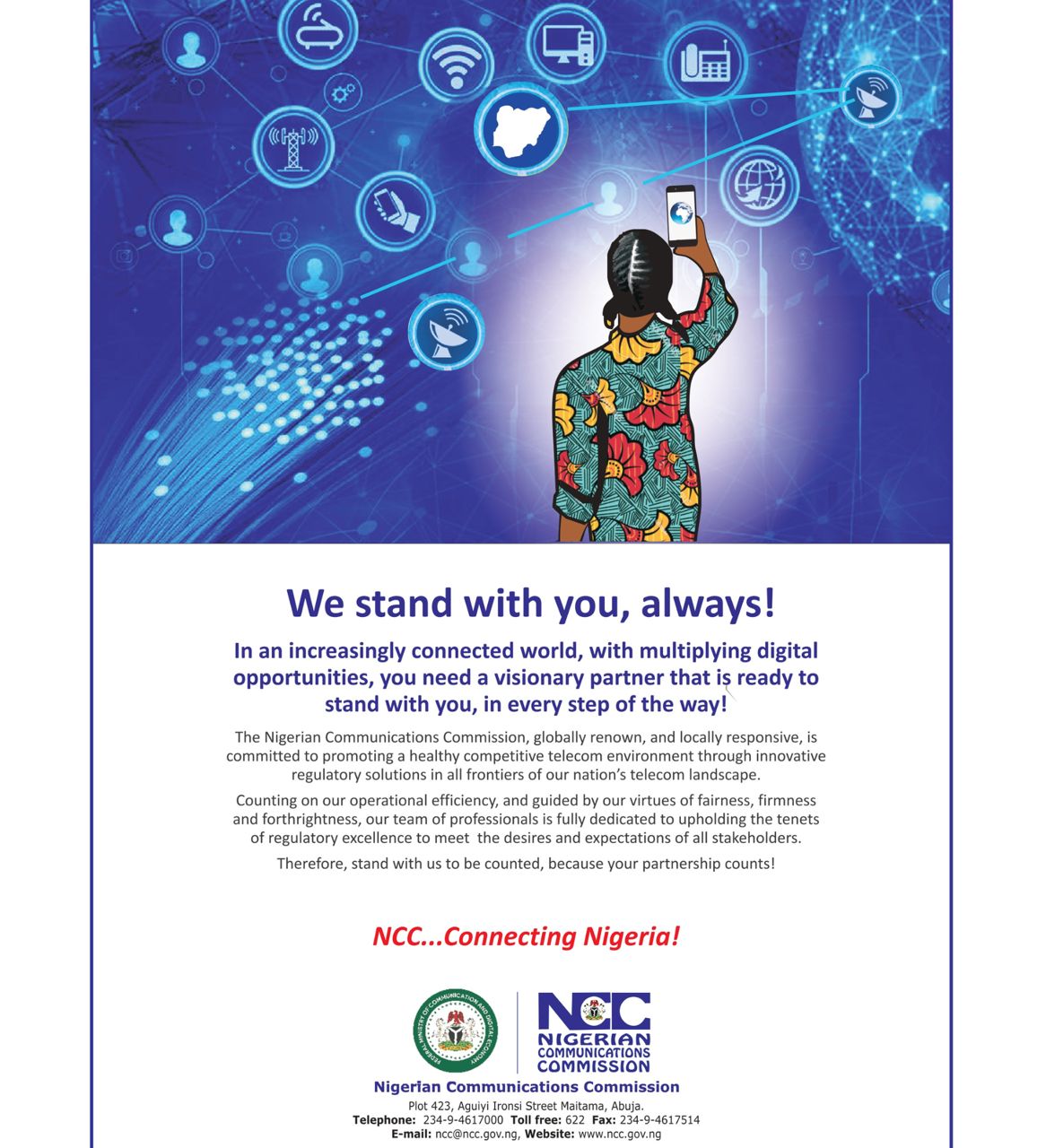

The Nigerian Communications Commission (NCC) has raised the alarm over a fresh return of call masking, warning that the practice poses both security and financial risks to the country’s telecommunications sector.
The warning came as the Commission stepped up efforts to protect the integrity of Nigeria’s communication networks and prevent activities capable of depriving licensed operators and government of legitimate revenue.
Call masking has become a recurring problem in the industry, particularly where international calls are deliberately presented as local calls. By altering the caller identity, operators or other parties involved can make an international call appear to have originated within Nigeria.
The financial attraction is straightforward. Instead of attracting the applicable international termination rate, the disguised call is treated as local traffic and attracts a lower local termination rate.
The NCC Governing Board expressed concern over the resurgence at its 110th meeting on September 9, 2026, and restated the Commission’s opposition to the practice.
It described call masking as “an unacceptable practice and a serious regulatory concern,” stressing that its consequences extend beyond lost revenue.
According to the Commission, the practice can also compromise the security of the telecommunications environment because it makes it harder to establish the true identity or origin of a call.
Masked calls may involve temporary or proxy numbers that conceal the actual numbers of the people communicating. That feature, when abused, can provide cover for fraudulent activities and other forms of unlawful communication.
The NCC said call masking “undermines legitimate telecommunications operations” and distorts the revenue structure of the industry.
The impact can also extend to government revenue, given the taxes and other statutory earnings associated with legitimate telecommunications activities.
The Commission has previously taken regulatory action against operators involved in call masking-related violations. The latest resurgence, however, has prompted renewed collaboration with security agencies, law-enforcement authorities and industry stakeholders.
The Board said the NCC would work with the relevant bodies to identify, prevent and eliminate the practice.
It went further to describe call masking as “an act of economic sabotage capable of adversely impacting the national economy.”
The renewed focus on call masking comes at a time when the regulator is introducing other measures designed to strengthen security and accountability within the telecommunications industry.
One of them is the Device Management System, which is already operational. The platform is expected to improve compliance with device type-approval requirements and discourage the circulation of non-compliant phones and other devices.
It will also support the fight against phone theft by making it possible to block reported stolen devices from operating across Nigerian networks.
The Commission is also preparing to introduce the Telecommunications Identity Risk Management System in October.
The system is expected to tighten the management of telecommunications identities, particularly mobile numbers, by addressing risks associated with misuse, reassignment and recycling.
The need for such controls has become more important as telephone numbers have evolved beyond their traditional use for calls and messages. They are now routinely connected to banking, social media and other digital services, making the compromise of a mobile identity potentially more damaging.
The NCC said the deployment of its regulatory technology systems would be guided by consumer protection, lawful use of digital services, privacy and data protection requirements.
Meanwhile, the Commission is reporting progress in efforts by mobile network operators to expand coverage and improve service capacity.
Of the 12,179 additional sites operators had committed to deploy, 8,526 have now been deployed nationwide. This represents about 70 per cent of the commitment and is a substantial rise from the roughly 5,000 sites recorded at the previous Board meeting.
The expansion has not, however, eliminated disruptions on the networks. The Board noted that fibre cuts were responsible for a sharp increase in network disruptions in June and stressed the need to protect critical telecommunications infrastructure.
Beyond network security, the Commission is pursuing initiatives aimed at widening access to digital services.
The Board reviewed progress on the framework for zero-rating educational platforms and content, an initiative intended to reduce the cost of accessing online learning resources for students.
The programme was launched on September 10, with October 1, 2026 scheduled for its Go-Live.
The Board also considered plans to reposition the Digital Bridge Institute, with the proposed exercise aimed at improving its institutional relevance and ensuring its long-term sustainability.
Two independent consultancies are expected to undertake separate assessments of the institute, covering its structure, operations, human resources, institutional standing, as well as the commercial and legal viability of the proposed changes.
The NCC said its broader regulatory efforts would remain focused on building a telecommunications environment that is secure, resilient and accessible, while protecting consumers and promoting sustainable growth in Nigeria’s digital economy.
📢 Follow National Periscope on WhatsApp
Get breaking news and updates directly on WhatsApp.
Join WhatsApp ChannelPost Disclaimer
All rights reserved. This material and other digital content on this website are not and do not represent the stance of National Periscope but the statements of newsmakers mentioned therein.
For your detailed news reportage... contact the Editor at Joel2oladele@gmail.com






NITDA unveils NIJA Chat App to support digital economy devt Read more
The Federal Government has introduced an 11-character alphanumeric postcode system Read more
The Global System for Mobile Association (GSMA) has called on Read more
The Federal Government has approved the acquisition and deployment of Read more