

•Agency Seeks Global Support To Revive Vaccine Manufacturing In Nigeria
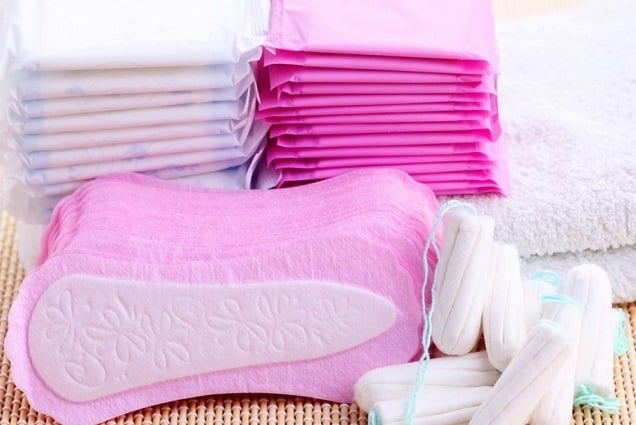
The National Agency for Food and Drug Administration and Control (NAFDAC) has begun laboratory tests on selected sanitary pads amid growing concerns over their chemical composition and possible health risks.
The agency said it had sampled a named sanitary-pad product following a complaint and commenced safety assessments, including microbial limit and skin irritation tests.
The development follows renewed public concern over sanitary products after reports of studies conducted in 2024 by scientists from the Nigerian Defence Academy and the Air Force Institute of Technology.
The findings have triggered debate on social media, with some users questioning whether certain sanitary pads contain substances that could pose health risks.
Some women have also reported itching, burning sensations, infections and perceived changes in menstrual flow after using certain brands. Others said they had used the same products for years without similar reactions.
NAFDAC said it had started evaluating selected registered sanitary pads for volatile organic compounds (VOCs) as part of its response to the concerns.
“A complaint received on a named sanitary pad is currently being investigated as the product has been sampled for laboratory evaluation for safety including microbial limit and skin irritation tests,” the agency said.
The agency also rejected claims that it does not conduct laboratory tests on disposable sanitary pads.
“The agency conducts laboratory evaluation of Disposable Sanitary Pad products submitted for regulatory approval and those sampled from post-market surveillance activities,” it said.
NAFDAC explained that disposable sanitary pads fall under Class I medical devices and must meet regulatory requirements covering registration, laboratory assessment, manufacturing and post-market surveillance.
It added that the products must comply with the applicable Nigerian Industrial Standard, NIS 291, developed by the Standards Organisation of Nigeria.
The agency said manufacturers must also meet relevant quality-management requirements, while product labels must provide consumers with information needed for safe use.
NAFDAC said it could introduce additional controls if scientific evidence confirms the need for tighter regulation.
Possible measures include routine VOC testing, closer product monitoring, restrictions on substances of regulatory concern and disclosure of fragrances and other relevant ingredients.
Pharmacist Ezekiel Daniel, however, cautioned against declaring sanitary products unsafe solely because some users reported adverse reactions.
“The studies being discussed on social media do not, by themselves, establish that the products were harmful,” he said.
Daniel urged NAFDAC to publicly explain the scientific findings and clarify what the reported chemical detections could mean for women using the products.
While addressing the sanitary-pad concerns, NAFDAC is also seeking international support to revive vaccine manufacturing in Nigeria.
The agency’s Director-General, Prof. Mojisola Adeyeye, made the appeal at the eighth Nigeria Pharma Manufacturers’ Expo in Lagos.
Adeyeye said Nigeria needed to resume vaccine production to meet the remaining requirement for the World Health Organisation’s Maturity Level 4 for vaccine lot release.
She said NAFDAC had fulfilled eight of the nine functions required for full benchmarking of medicines and vaccines, leaving vaccine lot release as the outstanding requirement.
“We want to call on our international partners that have been of tremendous help. Without them we wouldn’t have been here,” Adeyeye said.
“I want to challenge them to contribute to fill and finish modular vaccine manufacturing so that we can get our vaccine lot release,” she added.
The NAFDAC boss said the agency had developed a feasible plan for meeting the requirement and estimated that the investment would not be excessive.
She also recalled that Nigeria had previously manufactured vaccines, arguing that the country should return to local production.
“It’s high time we went back to vaccine manufacturing,” she said.
Adeyeye further credited the Federal Government’s 2024 Executive Order on local pharmaceutical manufacturing with supporting efforts to strengthen the industry.
She said NAFDAC’s Good Manufacturing Practice (GMP) Roadmap had also improved local production through compliance audits of more than 165 companies.
According to her, NAFDAC inspectors spent eight months conducting the audits under a programme funded by the United States Agency for International Development through the United States Pharmacopeia.
Adeyeye said local manufacturers reduced imports under the “5 plus 5” and Ceiling Initiative by 70 per cent between 2021 and 2025.
She attributed the reduction to stronger manufacturing capacity and greater willingness among producers to compete in the domestic market.
The NAFDAC chief also said the agency had strengthened its regulatory capacity through staff development and international partnerships.
She noted that NAFDAC joined the International Medical Device Regulators Forum in 2023, while its Yaba laboratory secured WHO prequalification in September of the same year.
Adeyeye said NAFDAC became the first regulatory agency in sub-Saharan Africa to successfully undergo WHO re-benchmarking at the first attempt.
“All this is because of our industry. It’s because of our citizens,” she said.
The chairman of the Pharmaceutical Manufacturing Group of the Manufacturers Association of Nigeria (PMG-MAN), Oluwatosin Jolayemi, urged the Federal Government to sustain policies supporting local pharmaceutical production.
Jolayemi called for a two-year extension of the 2024 Executive Order after its expiration in March 2027.
He said medicine security and pharmaceutical sovereignty required sustained policies, investment and capacity development.
“Journey towards Medicine Security and Pharma Sovereignty is not a short-term intervention,” Jolayemi said.
A total of 132 companies from Nigeria, the United States, China, Argentina, Egypt, India, Rwanda, Austria, the United Arab Emirates, France, Germany and Indonesia participated in the two-day expo.
📢 Follow National Periscope on WhatsApp
Get breaking news and updates directly on WhatsApp.
Join WhatsApp ChannelPost Disclaimer
All rights reserved. This material and other digital content on this website are not and do not represent the stance of National Periscope but the statements of newsmakers mentioned therein.
For your detailed news reportage... contact the Editor at Joel2oladele@gmail.com






Tinubu reiterates commitment to education, health President Bola Tinubu says Read more
Oyo Confirms Lassa Fever Case, Activates Emergency Response The Oyo Read more
‘We are wife materials’, deaf women cry out over neglect Read more
Ogun State Leads Charge Against Unsafe Abortions Amid Maternal Health Read more