

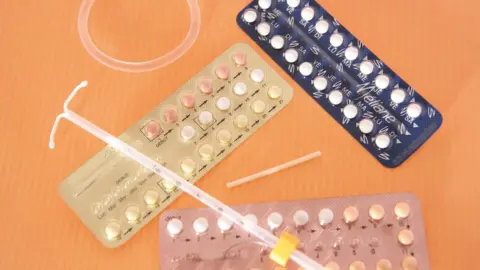
The World Health Organisation(WHO) has expanded its recommended contraceptive options, including longer use of some existing methods and mifepristone for emergency contraception.
The new guidance also calls for the development of new contraceptives for men. WHO said the recommendations aim to help countries widen access to methods backed by scientific evidence.
The global health body said greater choice would allow people to select methods that suit their needs. It would also give them more flexibility to change or stop contraception when necessary.
WHO estimates that 164 million women who want to delay or avoid pregnancy currently do not use contraception.
Under the new guidance, women may use combined oral contraceptive pills continuously for up to one year. The pills may also be taken for extended periods of up to six months.
WHO has also recommended extending the use of contraceptive implants to five years. The organisation said longer use could reduce replacement procedures, clinic visits and related costs.
The guidance adds mifepristone to the recommended emergency contraceptive options. WHO advises taking it as soon as possible and within five days after unprotected sex.
According to the organisation, available evidence shows that mifepristone doses ranging from 10 to 50 milligrams are likely to be as safe and effective as other emergency contraceptive methods.
Pascale Allotey, Director of WHO’s Department of Sexual, Reproductive, Maternal, Child and Adolescent Health and Ageing, said contraceptive choices should reflect individual needs and circumstances.
She pointed to convenience, invasiveness, behaviour, reliability and accessibility as factors that should influence contraceptive choices.
“Choice is a gender equality issue,” Allotey said, stressing that contraception was not a “one-size-fits-all” matter.
She added that people should have the freedom and confidence to choose a method, change it or stop using it.
However, WHO also highlighted methods that require more evidence before wider adoption. The organisation called for further research into ormeloxifene because of limited safety evidence.
It also advised against including quinestrol-containing contraceptive pills in national family planning programmes. WHO cited limited evidence and reports of serious adverse events.
Meanwhile, the organisation wants greater attention paid to male contraception. WHO noted that men currently have only a few direct options, including condoms, withdrawal and vasectomy.
Despite the limited choices, about 30 per cent of couples rely on a male-controlled contraceptive method, according to WHO.
The organisation said research also challenges the assumption that men would reject new contraceptive options. More than 75 per cent of couples surveyed said they would consider using a new male contraceptive.
More than 85 per cent of women surveyed also said they would trust their male partners to take responsibility for contraception.
To encourage further development, WHO has introduced its first Target Product Profile for male contraceptives. The profile sets out key characteristics for future products, including safety, effectiveness, acceptability and affordability.
WHO said the framework would give researchers, funders and developers clearer direction. It also aims to encourage a contraceptive market that responds to users’ needs.
Several hormonal and non-hormonal male contraceptives are already undergoing research. Some candidates have reached advanced stages of clinical trials.
WHO said the progress suggests that new reversible male contraceptives could become available within the next five to 10 years.
The organisation said it would continue helping countries update their family planning policies and programmes in line with emerging scientific evidence.
📢 Follow National Periscope on WhatsApp
Get breaking news and updates directly on WhatsApp.
Join WhatsApp ChannelPost Disclaimer
All rights reserved. This material and other digital content on this website are not and do not represent the stance of National Periscope but the statements of newsmakers mentioned therein.
For your detailed news reportage... contact the Editor at Joel2oladele@gmail.com







Controversy as 4-year-old boy dies in Abuja school A four-year-old Read more
Tinubu retains Adeyeye as NAFDAC DG, NCDC, others get new Read more
Climate change: Expert X-rays effects on mental health, recommends remedies. Read more
[caption id="attachment_25214" align="alignnone" width="636"] Menstrual pad[/caption] Stakeholders across the health, Read more