

Climate change: Expert X-rays effects on mental health, recommends remedies.
Joel Oladele, Abuja
The United Nations Environment Programme(UNEP), Climate Change Coordinator for Africa, Dr Richard Munang has X-rayed the effects of climate change on mental health in Africa.
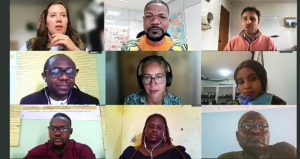
Speaking via a zoom meeting on Monday on the topic “Climate Change and mental health: Connecting Climate Minds Sub-Saharan Africa dialogue. Understanding the emerging mental health challenges of the climate crisis” Munang noted that most injuries experienced during climate change induced disasters, are primarily psychological.
According to him, up to 34% of disability adjusted life-years are due to climate change in sub-Saharan Africa and the continent is disproportionately vulnerable.
He added that the extreme weather events in Africa has affected about 19 million people and killed at least 4,000 individuals.

UNEP Climate Change Coordinator for Africa.
“The psychological impacts of any extreme event or disaster exceeds physical injuries by 40 to 1. This is to say that most injuries experienced during climate change induced disasters, are primarily psychological injuries that we can’t see. It is further estimated that in sub-Saharan Africa, up to 34% of disability adjusted life-years are due to climate change.
“Last year, the Intergovernmental Panel on Climate Change (IPCC) reported that vulnerability to climate hazards is higher in locations with considerable constraints on development, such as poverty, limited access to basic services and resources, etc., and Africa stands out.
“The World Bank records that while climate change is global, Africa’s is disproportionately vulnerable to the changing climate, because of a low socioeconomic base, where vulnerable communities often are unable to afford the goods and services, they need to access alternative solutions to buffer against the worst of the changing climate.
“As an example, to illustrate this, it is reported that in Louisiana, one of the risk prone areas in America that experiences hurricanes, home & business owners filed up to $10billion in insurance claims for damage caused by hurricanes and tropical storms in 2020. In contrast, cyclones Idai and Kenneth – that hit southern Africa and caused a trail of losses and fatalities, caused damages exceeding $3billion.
“There was no talk of insurance among the most vulnerable. Africa’s disproportionate vulnerability therefore comes down to its low socioeconomic base. As we speak today, by June 2023, extreme weather events in Africa affected about 19 million people and killed at least 4,000 individuals.” He said.
Munang also stated that in spite of the fact that Africa is leading in climate change induced adversity, stress, and distress, the resilient nature of Africans is the reason the continent accounts for the least global disease burden of depressive disorder.
“Between January 2021 – September 2022, about 52million people, which is 4% of Africa’s population, were impacted either by drought or floods, deeply affecting their livelihoods. In the whole of 2022, over 110 million people on the continent were directly affected by weather, climate and water-related hazards that caused over $8.5 billion in economic damages.
“These risks occur in the continent which is the least able to cope with the negative impacts of climate change. The point is that – wherever we look, Africa is a continent leading in climate change induced adversity, stress, and distress.
“The expectation would therefore be that the continent would carry the most burden of depression and mental health. But the opposite is true – Africa accounts for the least, about 9%, of global disease burden of depressive disorder. This then tells us one thing – the question for us is – how do we prevent this figure from rising any further, and instead lower it rapidly?
“The answer is one – timing. Africans are a resilient people, a hopeful people, a positive people, looking forward to a brighter tomorrow despite the extreme difficulty of today. We urgently need to tap into this wide scale positivity as fuel to advance socioeconomic transformation and hence build real resilience of populations against climate change.
“And with Africa also accounting for less than 1% of global research output, and a lack of psychiatric studies on mental disorders associated with climate change within the African context, my message today is simple – let us leverage the goodwill and positivity that exists today, to avert a crisis of climate change induced depression in the future, and as we do so, document lessons to inform the global body of research from a solutions dimension.”
He therefore called on stakeholders to take decisive steps towards averting a future crisis of climate change induced mental health challenges in Africa.
“Rethink climate change narrative in Africa: a common saying reminds us, that “where the mind goes, the person follows”. In simple terms, you are likely to become or likely to do, that which you think and dwell on all the time. A narrative that projects powerlessness, is likely to commit your thoughts to powerlessness, and thereby strip you of all your willpower to do anything.
“This is what we see with climate change in Africa, and especially among the youth. A study shows that there is a rise of climate anxiety – which is becoming a medical condition that drives apathy towards life especially among young people who see no hope. A climate narrative of doom and gloom is driving hopelessness among Africa’s youth, as they see no hope for a better tomorrow.
“Acting on climate change will never be achieved with a sick, demotivated, weak-minded, hopeless population, and especially among young people. What urgently needs to happen is that the narrative of climate change, needs to start projecting the income, enterprise, business opportunities on diverse levels that actions to combat climate change can present to energize and inspire especially young people to start seeing themselves as solutions providers, not victims.” Munang suggested among other things.
📢 Follow National Periscope on WhatsApp
Get breaking news and updates directly on WhatsApp.
Join WhatsApp ChannelPost Disclaimer
All rights reserved. This material and other digital content on this website are not and do not represent the stance of National Periscope but the statements of newsmakers mentioned therein.
For your detailed news reportage... contact the Editor at Joel2oladele@gmail.com






NiMet, C-WINS Partner to Shield Farmers from Climate Threats JOEL Read more
Akeredolu returns from three months medical leave. The Governor Read more
[caption id="attachment_25601" align="alignnone" width="452"] A fake version of ORACARE, Oracire, Read more
Stakeholders Gather in Namibia to Discuss Climate’s Role in Fostering Read more