

Finance Ministry Defends Tinubu’s $22.5bn Loan, N758bn Pension Bond
JOEL OLADELE, Abuja
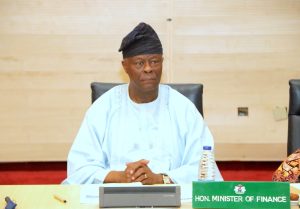
The Ministry of Finance has defended the recent loan request by President Bola Ahmed Tinubu, which includes a $21.5 billion external loan and a ₦758 billion domestic bond aimed at settling outstanding pension liabilities.
This was disclosed in a statement signed by the Director, Information and Public Relations, Finance Ministry, Mohammed Manga, on Wednesday.
The statement provided context and clarification regarding the significance of the loan request, emphasizing its role in the country’s financial planning.
Tinubu had on May 27, 2025, formally requested the approval of the 2024 – 2026 External Borrowing Rolling Plan from the National Assembly.
The plan is described as an essential component of the Medium-Term Expenditure Framework (MTEF) and aligns with both the Fiscal Responsibility Act 2007 and the Debt Management Office (DMO) Act 2003.
The statement noted, “The Plan outlines the external borrowing framework for both the federal and sub-national governments over a three-year period, accompanied by five detailed appendices on the projects, terms and conditions, implementation period, among others.”
Manga explained that the structured approach of the borrowing plan facilitates comprehensive financial planning and avoids the inefficiencies of ad hoc borrowing practices.
“This strategic method enhances Nigeria’s ability to implement effective fiscal policies and mobilize development resources,” he added.
Importantly, the statement clarified that the borrowing plan does not equate to actual borrowing for the period.
“The actual borrowing for each year is contained in the annual budget. In 2025, the external borrowing component is US $1.23 billion, and it has not yet been drawn. This is planned for H2 2025.
“The plan encompasses both federal and several state governments across various geopolitical zones, including Abia, Bauchi, Borno, Gombe, Kaduna, Lagos, Niger, Oyo, Sokoto, and Yobe States,’’ Manga stated.
The Ministry emphasized that the Borrowing Rolling Plan does not automatically increase the nation’s debt burden.
“The nature of the rolling plan means that borrowings are split over the period of the projects. For example, a large proportion of projects in the 2024 – 2026 rolling plan have multi-year drawdowns of between 5 – 7 years, which are project-tied loans.
“These projects span critical sectors of the economy, including power grids, irrigation for food security, fiber optics networks, security enhancements, and infrastructure development,” Manga explained.
According to him, the majority of the proposed borrowing will be sourced from Nigeria’s development partners, including the World Bank, African Development Bank, French Development Agency, European Investment Bank, JICA, China EximBank, and the Islamic Development Bank.
“These institutions offer concessional financing with favorable terms and long repayment periods, thereby supporting Nigeria’s development objectives sustainably,” Manga noted.
The government reiterated that the debt service to revenue ratio has begun to decrease from its peak of over 90% in 2023.
“The government has ended the distortionary and inflationary ways and means. There are significant revenue expectations from the Nigerian National Petroleum Corporation (NNPC) and technology-enabled monitoring and collection of surpluses from Government Owned Enterprises and revenue-generating ministries, departments, and agencies.
“With a focus on macroeconomic stabilization, the Federal Government aims to pivot the economy toward rapid, sustained, and inclusive growth.
“Achieving this vision requires substantial investment in critical sectors such as transportation, energy, infrastructure, and agriculture,” Manga stated.
He therefore noted that the government remains committed to keeping borrowing within manageable and sustainable limits in accordance with the DMO Debt Sustainability Framework.
He added that the ongoing tax reform agenda and other revenue initiatives will further improve revenue generation and prudent financial management.
“We reaffirm our dedication to fiscal discipline, transparency, and accountability. Constructive public engagement and legislative oversight are vital components of our journey toward long-term economic stability and inclusive national prosperity,” he concluded.
📢 Follow National Periscope on WhatsApp
Get breaking news and updates directly on WhatsApp.
Join WhatsApp ChannelPost Disclaimer
All rights reserved. This material and other digital content on this website are not and do not represent the stance of National Periscope but the statements of newsmakers mentioned therein.
For your detailed news reportage... contact the Editor at Joel2oladele@gmail.com




FG Replenishes $500m Trust Fund to Spur Private Sector Growth Read more
Tinubu shuts down Treasury Single Account, opens new one for Read more
Tinubu, Shettima, APC, Governors, Others Mourn Gov. Ododo’s Father JOEL Read more
No going back on demand for N1m minimum wage — Read more