

Abia, Ogun Top Intercity Bus Fares as Transport Costs Climb Nationwide
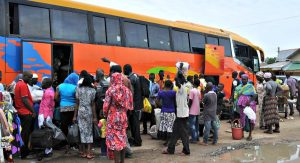
Transport costs across Nigeria recorded fresh increases in February 2026, with Abia and Ogun states posting the highest intercity bus fares, according to the latest Transport Fare Watch released by the National Bureau of Statistics.
The report indicates a broad rise in fares across major modes of transportation, including buses, air travel, motorcycles and water transport, underscoring the sustained pressure on commuters amid economic challenges.
Data from the agency showed that passengers paid the highest intercity fares in Abia at N9,490.95 and Ogun at N9,402.26 during the period under review. In contrast, Kwara recorded the lowest average at N6,190.50, followed by Edo at N6,650.00.
Within cities, bus fares edged up slightly to an average of N1,195.75 in February from N1,186.98 recorded in January, representing a marginal monthly increase. However, on a yearly basis, the rise was more pronounced, reflecting a 26.71 per cent jump compared to February 2025.
Intercity travel showed mixed movements, with the average fare dropping month-on-month to N8,108.81 from N8,504.39 in January, but still higher than figures recorded a year earlier.
Air travel also became more expensive, as the average cost of a one-way ticket rose to N153,647.95, marking both monthly and annual increases. Kano recorded the highest average airfare, followed by Ogun, while Gombe and Bauchi posted the lowest fares.
Motorcycle transport, commonly known as okada, continued its upward trend, with average fares rising to N920.95. The increase represents a sharp year-on-year surge of over 50 per cent, reflecting higher operating costs. Kaduna and Lagos topped the list, while Adamawa and Akwa Ibom recorded the lowest fares.
Similarly, water transport fares climbed to an average of N2,097.30, with Rivers and Bayelsa states accounting for the highest charges, while Borno recorded the lowest.
Across regions, the South-West zone recorded the highest intra-city transport fares, while the South-East posted the lowest. For intercity journeys, the South-East emerged as the most expensive, whereas the North-East recorded relatively lower costs.
The figures highlight the continued rise in the cost of mobility across the country, affecting both short-distance commuters and long-distance travellers, and adding to the financial burden on households and businesses.
📢 Follow National Periscope on WhatsApp
Get breaking news and updates directly on WhatsApp.
Join WhatsApp ChannelPost Disclaimer
All rights reserved. This material and other digital content on this website are not and do not represent the stance of National Periscope but the statements of newsmakers mentioned therein.
For your detailed news reportage... contact the Editor at Joel2oladele@gmail.com





NRC Increases Abuja–Kaduna Train Trips From March 6 The Nigerian Read more
No compensation for shanties along Lagos-Calabar coastal road project – Read more
FCT Police CP orders clampdown on unregistered vehicles over insecurity Read more
FG to commission Abuja Rail Mass Transit in May Minister Read more