

Uphold Truth or Risk Undermining Democracy, INEC Tells Media
JOEL OLADELE, Abuja
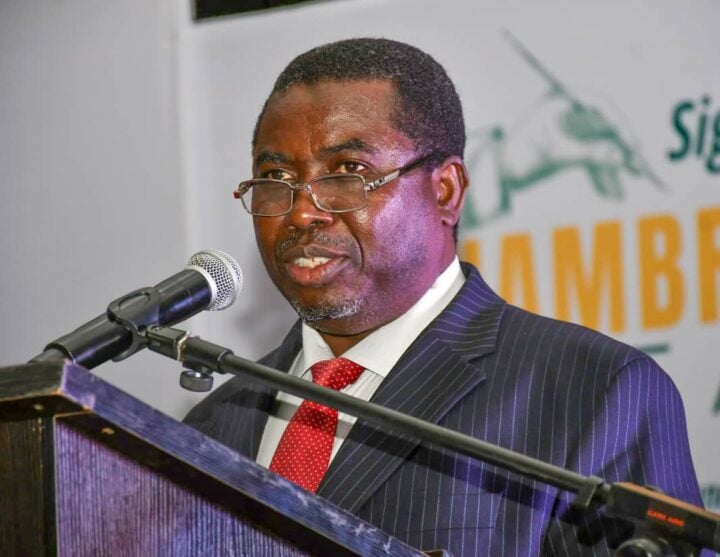
The Chairman of the Independent National Electoral Commission (INEC), Joash Amupitan, on Wednesday warned broadcast organisations to prioritise truth and professionalism in election coverage, cautioning that failure to do so could undermine Nigeria’s democratic process ahead of the 2027 general elections.
Speaking at the 81st General Assembly of the Broadcasting Organisations of Nigeria (BON) in Abuja, Amupitan said the media now plays a decisive role in shaping electoral outcomes, stressing that the credibility of elections depends not only on voting but also on the integrity of the information space.
“Your airwaves have become the primary infrastructure of our democracy. If they are clear, the nation sees the truth; if they are clouded by misinformation, the sovereign will of the people is threatened,” he said.
He commended broadcasters for their performance during recent elections, particularly the Anambra 2025 and FCT 2026 polls, noting that their coverage helped bridge the gap between electoral processes and public understanding.
However, the INEC chairman cautioned that the growing influence of the media has also heightened concerns over misinformation, unequal access, and the potential for manipulation of public opinion.
Amupitan highlighted provisions of the Electoral Act 2026 designed to regulate political communication, including equal access to airtime for all political parties and restrictions on the use of state-owned media to favour any candidate.
“State apparatus, including the media, shall not be employed to the advantage or disadvantage of any political party or candidate,” he said, adding that equal airtime must be allocated at similar hours to ensure fairness in political competition.
He explained that such measures are aimed at creating a level playing field, especially in a political environment with multiple parties, warning that unequal media exposure could distort voter perception and weaken electoral credibility.
The INEC boss also drew attention to the 24-hour blackout period before election day, which prohibits political advertising and campaign messaging within that window.
“The rationale is to create a quiet period in which voters can reflect on their choices without last-minute persuasion, propaganda, or misinformation,” he noted.
Despite the legal framework, Amupitan identified persistent challenges, including the dominance of incumbents in media coverage, the commercialisation of political airtime, and weak enforcement of regulations.
He warned that financial strength often determines access to the airwaves, leaving smaller parties at a disadvantage and narrowing the democratic space.
“In the 2027 General Election, the most dangerous weapon will not be a ballot-snatcher’s gun, but a smartphone-user’s lie amplified by an uncritical broadcast station,” he said.
With the countdown to the 2027 elections already underway, Amupitan urged broadcasters to take proactive steps to combat misinformation and strengthen public trust in the electoral process.
“Fact-check in real-time: Do not wait for the post-mortem. Kill the fake news on your morning shows before it reaches the afternoon news,” he charged.
He also called on the media to help address voter apathy by mobilising citizens to participate in the electoral process.
“A democracy experiencing voter apathy is a backsliding democracy… help us mobilise Nigerians to come out and exercise their franchise,” he said.
Amupitan further warned against prioritising profit over professional ethics, especially in the sale of political advertising.
“The temptation to prioritise high-paying political adverts over balanced reporting will be great. I urge you to choose the sanctity of the ballot,” he added.
He proposed stronger collaboration between INEC, broadcasters, security agencies and the judiciary to safeguard electoral integrity, stressing that elections are increasingly being contested in the information space.
“Elections are no longer just contested at the polling units; they are contested in the information space,” he said.
The INEC chairman maintained that while the Electoral Act 2026 provides a solid foundation for regulating media conduct during elections, more work is needed to strengthen enforcement and ensure compliance.
He urged broadcast organisations to uphold fairness and accuracy as political parties begin their primaries, noting that equal airtime obligations must be guided by official party records held by the commission.
📢 Follow National Periscope on WhatsApp
Get breaking news and updates directly on WhatsApp.
Join WhatsApp ChannelPost Disclaimer
All rights reserved. This material and other digital content on this website are not and do not represent the stance of National Periscope but the statements of newsmakers mentioned therein.
For your detailed news reportage... contact the Editor at Joel2oladele@gmail.com



INEC Chairman, Otti in Alleged Unholy Alliance Over Labour Party Read more
INEC Defers Voter Revalidation Exercise Until After 2027 Polls JOEL Read more
[caption id="attachment_25304" align="alignnone" width="2560"] Representative of the INEC Chairman, Prof. Read more
The Independent National Electoral Commission (INEC) has raised the alarm Read more