

African Cocoa, Coffee Farmers Demand Fair Pricing Amid Global Market Boom
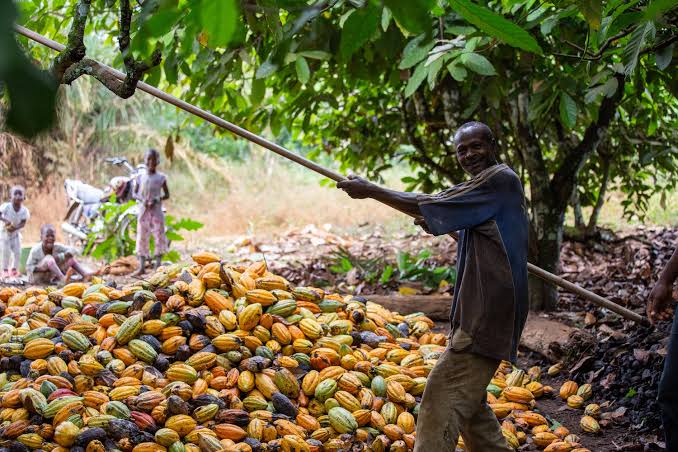
African cocoa and coffee farmers have raised fresh concerns over widening inequality in global commodity markets, warning that rising international demand is doing little to improve livelihoods at the grassroots.
The Cocoa and Coffee Farmers Alliance Association of Africa said producers across West, East and Central Africa are grappling with unstable prices and shrinking incomes, despite strong growth forecasts for both industries.
In a statement issued Tuesday, the group’s global president, Adeola Adegoke, noted that the cocoa and chocolate market is projected to expand significantly in the coming years, driven largely by demand for premium and dark chocolate in Europe and emerging Asian economies.
The global coffee sector is also expected to witness sustained growth, fuelled by rising consumption of high-end and ready-to-drink products.
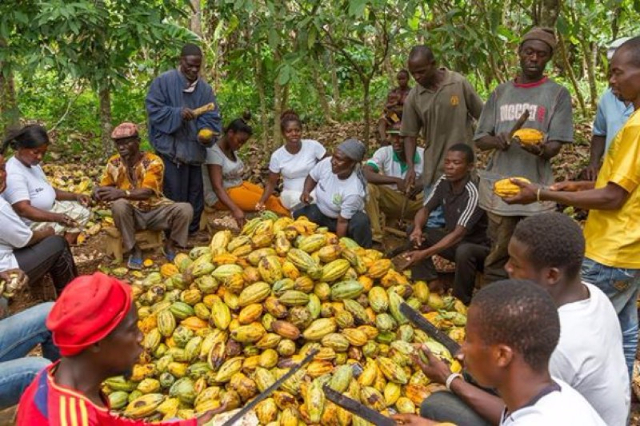
However, Adegoke warned that these positive projections are masking a deepening crisis among smallholder farmers, who form the backbone of Africa’s production.
“Growth in global markets is not translating into better earnings for farmers,” he said, adding that many producers are forced to sell below production costs due to volatile pricing systems.
According to the alliance, the consequences are already visible in rural communities. Farmers are struggling to afford essential inputs such as fertilisers and improved seedlings, while some households are reportedly cutting spending on education and healthcare as incomes fluctuate.
The group described farmers as “shock absorbers” in the global supply chain—bearing the brunt of price drops while receiving minimal benefit during price surges. It warned that the imbalance poses a serious threat to the long-term sustainability of the sector.
Climate pressures are further complicating the situation. Changing rainfall patterns and rising temperatures are reducing yields in traditional growing belts, forcing some farmers to relocate or abandon cultivation altogether. The gradual shift toward heat-tolerant crop varieties, including Fine Robusta coffee, presents opportunities but also requires substantial investment and technical support.
COCEFAAA cautioned that without urgent reforms, declining profitability at the farm level could eventually disrupt global supply, undermining the same growth projections that currently excite investors.
To address the challenges, the alliance is advocating three key interventions: increased funding for agricultural research, particularly for climate-resilient crops; expansion of local processing capacity to retain more value within Africa; and stronger collaboration among producing countries to enhance bargaining power in global markets.
It also urged international buyers and manufacturers to adopt long-term purchasing frameworks that ensure stable and livable incomes for farmers, alongside greater investment in training and climate adaptation.
The group further identified Asia, particularly India, as a promising frontier for diversifying export markets and reducing dependence on traditional buyers.
“We cannot continue to celebrate a multi-billion-dollar industry while its primary producers remain in poverty,” the statement said, stressing that future growth must be more inclusive.
COCEFAAA maintained that unless farmers are placed at the centre of the value chain, the projected expansion of the cocoa and coffee industries could prove unsustainable.
📢 Follow National Periscope on WhatsApp
Get breaking news and updates directly on WhatsApp.
Join WhatsApp ChannelPost Disclaimer
All rights reserved. This material and other digital content on this website are not and do not represent the stance of National Periscope but the statements of newsmakers mentioned therein.
For your detailed news reportage... contact the Editor at Joel2oladele@gmail.com






FG unveils comprehensive mechanisation plan to boost agricultural productivity The Read more
FG urges Agric research institute to increase IGRs Olaitan Ogundele Read more
Despite complaints, Nigeria has cheapest food in West Africa – Read more
Governors Ododo flags off fertilizer distribution to Kogi farmers JOEL Read more