

The Nasarawa State Government has reaffirmed its partnership with Digital Peers International (DPI) in efforts to curb rising healthcare costs linked to poor sanitation practices, warning that indiscriminate waste disposal continues to fuel preventable diseases across communities.
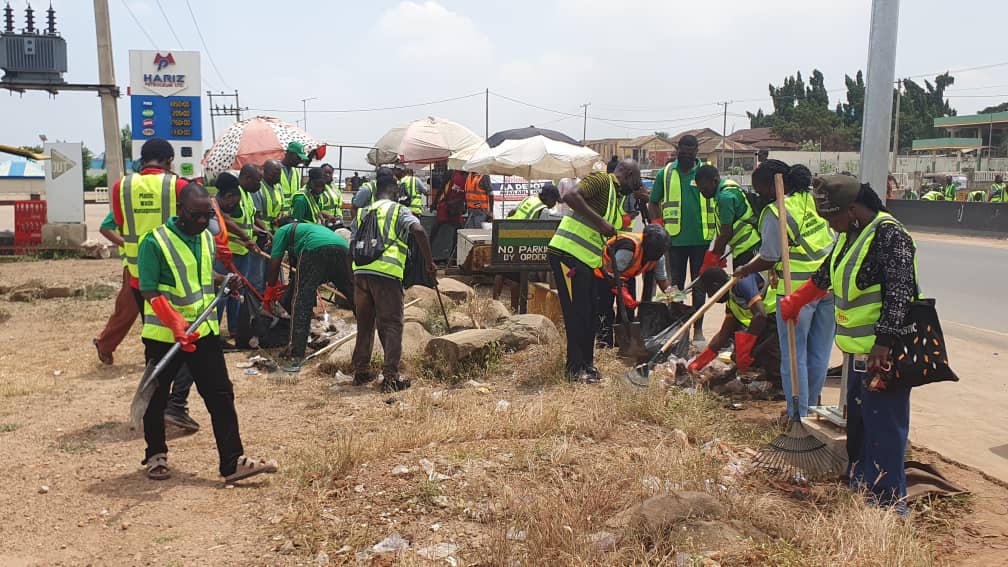
The warning was delivered on Tuesday during a community cleanup and environmental sensitisation exercise held in Masaka, Karu Local Government Area, under the Digital Peers International-Small Grant Project (DPI-SGP), which focuses on plastic waste management and environmental sustainability.
The initiative also comes amid reports that Nigeria loses an estimated N455 billion annually to poor sanitation and environment-related health challenges. The figure represents about 1.3 per cent of the country’s GDP and translates to roughly $20 per person each year.
Speaking at the event, the Director General of the Nasarawa State Waste Management and Sanitation Authority (NASWAMSA), Mohammed Bello Isa, said the state government remains committed to addressing sanitation challenges that continue to affect public health and economic productivity.
Isa noted that environmental cleanliness is directly linked to public health, stressing that poor waste management contributes to flooding, pollution and the spread of diseases in communities.
“Poor waste disposal practices contribute significantly to environmental degradation, flooding, air and water pollution, and vector-borne diseases,” he said.
The Director General, who was represented by the Director of Waste Management, Dr Ishaq Abubakar Ibrahim, said the administration of Governor Abdullahi Sule has continued to strengthen waste collection systems, promote recycling initiatives and expand public awareness campaigns on sanitation.
He stressed that sanitation must be treated as a collective responsibility involving government, households, businesses and community leaders.
“Every household, business owner, institution and community leader has a role to play in waste reduction, proper segregation, recycling and responsible disposal,” he said.
Isa described the cleanup exercise as both symbolic and practical, noting that awareness must be matched with sustained action to achieve lasting results.
He added that NASWAMSA supported the exercise with waste evacuation trucks and personnel, saying Masaka remains one of the most challenging areas in the Karu axis in terms of waste management.
“This exercise will beautify Masaka. The waste will be evacuated and properly disposed of at designated sites,” he said.
He further explained that poor sanitation has direct consequences on public health, noting that cleaner environments significantly reduce the burden on healthcare facilities.
“Once a community is clean and well managed, the burden of disease reduces significantly, and fewer people will need medical attention for waste-related illnesses,” he added.
Isa also highlighted the economic value of waste, describing it as a resource that can generate employment and income through recycling and recovery initiatives.
“Waste is not just waste. It is a resource. What one person discards can be valuable to another,” he said, pointing to ongoing collaborations with agencies such as the Abuja Environmental Protection Board (AEPB) in waste recycling programmes.
According to him, organic waste can be converted into manure for agricultural use, while plastic waste can be recycled into useful products that support both environmental protection and economic growth.
Also speaking, the Director of Public Health at NASWAMSA, Dr Joseph David Anzaku, warned that poor waste disposal exposes communities to communicable and tropical diseases, increasing avoidable healthcare spending for families and government.
“The dangers of poor waste management are numerous. They include the spread of infectious diseases and the diversion of resources meant for family welfare into unnecessary medical treatments,” he said.
Earlier, the Chief Executive Officer of Digital Peers International, Dr Ibukun Odusote, represented by Programme Officer Pada Zadunya, said the project titled *“Deploying the Power of IT-Engaged Youths in Effective Plastic Use and Plastic Waste Management 2.0”* is designed to promote environmental sustainability through youth participation and innovation.
She noted that the initiative is supported by the UNDP Global Environment Facility Small Grants Programme (UNDP-GEF SGP) Nigeria and aims to address plastic pollution while empowering young people economically.
Odusote urged residents to take ownership of environmental cleanliness and act as ambassadors of sustainable sanitation practices within their communities.
The exercise featured cleanup operations, sensitisation campaigns and stakeholder engagements aimed at improving waste management practices in Masaka and surrounding areas.
📢 Follow National Periscope on WhatsApp
Get breaking news and updates directly on WhatsApp.
Join WhatsApp ChannelPost Disclaimer
All rights reserved. This material and other digital content on this website are not and do not represent the stance of National Periscope but the statements of newsmakers mentioned therein.
For your detailed news reportage... contact the Editor at Joel2oladele@gmail.com




Abuja Garden Owners Association Laments Encroachment of Green Area Against Read more
JOEL OLADELE, Abuja The Cross River State Government has called Read more
Engineers Raise Alarm Over Potential Earthquake Impact in Lagos, Ibadan, Read more
Lagos govt bans single-use plastics, Styrofoam with immediate effect The Read more