

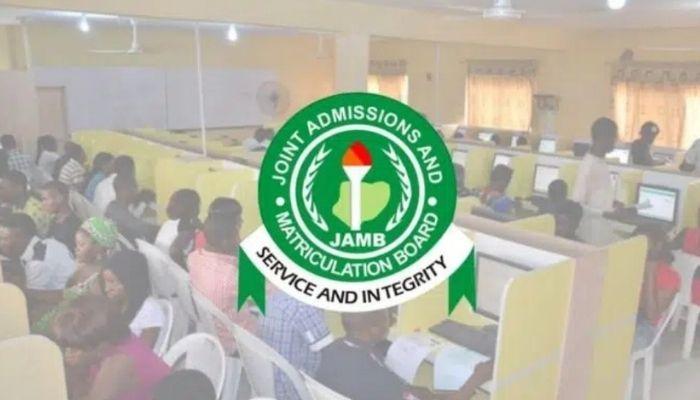
The Joint Admissions and Matriculation Board (JAMB) has begun a review of the Unified Tertiary Matriculation Examination (UTME) to include life skills and critical thinking.
The board said the move would make the examination more relevant to the demands of tertiary education and real-life situations.
JAMB Registrar, Prof. Segun Aina, disclosed this on Wednesday in Abuja while inaugurating a committee of education experts and stakeholders.
The committee will develop a framework for incorporating the proposed skills into the UTME.
Aina explained that UTME mainly ranks candidates for admission after they have obtained their O-Level qualifications.
He said a continued focus on subject knowledge could duplicate assessments already conducted by examination bodies such as the West African Examinations Council (WAEC) and the National Examinations Council (NECO).
“So ours is a ranking task. It’s not necessarily to test your subject matter expertise,” Aina said.
He said JAMB therefore wanted to assess skills candidates would need beyond the classroom.
These include critical thinking, reasoning and problem-solving abilities that they can apply in real-life situations.
The registrar also questioned whether the current UTME format still predicts how candidates will perform after gaining admission.
He said the board must determine whether its existing methods can reliably identify candidates with strong prospects in universities, polytechnics and colleges of education.
“Are the methods that we are employing to check and predict who will do well in the university or the polytechnic or the college of education, are they still valid?” he asked.
Aina noted that the UTME format had remained largely unchanged for more than 30 years.
He said JAMB must therefore continue to review its assessment methods as education and skills requirements evolve.
“The biggest room in the house is the room for improvement,” he said.
Aina explained that JAMB deliberately brought different stakeholders into the review process to ensure broad input before adopting any major changes.
He said the board could not independently determine the effectiveness of its own examination without input from those affected by its decisions.
“We cannot be judges in our own matter,” the registrar said.
He added that the committee had an initial four-week period to examine the proposal from a conceptual standpoint.
The Minister of Education, Dr Tunji Alausa, also backed the review.
Alausa, represented by Technical Assistant to the Acting Permanent Secretary, Federal Ministry of Education, Mr Oni Adedeji, said the initiative aligned with broader efforts to reform assessment in the education sector.
He urged the committee to develop fair and transparent methods for measuring analytical, logical and verbal reasoning.
The minister said the committee should also determine how JAMB could introduce the new elements into the UTME.
It will consider whether to assess them as a separate component or integrate them into existing subjects.
Alausa said the goal was to measure not only what candidates know but also how they think, reason and solve problems.
“I strongly believe getting these right will shape how Nigeria evaluates readiness for tertiary education now and in years to come,” he said.
Chairman of the committee, Prof. Boniface Nworgu of the University of Nigeria, Nsukka, said the UTME should identify candidates with a strong prospect of succeeding in tertiary education.
He explained that JAMB conducts a selection examination rather than a certificate examination.
Nworgu said the predictive validity of the test therefore remains central to the review.
“What JAMB is expected to do and what it is doing is to look at those measures that can help us to select the candidates that have the highest promise of succeeding in academic tasks at the tertiary education level,” he said.
He said the committee would examine the validity of the UTME against changes in tertiary education and curriculum requirements.
Nworgu cited the shift from the Benchmark Minimum Academic Standards (BMAS) to the Core Curriculum and Minimum Academic Standards (CCMAS).
He said the newer curriculum places greater emphasis on skills and critical thinking.
“The focus now is the area of skills and then critical thinking,” he said.
Nworgu, however, said the committee would consider other measures if they could improve the UTME’s ability to predict academic success.
He stressed that the committee would rely on evidence before recommending any major change to the examination.
The committee chairman said members would establish a baseline to determine whether a modified UTME delivers better results.
He said this would help ensure that public funds spent on the reform produce measurable benefits.
The committee comprises representatives from universities, examination bodies, professional councils, secondary schools, students’ organisations and development agencies.
Members include representatives of the University of Nigeria, Nsukka; Bayero University, Kano; WAEC; Medical and Dental Council; Council for the Regulation of Engineering in Nigeria; National Board for Technical Education; and other education and professional bodies.
Also represented are the Nigerian Educational Research and Development Council, Nursing and Midwifery Council of Nigeria, National Universities Commission, National Commission for Colleges of Education and National Association of Nigerian Students.
The committee is expected to submit its initial recommendations within four weeks.
JAMB will then consider the findings before moving to a further stage that could involve assessment specialists in developing the details of any framework eventually adopted.
📢 Follow National Periscope on WhatsApp
Get breaking news and updates directly on WhatsApp.
Join WhatsApp ChannelPost Disclaimer
All rights reserved. This material and other digital content on this website are not and do not represent the stance of National Periscope but the statements of newsmakers mentioned therein.
For your detailed news reportage... contact the Editor at Joel2oladele@gmail.com






 to include life skills and critical thinking.)
The West African Examinations Council (WAEC) has released the results Read more
FG sets 18 years as minimum entry age into tertiary Read more
Peter Higgs, physicist who proposed the existence of the 'God Read more
The National Youth Service Corps (NYSC) says it is Read more