
Extreme Weather, Climate Change Worsen Hunger, Insecurity in Africa — WMO Report
JOEL OLADELE, Abuja

The World Meteorological Organization (WMO) has released a report indicating that extreme weather events and climate change are severely undermining socio-economic development across Africa, exacerbating issues of hunger, insecurity, and displacement.
The “State of the Climate in Africa 2024” report highlights that the year 2024 has been marked as either the warmest or second-warmest year on record, with the past decade being the hottest in history.
According to the report, sea-surface temperatures around the continent have reached unprecedented levels, particularly in the Atlantic Ocean and the Mediterranean Sea, leading to extensive marine heatwaves that have affected the largest area since monitoring began in 1993.
WMO Secretary-General, Celeste Saulo emphasized the urgency of the situation, stating, “The State of the Climate in Africa report reflects the urgent and escalating realities of climate change across the continent. It also reveals a stark pattern of extreme weather events, with some countries grappling with exceptional flooding caused by excessive rainfall and others enduring persistent droughts and water scarcity.”
The report outlined the multifaceted challenges posed by climate change, impacting agriculture, food security, water resources, energy supply, health, and education.
However, it also identified opportunities for innovation, noting that advancements in artificial intelligence, mobile communication, and weather prediction models are enhancing the accuracy and reach of weather services across Africa. “WMO and its partners are committed to working with Members to build resilience and strengthen adaptation efforts in Africa through initiatives like Early Warnings for All.
“It is my hope that this report will inspire collective action to address increasingly complex challenges and cascading impacts,” Saulo added.
The report revealed alarming statistics regarding temperature increases, with the average surface temperature across Africa in 2024 approximately 0.86 °C above the 1991-2020 long-term average.
North Africa has experienced the most significant warming, with temperatures rising 1.28 °C above the long-term average. The extreme heat has adversely affected agriculture, labor productivity, and educational activities across the continent.
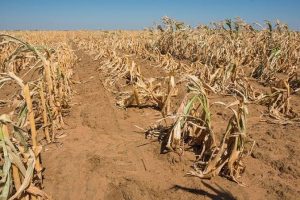
In Southern Africa, severe drought conditions have particularly impacted Malawi, Zambia, and Zimbabwe, which are experiencing their worst drought in two decades. The report indicated that aggregate cereal yields in Southern Africa are 16% below the five-year average, with Zambia and Zimbabwe facing declines of 43% and 50%, respectively.
This has led to low water levels and reduced hydropower output from Lake Kariba, resulting in prolonged power outages and economic disruption.
Conversely, East Africa has faced devastating flooding due to exceptionally heavy rains from March to May, affecting Kenya, Tanzania, and Burundi, resulting in hundreds of fatalities and displacing over 700,000 individuals.
West and Central Africa have also suffered from catastrophic floods, impacting over four million people and causing significant casualties and displacements, particularly in Nigeria, Niger, Chad, Cameroon, and the Central African Republic.
The report further noted that North Africa has recorded its third consecutive below-average cereal harvest, with Morocco’s output falling 42% below the five-year average due to low rainfall and extreme temperatures.
Additionally, the report highlighted the unprecedented occurrence of two tropical cyclones in May, which impacted regions rarely affected by such storms.
In response to these challenges, WMO noted the need for enhanced early warning systems and climate resilience strategies. It called on governments, development partners, and the private sector to accelerate climate-smart investments.
The WMO’s “State of the Climate in Africa 2024” report is accompanied by a digital story map and is part of a series of WMO climate reports aimed at informing decision-making for national and regional climate strategies.
As Africa grapples with the escalating impacts of climate change, the report emphasized the critical importance of digital transformation in improving weather forecasts and early warning systems. Countries across the continent are increasingly adopting digital technologies to enhance service delivery, with notable examples including the Nigeria Meteorological Agency’s use of digital platforms for agricultural advisories and the Kenya Meteorological Department’s mobile applications for weather forecasts.
While these initiatives represent significant progress, the report stressed that much more is needed to integrate digital technologies into operational systems throughout Africa, including increased investment in digital infrastructure, stronger data-sharing frameworks, and improved equitable access to services.
The World Meteorological Organization remains the authoritative voice of the United Nations System on weather, climate, and water, and its findings serve as a clarion call for urgent action to address the multifaceted challenges posed by climate change in Africa.
📢 Follow National Periscope on WhatsApp
Get breaking news and updates directly on WhatsApp.
Join WhatsApp ChannelPost Disclaimer
All rights reserved. This material and other digital content on this website are not and do not represent the stance of National Periscope but the statements of newsmakers mentioned therein.
For your detailed news reportage... contact the Editor at Joel2oladele@gmail.com






Experts X-ray Phytobiotechology as panacea to climate change, food insecurity, Read more
NiMet DG says New Act will guarantee impactful future. Joel Read more
Things to know about Monday’s total Solar Eclipse When a Read more
Global Leaders Rally for Urgent Action on Early Warning Systems Read more