
African Ministerial Conference on Meteorology urges increased investment
Joel Oladele, Abuja
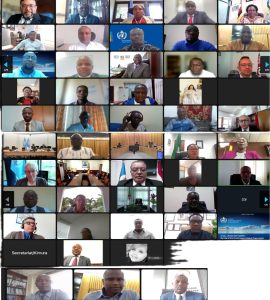
The African Ministerial Conference on Meteorology (AMCOMET) convened virtually on May 16, 2024, to discuss strategies for enhancing the delivery of weather, water, and climate services, and early warnings to users ranging from decision-makers to local communities.
In a statement signed by the Public Information Officer, World Meteorological Organization (WMO) Regional Office for Africa (RAF), Dr Kosmos E. Akande-Alasoka, the conference noted the critical need for increased investment to achieve these goals.
Held biennially, AMCOMET sessions provide a unique ministerial forum offering policy and political guidance to improve the contribution of National Meteorological and Hydrological Services (NMHSs) to sustainable socio-economic development and regional cooperation.
“Africa faces a great threat: climate change, which has devastating effects. Experts indicate that our continent is one of the most vulnerable regions in the world. Droughts, floods and other extreme weather events are now more frequent and more intense on the continent; the recent case of floods in Kenya is a perfect illustration,” said H.E. Mr Jean Ernest Massena Ngalle Bibehe, Minister of Transport, Republic of Cameroon, and outgoing AMCOMET Chair.
“It is more than ever time to ensure the regular and systematic provision of multi-hazard early warnings, with a view to rapid action. And this cannot be achieved without developing the capacities of national meteorological and hydrological services who are the authoritative voices on weather, water and climate related issues,” he said.
The ministerial session also deliberated on progress in the implementation, monitoring, and evaluation,as well as the resource mobilization plan, of the Integrated African Strategy on Meteorology (2021-2030) approved by African Heads of States. This is pivotal to ensuring that NMHSs can fully play their pivotal role in the development agendas.
“The current level of investment in weather, water and climate services in the continent is generally inadequate. There are glaring gaps in the basic observing network. Many NMHSs in Africa are not able to absorb the various opportunities for capacity building and skills enhancement offered by the WMO community.
“This in turn undermines the real-time exchange of weather observations that underpins the provision of accurate and fit-for-purpose forecasts and warnings. There are insufficient staff resources,” said WMO Deputy Secretary-General Ko Barrett.
“Ministers may be aware that unless these structural gaps are fixed, the relevance and effectiveness of NMHSs under their supervision will not be optimal,” she said.
The AMCOMET session elected a new bureau, with Sam Cheptoris (MP) Minister of Water and Environment, Uganda, as Chair.
There is thus need to strengthen the capacity of National Meteorological Hydrological Services (NMHSs) to provide early warning information to save lives and property,” said Beatrice Atim Anywar, Minister of State for Environment, in a statement on behalf of the Chair.
📢 Follow National Periscope on WhatsApp
Get breaking news and updates directly on WhatsApp.
Join WhatsApp ChannelPost Disclaimer
All rights reserved. This material and other digital content on this website are not and do not represent the stance of National Periscope but the statements of newsmakers mentioned therein.
For your detailed news reportage... contact the Editor at Joel2oladele@gmail.com



2025 SCP: NiMet Predicts Delayed Onset of Rain in Kwara, Read more
NiMet Seeks Dialogue with Labour Unions over Fresh Strike Threat Read more
NGO Launches Hotline to Guide Response to Rising Extreme Heat Read more
NiMet, NCDC Sign MoU on Data sharing and information exchange Read more