

JOEL OLADELE, Abuja
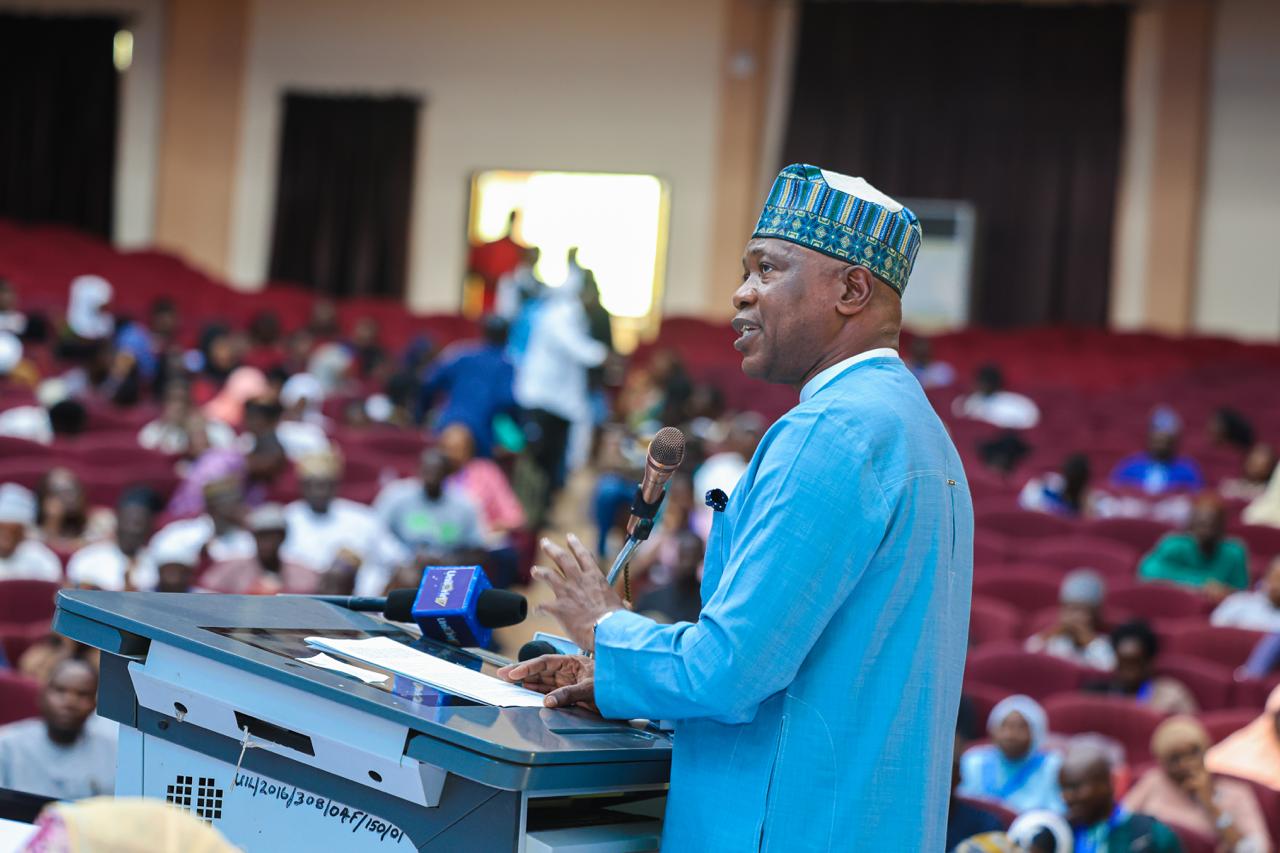
The Comptroller-General of the Nigeria Customs Service, Adewale Adeniyi, has called for a more human-centred approach to digital transformation, warning that technology must remain guided by ethics, leadership and institutional responsibility.
Adeniyi spoke on Wednesday while delivering the keynote address at the 4th Biennial International Conference organised by the Faculty of Communication and Information Sciences of University of Ilorin in collaboration with the Faculty of Philology of RUDN University.
The conference, themed “Disruptive Technology: Human and Artificial Intelligence in the Digital Economy,” drew scholars, researchers, policymakers, communication experts and heads of government agencies to discuss the growing influence of artificial intelligence and emerging technologies on governance, trade and economic development.
Addressing participants at the university’s main auditorium, the Customs boss said the digital economy should not be driven solely by machines and automation but by the ability of institutions to deploy technology responsibly for public good.
“The digital age is, in the end, a human story, and the real test of our generation is not how powerful our machines become, but how wisely our societies choose to use them,” Adeniyi stated.
He noted that the rapid growth of artificial intelligence, e-commerce, digital payment systems and smart technologies had already altered the global economic landscape, adding that governments and institutions must now focus on ensuring that innovation strengthens accountability and public trust.
According to him, the world has moved beyond merely preparing for disruption and is already operating within a technology-driven environment that requires adaptive leadership and ethical governance.
Drawing examples from reforms within the Nigeria Customs Service, Adeniyi highlighted ongoing digital transformation initiatives, particularly the deployment of the B’Odogwu Unified Customs Management System.
He said the platform had significantly improved cargo processing, trade facilitation and collaboration among government agencies involved in port operations and border management.
The Customs chief disclosed that the system generated more than N230 billion at the PTML Command within its first eight months of operation, while reducing cargo clearance time for compliant traders to less than eight hours.
“The partnership, not the rivalry, between human and artificial intelligence is where the real value lies,” he said.
Adeniyi stressed that while artificial intelligence can improve operational efficiency and support risk management, technology alone cannot replace human judgment, institutional experience and leadership.
“Technology changes processes; leadership and expertise still deliver the results,” he added.
He also called for stronger collaboration between universities, research institutions and public agencies to develop practical solutions to emerging governance and digital economy challenges.
According to him, academic institutions must evolve beyond theoretical research and become active contributors to innovation, policy development and institutional reforms.
The Customs boss identified several areas where academia could support modernisation efforts within the service, including digital compliance systems, AI-driven risk assessment, governance of cross-border data flows and communication strategies aimed at improving public trust.
Adeniyi further urged African countries to design digital governance frameworks that reflect local realities, legal systems and developmental priorities rather than relying entirely on foreign models.
He maintained that technological advancement must remain accountable to the people it is meant to serve, insisting that innovation without ethical direction could weaken institutions instead of strengthening them.
On the sidelines of the conference, the Comptroller-General held engagements with heads of government agencies, traditional rulers, scholars and communication professionals on possible areas of collaboration in research, innovation, capacity development and community advancement.
📢 Follow National Periscope on WhatsApp
Get breaking news and updates directly on WhatsApp.
Join WhatsApp ChannelPost Disclaimer
All rights reserved. This material and other digital content on this website are not and do not represent the stance of National Periscope but the statements of newsmakers mentioned therein.
For your detailed news reportage... contact the Editor at Joel2oladele@gmail.com






Don’t Push Nigeria to War, Tolu Bankole Cautions Foreign Powers Read more
FRSC Deploys Tactical Team to AYA–Nyanya Corridor to Curb Recurrent Read more
JOEL OLADELE, Abuja The Ijaw Youth Council has renewed its Read more
I’m not a shareholder in Intels, Atiku tells FG Atiku Read more