
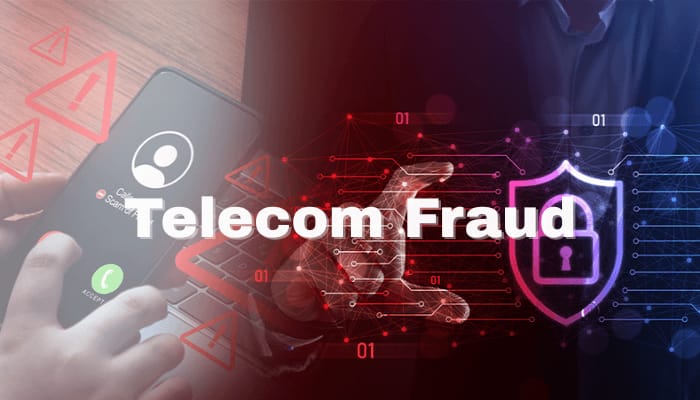
Nigeria’s telecommunications ecosystem has lost about N12.5 billion to telecom-related financial crimes between 2019 and January 2023, highlighting the growing vulnerability of digital users and operators to increasingly sophisticated fraud schemes, according to PwC Nigeria.
The figure, drawn from data of the Nigerian Communications Commission, was contained in PwC’s latest report titled “AI’s Dual Role in Telecom Fraud: Why Artificial Intelligence is Both a Threat and a Shield for Telcos.”
The professional services firm warned that the rapid adoption of artificial intelligence is reshaping telecom fraud patterns, making scams more complex, scalable and difficult to detect.
According to the report, fraud has remained a persistent challenge in the telecom sector, resulting in heavy financial losses for consumers, reputational damage for operators, and growing compliance risks for service providers.
It noted that globally, telecom fraud was estimated at $38.95 billion in 2023, with Nigeria particularly exposed due to the sector’s increasing role in financial services through platforms such as USSD and mobile money channels.
PwC explained that the convergence of telecom and financial services has widened the attack surface for criminals, making fraud more interconnected and cross-border in nature.
The report warned that emerging technologies such as AI are now being used to automate fraud schemes, including deepfake-enabled social engineering, phishing attacks, and SIM swapping incidents linked to the transition to eSIM technology.
“In Nigeria, where telecoms serve as a gateway to financial services, these evolving risks place additional pressure on operators and regulators,” the report stated.
It added that telecom fraud is no longer limited to traditional scams, as digital transformation and fintech integration have blurred the boundaries between banking and telecommunications fraud ecosystems.
Despite the rising threats, PwC said AI also presents significant opportunities for fraud prevention and detection if properly deployed by operators.
According to the report, artificial intelligence can help telecom companies identify suspicious patterns, detect anomalies in real time, and strengthen response mechanisms against cyber-enabled fraud.
“AI can be exploited to scale fraud schemes with unprecedented sophistication, but it also equips telcos with advanced tools for detection, prevention and response,” the report noted.
It stressed that the dual nature of AI, both as a threat and a defence tool requires telecom operators in Nigeria to adopt more strategic and responsible technology-driven approaches.
The report, authored by PwC Nigeria experts including Udochi Muogilim and Adeola Adekunle, warned that failure to adapt could expose the sector to more severe financial and reputational risks.
It further stated that telecom fraud affects a wide range of stakeholders, from individual subscribers facing unauthorised deductions to corporations dealing with reputational damage and regulatory scrutiny.
“The combination of AI and multiple fraud types significantly increases the success rate of these schemes,” PwC said.
The firm also highlighted that the global and borderless nature of telecom networks makes fraud investigations and prosecutions more difficult, thereby complicating regulatory enforcement.
However, PwC maintained that with the right investment in technology, data systems and partnerships, the industry could significantly reduce fraud and improve trust in digital services.
It urged telecom operators to stay ahead of emerging technological trends and adopt proactive fraud management systems driven by artificial intelligence.
“A well-coordinated combination of the right resources and strategic alliances will enable the industry to make a significant impact in the fight against telecom fraud,” the report added.
PwC also offered advisory support to industry players, saying it could help organisations deploy AI and data-driven tools to reduce fraud risks and improve operational resilience.
The firm stressed that building a safer telecom ecosystem would require continuous innovation, stronger collaboration among stakeholders, and adherence to responsible AI practices.
📢 Follow National Periscope on WhatsApp
Get breaking news and updates directly on WhatsApp.
Join WhatsApp ChannelPost Disclaimer
All rights reserved. This material and other digital content on this website are not and do not represent the stance of National Periscope but the statements of newsmakers mentioned therein.
For your detailed news reportage... contact the Editor at Joel2oladele@gmail.com






OPay gets WEF recognition on financial inclusion Mobile banking institution, Read more
FG pledges to fund startups in advancing AI research The Read more
President Bola Ahmed Tinubu has signed the National Identity Management Read more
The Nigerian Communications Commission (NCC) and the Corporate Affairs Commission Read more