
The Nigerian Communications Commission (NCC) has urged telecommunications regulators across Africa to deepen collaboration and embrace evidence-based regulation to strengthen consumer protection, attract investment and support the continent’s expanding digital economy.
The commission said leveraging data, market intelligence and shared regulatory experiences would help African countries respond more effectively to emerging technologies while building resilient communications infrastructure.
The call was made at the Heads of Regulators Roundtable hosted by the NCC on the sidelines of the ongoing African Telecommunications Union (ATU) Conference of Plenipotentiaries (CPL-26) in Abuja.
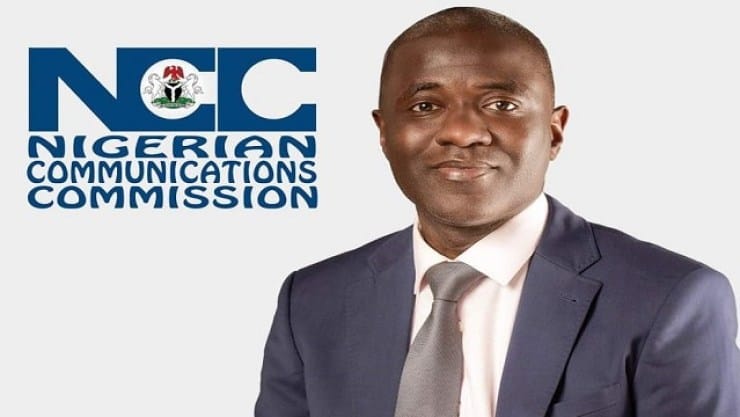
Speaking at the forum, the Executive Vice Chairman and Chief Executive Officer of the NCC, Dr Aminu Maida, said although African regulators operate under different legal and market environments, they continue to face similar regulatory challenges.
He noted that discussions among regulators increasingly centre on issues such as infrastructure resilience, cybersecurity, satellite communications, affordability, artificial intelligence and other emerging technologies.
According to Maida, many regulatory challenges confronting one African country have already been addressed elsewhere on the continent, making collaboration essential.
“Very often the challenge one regulator is trying to solve has already been encountered in one form or another by a colleague elsewhere on the continent,” he said.
Maida explained that the roundtable, themed “Building Africa’s Network Intelligence Ecosystem for Evidence-Based Regulation,” was designed to encourage practical cooperation and promote informed policy decisions.
“It gives us an opportunity to consider how better use of data, evidence and market intelligence can strengthen regulatory decisions and how African regulators can learn more systematically from one another,” he added.
He said the NCC was using the platform to share Nigeria’s regulatory experience while encouraging participants to exchange lessons from successful initiatives, failed approaches and collaborative efforts that could prevent duplication of work across jurisdictions.
Also speaking, the Executive Commissioner for Stakeholder Management at the NCC, Rimini Makama, said the rapid growth of broadband, satellite services, artificial intelligence, cloud computing and digital public infrastructure had rendered conventional regulatory approaches inadequate.
He stressed that regulators now have access to unprecedented volumes of technical, market and consumer data, but the real challenge lies in translating that information into effective regulatory actions.
“The old regulatory approaches were built for a simpler time. They are no longer enough. To stay ahead of the problems and not just react to them, we need trusted intelligence,” Makama said.
He disclosed that the NCC had developed a regulatory intelligence ecosystem that integrates quality of service and quality of experience data, consumer complaints, compliance analytics and market intelligence into a unified platform to support evidence-based regulation.
Makama added that the roundtable provided an opportunity for regulators to exchange ideas on improving data quality, applying advanced analytics, strengthening information sharing and measuring consumers’ actual service experiences beyond traditional quality-of-service indicators.
Director-General of the Regional Africa Satellite Communications Organisation, Timothy Ashong, described the meeting as an important platform for African regulators to exchange best practices and strengthen the continent’s telecommunications regulatory framework.
He praised Nigeria’s deployment of technology that allows regulators, operators and consumers to monitor fibre cuts and network outages in real time, describing it as an innovation worthy of adoption across Africa.
“This is what we believe every African country needs to emulate,” Ashong said, noting that the system promotes transparency and enables faster responses to service disruptions.
He also urged African countries to diversify their connectivity infrastructure by investing in both terrestrial fibre and satellite communications to improve network resilience and expand digital access.
According to him, satellite technology remains a practical solution for connecting remote and underserved communities where terrestrial infrastructure is difficult to deploy.
Ashong pledged the organisation’s support for stronger partnerships with regulators across the continent to deepen satellite connectivity, improve cross-border communications and help bridge Africa’s digital divide.
The Heads of Regulators Roundtable was one of the key events at the ongoing ATU Conference of Plenipotentiaries, bringing together telecommunications regulators and industry stakeholders to advance a more collaborative, transparent and data-driven regulatory ecosystem across Africa.
📢 Follow National Periscope on WhatsApp
Get breaking news and updates directly on WhatsApp.
Join WhatsApp ChannelPost Disclaimer
All rights reserved. This material and other digital content on this website are not and do not represent the stance of National Periscope but the statements of newsmakers mentioned therein.
For your detailed news reportage... contact the Editor at Joel2oladele@gmail.com




NIMC, NCC unveil collaborative efforts to enhance NIN-SIM linkage The Read more
JOEL OLADELE, Abuja Nigeria’s appetite for digital services continued to Read more
Reprieve for Glo subscribers as NCC shelves plans to bar Read more
CSO Demands Reversal of Telecom Tariff Hike The Grassroots Centre Read more