

The Independent Corrupt Practices and Other Related Offences Commission (ICPC) has urged Ministries, Departments and Agencies (MDAs) performing poorly on its Ethics and Integrity Compliance Scorecard (EICS) to learn from institutions that have recorded stronger results.
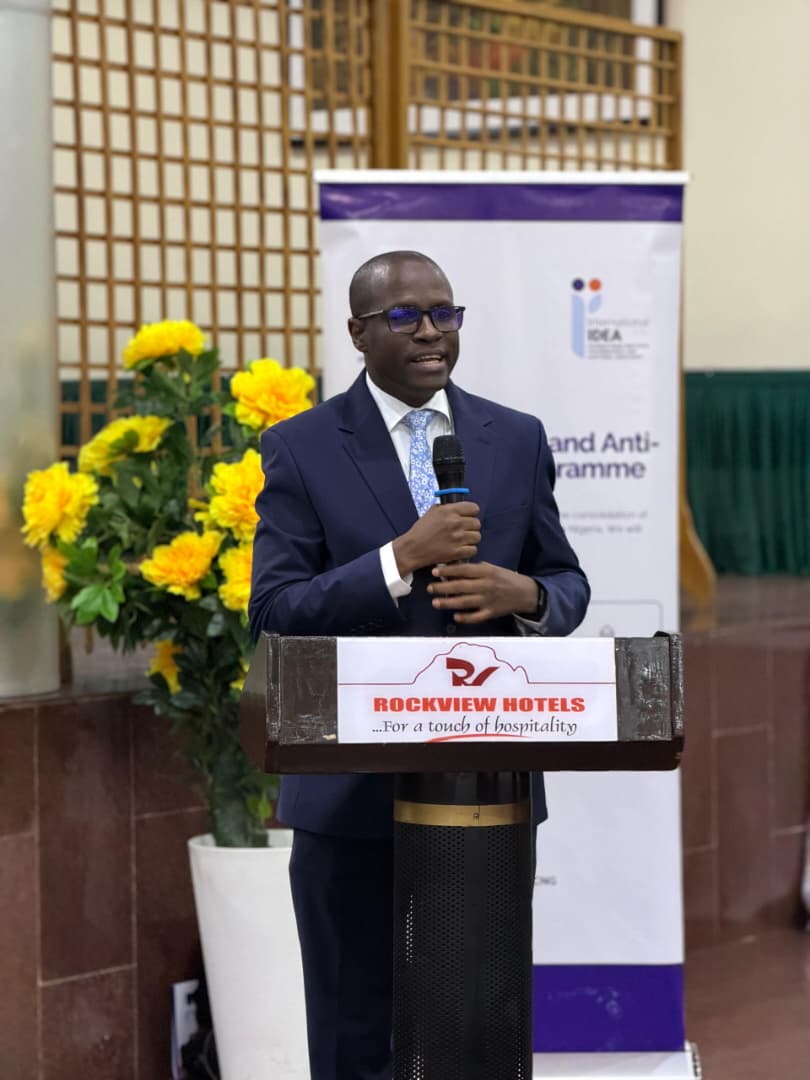
Chairman of the commission, Dr Musa Adamu Aliyu, SAN, made the call in Abuja at a one-day peer review roundtable for chief executives of performing and non-performing MDAs.
The event was organised by the ICPC in collaboration with the Rule of Law and Anti-Corruption (RoLAC) Programme to encourage public institutions to share practical approaches to improving ethics, transparency and accountability.
Aliyu described the EICS as one of the commission’s preventive mechanisms for measuring the extent to which public institutions comply with ethical standards, laws, policies and procedures designed to promote accountability.
He explained that the scorecard assesses MDAs across four key areas: management culture and structure, financial management systems, administrative systems, and the Anti-Corruption and Transparency Unit (ACTU).
The ICPC chairman said the strong performance recorded by some institutions demonstrated that the scorecard could produce results when taken seriously, urging weaker performers to use the peer review as an opportunity to improve.
“The MDAs being celebrated today as strong performers on the EICS are proof that the Scorecard works when it is taken seriously,” Aliyu said, adding that the roundtable provided an opportunity for institutions “still finding their footing” to learn from those doing better.
He also highlighted the role of ACTUs in strengthening internal accountability within government institutions.
According to him, the units serve as in-house ethics champions by promoting expected standards, providing channels for reporting concerns, monitoring expenditure and identifying processes vulnerable to corruption.
Their effectiveness, he noted, depended largely on the level of support and commitment provided by the leadership of their respective organisations.
While congratulating the high-performing MDAs, Aliyu cautioned institutions with poor scores against viewing their results negatively.
“To those still working towards it, please do not see today as a scorecard of shame, but as an honest starting point and an invitation to learn from your colleagues in the room,” he said.
The Component Lead of RoLAC, Dr Emmanuel Uche, commended the ICPC for strengthening institutional processes and sustaining reforms initiated by previous leaderships of the commission.
Uche said the EICS provided MDAs with a mechanism for identifying systemic weaknesses, administrative lapses and procedural gaps that could create opportunities for corruption.
He encouraged underperforming institutions to study the systems and practices adopted by high-performing agencies and adapt them to their own operations.
In a keynote address, the Secretary to the Government of the Federation, Senator George Akume, represented by the Permanent Secretary, General Services Office, Dr Ibrahim Abubakar Kana, challenged public sector leaders to build institutions that could survive changes in leadership, political pressures and economic disruptions.
Speaking on the theme, *The Public Executive: Building Resilient Institutions Beyond Political Tenure*, Kana warned that weak institutional structures could result in policy discontinuity, organisational instability, loss of institutional knowledge and abandonment of useful reforms.
He identified clarity of purpose, knowledge management, institutional memory, integrity and ethical leadership as essential components of resilient public institutions.
Kana also reaffirmed the Federal Government’s zero-tolerance stance on corruption and non-compliance, calling for stronger cooperation among MDAs and greater engagement with citizens, academia, civil society organisations and the private sector.
He urged public servants to see themselves as trustees of public institutions whose responsibility extends beyond their tenure in office.
Ultimately, he noted, public officials would be judged not only by the positions they occupied but by “the institutions we strengthened, the systems we improved, the values we upheld and the foundations we laid for future generations.”
📢 Follow National Periscope on WhatsApp
Get breaking news and updates directly on WhatsApp.
Join WhatsApp ChannelPost Disclaimer
All rights reserved. This material and other digital content on this website are not and do not represent the stance of National Periscope but the statements of newsmakers mentioned therein.
For your detailed news reportage... contact the Editor at Joel2oladele@gmail.com





Reps summon Binance CEO over allegations Chief Executive Officer (CEO) Read more
How Obiano used state officials to launder N4bn security votes, Read more
FG begins price enforcement in Abuja, targets Lagos, others Read more
ICPC Case: Court Jails UDUTH’s Accountant for Diversion of Over Read more