

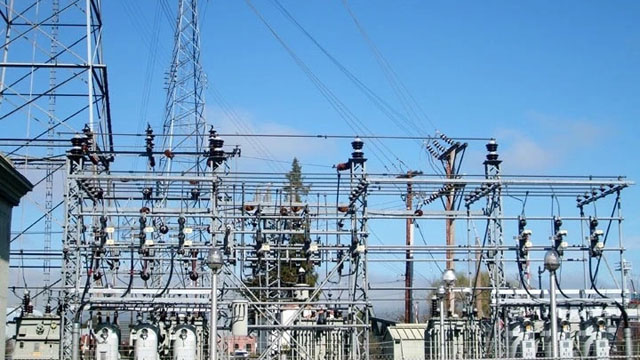
The Federal Government has begun moves to provide round-the-clock electricity to manufacturers at the Idu Industrial Estate in Abuja through a 50-megawatt power project.
The Minister of State for Industry, Owan Enoh, said the initiative would reduce production costs, increase factory output and create more jobs.
Enoh spoke yesterday in Abuja at the groundbreaking of the project. He described unreliable electricity as a major obstacle to industrial productivity and economic growth.
According to him, Nigeria cannot achieve meaningful industrial renewal without addressing its power deficit.
He said the government’s industrialisation strategy focuses on local production, value addition, economic diversification and stronger integration of Nigerian businesses into global markets.
“When you produce locally, you contribute to job creation. For our abundant youth, you provide for them a pathway for employment,” Enoh said.
The minister said higher domestic production would also reduce dependence on imported goods and conserve foreign exchange.
He added that stronger local manufacturing would help the country withstand disruptions in international markets and supply chains.
Enoh said the Federal Government was moving beyond policy declarations by developing practical industrial models that could work in other clusters across the country.
He described the Abuja project as one such model, noting that reliable electricity could allow factories to operate for longer hours, increase output and expand their workforce.
The minister said the initiative should not be viewed as an isolated electricity project. Instead, he described it as part of a broader effort to rebuild Nigeria’s productive capacity.
He linked dependable power to higher factory utilisation, increased local sourcing of raw materials and greater value addition.
“Industrial renewal is not a sprint. It is a marathon,” Enoh said.
He stressed the need for sustained cooperation between government, the private sector and beneficiary communities to protect the infrastructure and ensure that the project achieves its objectives.
The government also linked the industrial power initiative to President Bola Tinubu’s target of growing Nigeria’s economy to $1 trillion.
Enoh said such an expansion would require increased productivity and deeper industrialisation rather than continued dependence on exports of raw materials.
Giving details of the project, the Managing Director of Welbeck Electricity Distribution Limited, Afolabi Aiyela, said the first phase would generate 10MW from a site close to the Ajaokuta-Kaduna-Kano (AKK) gas pipeline in Zuba.
He said the electricity would be transmitted through a 33-kilovolt line to the Idu Industrial Estate.
Aiyela added that the remaining 40MW would be developed within the estate after the gas pipeline is extended to the area.
He said the industrial estate currently has an estimated electricity demand of between 300MW and 400MW.
The figure, he noted, shows the scale of the power challenge confronting manufacturers in the cluster.
The first phase will prioritise Nigerian small and medium-sized enterprises and large indigenous companies. Later phases will extend the supply to more manufacturers within the estate.
Meanwhile, the Minister of Power, Joseph Tegbe, said the government was adopting captive and decentralised generation to connect electricity supply directly to industrial consumers.
Tegbe said the Federal Government was also conducting technical audits of power infrastructure along major industrial corridors.
He identified the Lagos industrial axis, Abuja-Kaduna corridor and Enugu-Onitsha axis as priority areas for intervention.
According to him, the Lagos industrial corridor accounts for about 40 per cent of national electricity demand.
He said the government was targeting the creation or restoration of about 180,000 jobs in the corridor within six months through interventions aimed at improving electricity supply.
Tegbe, however, said solving Nigeria’s power problems would require sustained investment across the entire electricity value chain.
He identified gas supply, generation, transmission and distribution as critical areas requiring attention.
The minister also listed vandalism and energy theft among the major threats to investment in the electricity sector.
He said the government was considering different options for powering industrial clusters, including extending gas pipelines to industrial locations.
Another option, he said, would involve generating electricity in gas-rich locations and transmitting it to industrial centres.
📢 Follow National Periscope on WhatsApp
Get breaking news and updates directly on WhatsApp.
Join WhatsApp ChannelPost Disclaimer
All rights reserved. This material and other digital content on this website are not and do not represent the stance of National Periscope but the statements of newsmakers mentioned therein.
For your detailed news reportage... contact the Editor at Joel2oladele@gmail.com





The Transmission Company of Nigeria (TCN) and the Federal Ministry Read more
A suspected vandal was crushed to death after a 330kV Read more
$6bn Mambila deal: Court remands ex-minister Agunloye in Kuje prison Read more
Reps Panel Probes N200bn CBN Loan to DISCOs The House Read more