
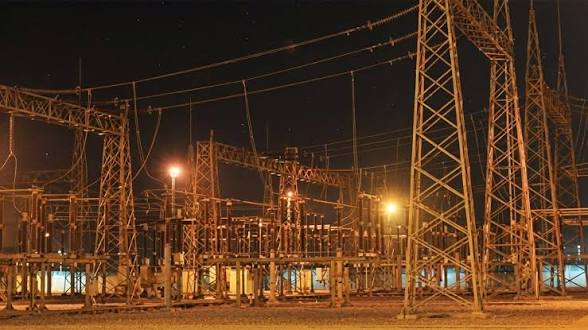
Lagos State Governor Babajide Sanwo-Olu has set a March 2027 deadline to raise electricity supply in the state to more than 3,000 megawatts (MW), from the current level of below 1,000MW, as the government seeks to support a 24-hour economy.
The plan will require an additional 2,000MW from the national grid and other sources, including independent power projects, embedded generation, power barges and energy hubs.
Sanwo-Olu announced the target at the fourth Lagos Business School Africa Energy Conference 2026 on Sunday. His deputy, Dr Kadri Obafemi Hamzat, represented him at the event.
The conference, held at the Honeywell Auditorium of Lagos Business School along the Lekki-Epe Expressway, focused on policy reforms, capital mobilisation and pathways to a sustainable power market.
According to a statement on the Lagos State Government’s official X account, the administration intends to expand supply to reduce blackouts and create conditions for businesses to operate around the clock.
The governor said achieving the target would require coordinated improvements across the electricity value chain, from generation and transmission to distribution, gas supply and metering.
He outlined a seven-point action plan to strengthen the Lagos Electricity Market, increase generation, improve distribution capacity and reinforce transmission infrastructure.
Other priorities include upgrading electricity networks, expanding metering, securing reliable gas supplies and deploying digital systems to improve market monitoring.
The government plans to upgrade substations and distribution feeders while expanding metering coverage. These measures are expected to improve service delivery and reduce disputes associated with estimated billing.
It also intends to clarify contractual obligations and strengthen coordination among electricity market operators and regulators. The government hopes these changes will provide a more predictable environment for private investment in power infrastructure.
Reliable gas supply remains central to the plan because of its importance to electricity generation. The administration also wants to use technology to improve transparency, accountability and operational efficiency.
The proposed digital systems include Supervisory Control and Data Acquisition (SCADA), Advanced Metering Infrastructure (AMI) and the Lagos Electricity Intelligence Platform.
Beyond grid-based electricity, Lagos has continued to invest in solar power. The state government has completed the solarisation of about 42,000 streetlights out of the 50,000 earmarked for the programme.
Solar projects have also been completed in 175 public schools, while work continues at another 100 schools.
Sanwo-Olu called on investors, financial institutions, energy operators and development partners to work with the state to deliver the electricity expansion plan.
He linked dependable power supply to industrial growth, job creation, business competitiveness and improved living standards. The administration, he added, would focus on implementation and measurable results.
The proposed expansion comes as Lagos works to establish a functional electricity market under its state regulatory framework.
In May 2026, the government approved 14 electricity licences and permits covering off-grid generation, embedded generation, independent distribution, metering services and interconnected mini-grid operations.
The Lagos State Electricity Regulatory Commission (LASERC) issued the approvals at its maiden stakeholder engagement.
The licences cover different segments of the electricity market and are intended to widen private-sector participation and improve access to power across industrial and residential areas.
LASERC said the regulatory framework would help attract investment and improve electricity reliability throughout the state.
However, the March 2027 target will depend on the timely delivery of new power projects, improvements to transmission and distribution infrastructure, adequate gas supply and effective coordination among market participants.
For businesses and residents, the key test will be whether the planned expansion translates into more reliable electricity, fewer outages and a reduced dependence on costly alternative power sources.
📢 Follow National Periscope on WhatsApp
Get breaking news and updates directly on WhatsApp.
Join WhatsApp ChannelPost Disclaimer
All rights reserved. This material and other digital content on this website are not and do not represent the stance of National Periscope but the statements of newsmakers mentioned therein.
For your detailed news reportage... contact the Editor at Joel2oladele@gmail.com



.)
Charity Nwakaudu, Abuja [caption id="attachment_22212" align="alignnone" width="1242"] Director General of Read more
National grid collapses again The National grid has suffered yet Read more
Power: Minister vows to end estimated billing The Minister of Read more
Electric cable thief electrocuted in Edo A middle-aged man was Read more