

NiMet Convenes Stakeholders on 2026 Seasonal Climate Outlook
JOEL OLADELE, Abuja
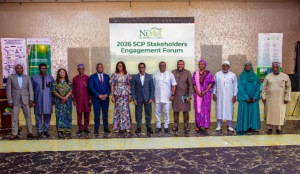
The Nigerian Meteorological Agency (NiMet) has convened a multi-sectoral stakeholders’ meeting to validate and strengthen the draft 2026 Seasonal Climate Prediction (SCP), reinforcing collaboration and co-creation as core pillars of Nigeria’s climate action and resilience strategy.
The meeting, organised in line with NiMet’s statutory mandate, brought together representatives of the Central Bank of Nigeria (CBN), the Federal Ministry of Environment, aviation, agriculture, water resources, disaster risk management, health, humanitarian response and other allied sectors.
The forum provided a platform to refine the 2026 climate outlook and enrich sector-specific advisories to enhance their relevance, usability and impact.
Declaring the meeting open, the Director-General and Chief Executive Officer of NiMet, and Nigeria’s Permanent Representative with the World Meteorological Organization (WMO), Professor Charles Anosike, described the Seasonal Climate Prediction as a critical national planning instrument.
“Our annual Seasonal Climate Prediction is not just a scientific exercise; it is a vital tool for decision-making across a wide spectrum of sectors: from aviation, agriculture and water resources to transportation, health, disaster risk reduction, construction and beyond,” Anosike said.
He stressed that stakeholder engagement remains central to NiMet’s approach to climate services delivery, noting that inputs from users help ensure forecasts are both scientifically robust and practically useful.
“The insights and feedback that emerge from this gathering are invaluable, ensuring our predictions are not only scientifically sound but also tailored to the real needs of our diverse communities and stakeholders,” he added.
Anosike further noted that rising climate variability and extreme weather events demand collective action, emphasising that collaboration is essential to translating climate information into practical solutions that protect lives, livelihoods and infrastructure.
In his remarks, the World Meteorological Organization (WMO) Representative to Nigeria, Dr. Roland Abah, commended NiMet for aligning its SCP process with global best practices, particularly its emphasis on user engagement and co-production.
“NiMet’s Seasonal Climate Prediction has evolved into a credible decision-support tool that continues to strengthen climate resilience across multiple sectors,” Abah said.
Also speaking, the Country Director of the International Rescue Committee (IRC), Babatunde Ojei, praised the consistency and reliability of NiMet’s seasonal forecasts, noting their growing importance to humanitarian operations.
“The SCP data has significantly improved humanitarian planning, early action and anticipatory response in vulnerable communities,” Ojei said.
Similarly, Director of Strategy and Innovation at the Women Farmers Advancement Network (WOFAN),Hajiya Maimuna Lawal, described NiMet’s climate information as highly practical and farmer-friendly.
“The Seasonal Climate Prediction has become indispensable in guiding planting decisions, reducing losses and improving livelihoods for smallholder farmers, especially women,” she said.
Representing the Honourable Minister of Environment, Mr. Jonah D. Barde applauded NiMet for its consistency in delivering timely and reliable climate information that supports national environmental policies and climate action initiatives.
He also commended the agency’s transition to digital climate services, describing it as a forward-looking move that improves data accessibility, transparency and efficiency.
According to him, NiMet’s digital innovations are contributing to Nigeria’s climate finance architecture, including efforts to strengthen the country’s carbon credit potential through improved climate data and monitoring systems.
The meeting reaffirmed NiMet’s commitment to providing climate services that are inclusive, actionable and responsive to sectoral needs, while deepening partnerships at national and international levels.
As deliberations continue, stakeholders are expected to contribute technical inputs that will further enhance the 2026 Seasonal Climate Prediction, ensuring it remains a robust tool for planning, risk reduction and sustainable development in Nigeria and the wider region.
📢 Follow National Periscope on WhatsApp
Get breaking news and updates directly on WhatsApp.
Join WhatsApp ChannelPost Disclaimer
All rights reserved. This material and other digital content on this website are not and do not represent the stance of National Periscope but the statements of newsmakers mentioned therein.
For your detailed news reportage... contact the Editor at Joel2oladele@gmail.com







NiMet Alerts Public on Rising Dust Haze, Advises Safety JOEL Read more
NiMet predicts three-day dust haze from Monday, harps on precautionary Read more
2024 SCP: NiMet predicts delayed onset rain in North Central, Read more
NiMet puts public on high alert over impending dust haze Read more