

JONAPWD Estimates 35m Nigerians Living With Disabilities as Kano, Lagos Top List
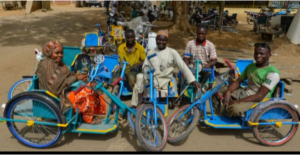
The Joint National Association of Persons with Disabilities (JONAPWD) has projected that about 35 million Nigerians are living with disabilities, with Kano State and Lagos State accounting for the highest numbers in the country.
The estimate was unveiled on Wednesday in Abuja during the public presentation of the Assumptive Disability Disaggregated Data, a report aimed at providing a clearer demographic outlook of persons with disabilities across Nigeria.
According to the data, Kano State has the largest estimated population of persons with disabilities at about 2.5 million, while Lagos State follows with approximately 2.1 million.
Speaking at the event, the Senior Special Assistant to the President on Special Needs and Equal Opportunities, Mohammed Abba Isa, described the report as a significant step toward addressing the long-standing challenge of insufficient and fragmented data on persons with disabilities in the country.
Isa noted that the lack of reliable statistics over the years had limited the ability of policymakers, development partners and stakeholders to design effective programmes and policies targeted at the disability community.
He said figures previously cited on Nigeria’s disability population ranged between 25 million and 40 million, but were largely based on speculation due to the absence of a structured and credible national database.
According to him, the newly developed dataset provides a more organised and disaggregated overview of persons with disabilities across the 36 states and the Federal Capital Territory, offering an important tool for evidence-based planning and inclusive policy formulation.
The report also provides a breakdown of disability clusters across the country.
Findings indicate that physical disabilities constitute the largest group, accounting for about 8.2 million persons, while the deaf community represents approximately 7.7 million people.
The gender distribution contained in the report shows that male persons with disabilities number about 17.6 million, while female persons with disabilities account for roughly 17.2 million.
Isa commended JONAPWD for undertaking the initiative, noting that the data would serve as an important resource for government agencies, development partners, civil society organisations and researchers working to advance disability inclusion in Nigeria.
He added that the administration of Bola Tinubu remains committed to strengthening inclusive governance through reliable data and improved institutional frameworks under its Renewed Hope Agenda.
Also speaking, the National President of JONAPWD, Abdullahi Usman, explained that the estimate was derived using internationally recognised benchmarks which assume that **persons with disabilities constitute about 15 per cent of any country’s population**.
Usman said the association applied this benchmark to the 2025 population projections of the National Population Commission of Nigeria, which were based on projections from the 2006 national census.
He added that the estimates were further refined through consultations with leaders of disability clusters and organisations of persons with disabilities across the country.
According to him, internationally recognised percentage allocations for various disability clusters were also applied to the projected population figures to generate the disaggregated dataset.
Usman acknowledged that the report remains an assumptive baseline, noting that further work is required to develop a more comprehensive national disability database.
He said one of the major gaps encountered during the process was the limited availability of data on children and youth with disabilities, largely due to weak detection systems and inadequate disability-sensitive administrative structures in many states.
Despite the limitations, he said the report represents a significant step toward building a more reliable dataset on persons with disabilities in Nigeria.
Usman also pointed out that the figures highlight the demographic and political significance of the disability community in the country.
According to him, about 28 million persons with disabilities are eligible voters, a number he said exceeds the total votes recorded in the 2023 general elections.
He therefore urged government agencies, development partners and civil society organisations to make use of the data in designing programmes and policies that promote inclusion and improve the welfare of persons with disabilities across Nigeria.
📢 Follow National Periscope on WhatsApp
Get breaking news and updates directly on WhatsApp.
Join WhatsApp ChannelPost Disclaimer
All rights reserved. This material and other digital content on this website are not and do not represent the stance of National Periscope but the statements of newsmakers mentioned therein.
For your detailed news reportage... contact the Editor at Joel2oladele@gmail.com




No Violence, No Vote-Buying in Rivers LG Polls, Says Nwambu Read more
Ohanaeze Ndigbo cautions against obstruction of Nnamdi Kanu’s release Ohanaeze Read more
The Minister of Information and National Orientation, Mohammed Idris, has Read more
Commission advocates protection of PWDs' rights by airlines Joel Oladele, Read more